.png)
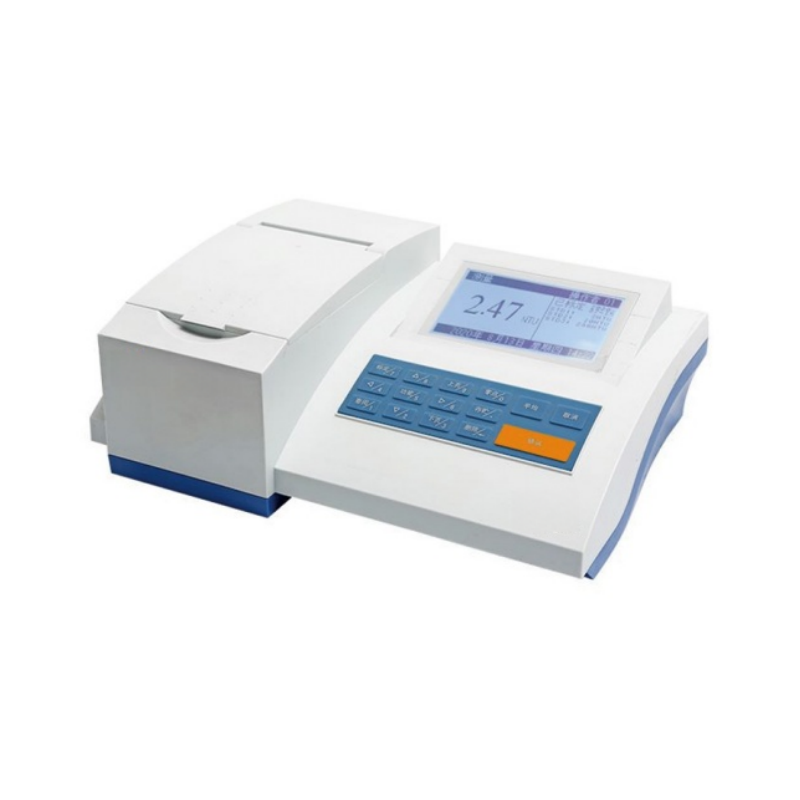
Laboratory turbidity meter WZS-180A meets ISO 7027 and HJ 1075 standards. Automatic chromaticity adjustment and range switching are used with an 850nm LED light source and scattering transmission light measurement. The device has a built-in average measurement algorithm to eliminate reading variations and supports zero point and 7-point standard sample calibration. It stores 2000 GLP-compliant data sets. It is a dependable detecting equipment for environmental monitoring, water quality measurement, scientific research activities, and other scenarios.
★★★★★
Features
- LED light source, using 850 nm wavelength, meets ISO 7027 standard and HJ 1075 standard
- Adopting the principle of scattered transmitted light measurement, ratio calibration, and automatic chromaticity compensation
- Automatic range switching
- Supports zero point and up to 7-point calibration
- Supports average measurement function, compensating for reading fluctuations caused by random floating of suspended solids in the sample through average calculation
- Compliant with GLP standards, supports data retrieval and deletion, with a data storage capacity of up to 2000 sets
- Equipped with standard USB communication interface, supporting connection and printing with PC
- Equipped with power-off protection function
Configuration List
- WZS-180A turbidity meter
- 5 turbidity bottles
- International universal power cord
- Instruction Manual
- Product Qualification Certificate
- 3 fuses with a diameter of 5 × 20 (0.5A)
- Turbidity calibration solution (400NTU)
Parameters
| Category | Specifications |
|---|---|
| Measurement Principle | Scatter-transmitted light method, automatic color compensation |
| Range & Accuracy | Measurement range: 0-20.00NTU / 20.0-200.0NTU (auto-range); Error: ≤±8%; Repeatability: ≤1.0% |
| Core Performance | Zero drift: ±0.5%FS/30min; Stability: ≤±1.0%FS/30min; LED light source (850nm) |
| Data Storage & Output | 2000 sets of data storage; USB communication interface (supports PC connection & printing) |
| Power Supply | AC (220±22)V, 50±1Hz |
| Physical Specifications | Dimension: 330×250×130mm (L×W×H); Weight: ~2.5kg; Operating temp: 5-35℃ |
| Standard Configuration | Host: WZS-180A; Turbidity bottles (5 pcs); Power cord; 400NTU calibration solution; Fuses (3 pcs, Φ5×20 0.5A); Manual & Certificate |
Core Highlights
- Double standard compliance: Complies with ISO 7027 and HJ 1075 standards, with an 850nm light source to ensure measurement accuracy and industry compatibility;
- Accurate anti-interference: The combination of scattered and transmitted light and automatic chromaticity compensation avoids the influence of sample color on the results, and the average measurement function suppresses reading fluctuations caused by suspended solids drift;
- Flexible calibration: supports zero point calibration and up to 7-point standard calibration, customizable standard values, and adapts to detection needs in different concentration ranges;
- Intelligent and convenient: automatic range switching, no need for manual adjustment; The power-off protection function ensures that calibration data and settings are not lost;
- Data traceability: 2000 sets of data storage meet GLP standards, supporting access, deletion, and USB export printing for easy experimental recording and traceability.
Featured Applications
- Surface water, groundwater, and industrial effluent turbidity detection in order to comply with environmental monitoring rules;
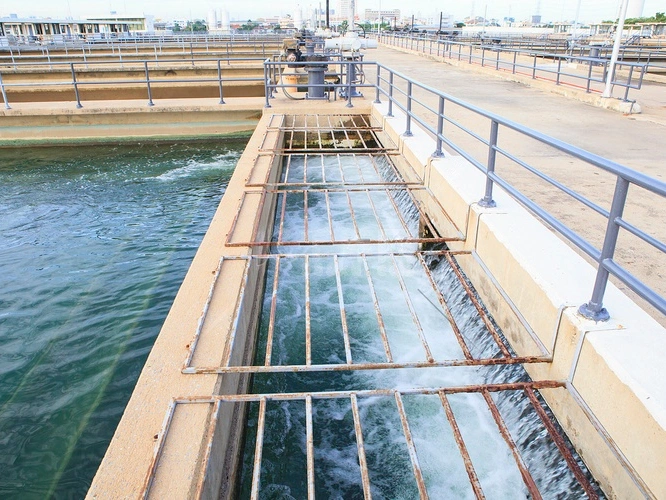
- Water industry: turbidity study of water facilities’ raw and filtered water to ensure conformance to drinking water quality requirements;
- Laboratory water quality evaluation, turbidity characteristic analysis, and giving accurate data support are examples of study experiments.
- Industrial quality inspection: To ensure product quality, manage water turbidity in chemical, food, and beverage industrial processes.
Daily maintenance and precautions
Key points for operation and use
- Instrument preparation: Place it on a sturdy and vibration free workbench, away from direct sunlight, connect the power supply for preheating, and enter the measurement state;
- Sample preparation: Select a scratch free turbidity bottle, clean it with zero turbidity water, and then rinse the test sample 2-3 times. Inject the solution to the “+” mark and wipe out any bubbles and fingerprints on the bottle wall;
- Calibration process: First, execute zero point calibration (inject zero turbidity water and push the “zero/0” button to complete); Then calibrate the standard samples in order of low to high concentration, up to 4 types of standard sample values can be calibrated;
- Measurement operation: Insert the prepared sample bottle into the instrument according to the stated position, cover the lid, and record or store the results after the reading is stable;
- Data export: Connect to a PC or printer through a USB interface to export stored measurement data and complete experimental records.
Daily maintenance and troubleshooting
- Daily maintenance: Regularly clean the instrument casing and sample room to avoid dust accumulation; Clean and dry the turbidity bottle in a timely manner after use to avoid scratches and residual stains;
- Regular calibration: It is recommended to perform zero calibration once a month and full-scale standard calibration every three months to ensure measurement accuracy;
- Storage requirements: If the instrument is not used for a long time, the power should be disconnected and placed in a dry, non corrosive gas environment. The turbidity bottle should be sealed and stored to prevent contamination.
Technical Support
Top 6 Industrial Gas Analyzers Manufacturers 2025
6 Best Industrial Gas Detector Manufacturers in the World
9 Best Portable Carbon Dioxide Detector 2025 – Complete Buying Guide
Top 7 portable combustion analyzer Tested
The WZS-180A laboratory turbidity analyzer has become the preferred equipment for water turbidity detection due to its core advantages of dual standard compliance, precise anti-interference, and intelligent convenience. Its flexible calibration method, rich data storage and export functions, adaptability to multiple scenarios such as environmental monitoring and scientific research experiments, simple operation and stable performance, provide reliable guarantee for the accuracy and traceability of experimental data.
Request a Quote