.png)
In modern industrial processes, the demand for absolute accuracy in fluid and gas management has never been higher. Engineers and procurement specialists are continuously evaluating technological advancements alongside budget constraints. Consequently, understanding the flow controllers mass price for the 2026 fiscal and operational year has become a top priority for facilities ranging from semiconductor manufacturing to biopharmaceutical production.

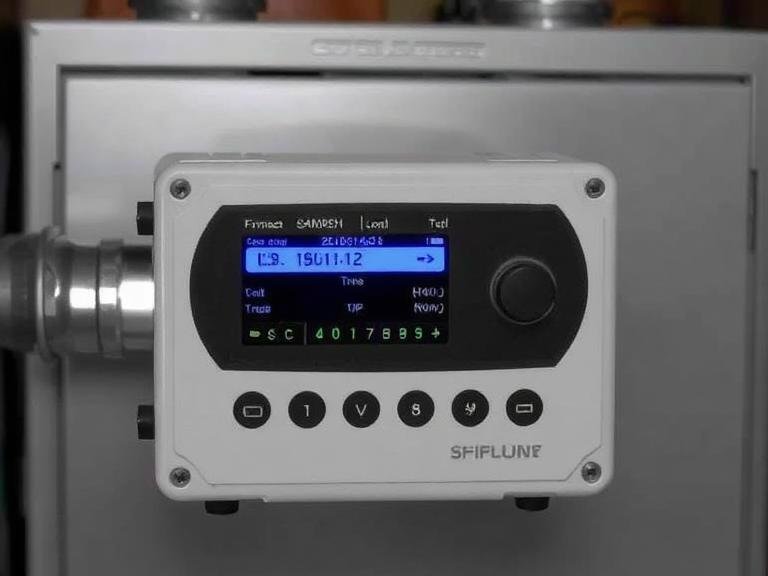
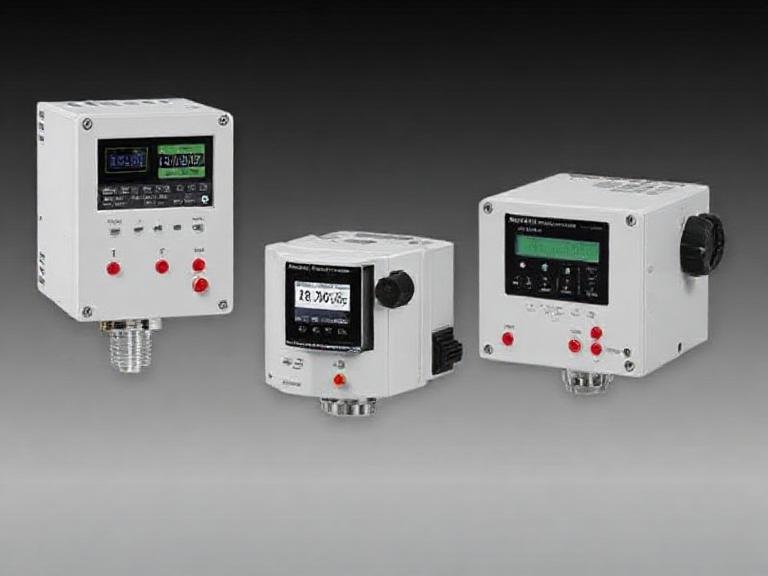
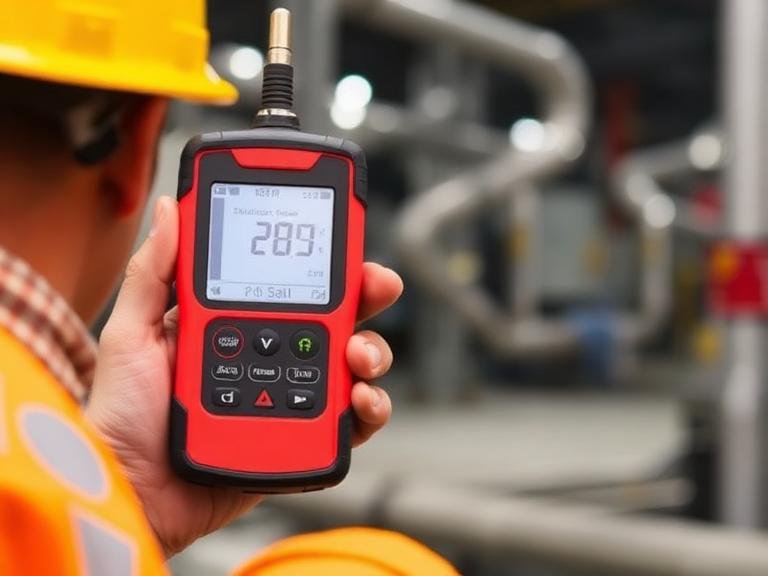
Mass Flow Controllers/Flow Meters are used for the precise measurement and control of gas or liquid mass flow rates. Also known as MFC/MFM, they not only function as mass flow meters but, more importantly, can automatically control gas/liquid flow rates. This ensures stable fluid transmission at a preset flow rate in industrial processes, scientific experiments, or environmental monitoring. Even with system pressure fluctuations or changes in ambient temperature, the flow rate remains constant at the set value. They offer high measurement accuracy, good sensitivity, and high reliability, and are widely used in various industries.
From our experience at Sino-Inst, navigating the complexities of procurement requires a deep understanding of the underlying measurement technologies. Sino-Inst’s fluid mass measurement and control products are available in three distinct technology types: thermal, differential pressure, and Coriolis. All three types utilize proven and mature technologies, ensuring high accuracy and reliability for our product lineup. We recommend closely aligning your specific process requirements with these technologies to secure the most favorable flow controllers mass price without compromising on precision.
Table of Contents
- 1. The Core Functionality of Mass Flow Controllers
- 2. Technologies Dictating the Flow Controllers Mass Price
- 3. Key Factors Influencing the Flow Controllers Mass Price in 2026
- 4. 2026 Pricing Trends and Industrial Outlook
- 5. Integrating MFCs with Broader Process Control Systems
- 6. Summary Table: Flow Controllers Mass Price Guide
- 7. Frequently Asked Questions (FAQs)
- 8. Authoritative References
1. The Core Functionality of Mass Flow Controllers
To accurately assess the flow controllers mass price, one must first understand the immense value these devices bring to an industrial circuit. An MFC is a closed-loop device consisting of a mass flow sensor, a proportional control valve, and sophisticated control electronics. When an operator or a programmable logic controller (PLC) sends a setpoint signal to the MFC, the internal electronics compare this setpoint to the actual flow rate reported by the sensor. If a deviation exists, the proportional valve automatically adjusts to correct the flow rate.
This closed-loop automation is why the initial flow controllers mass price is easily justified by the rapid return on investment. By completely eliminating human error and manual valve adjustments, facilities drastically reduce material waste and improve product yield. Furthermore, to ensure unparalleled accuracy, internally compensated laminar differential pressure technology, intelligent sensor technology, and digital display technology are widely used in the Sino-Inst product series. These modern digital integrations allow for real-time data logging, predictive maintenance, and seamless communication with modern SCADA systems.
2. Technologies Dictating the Flow Controllers Mass Price
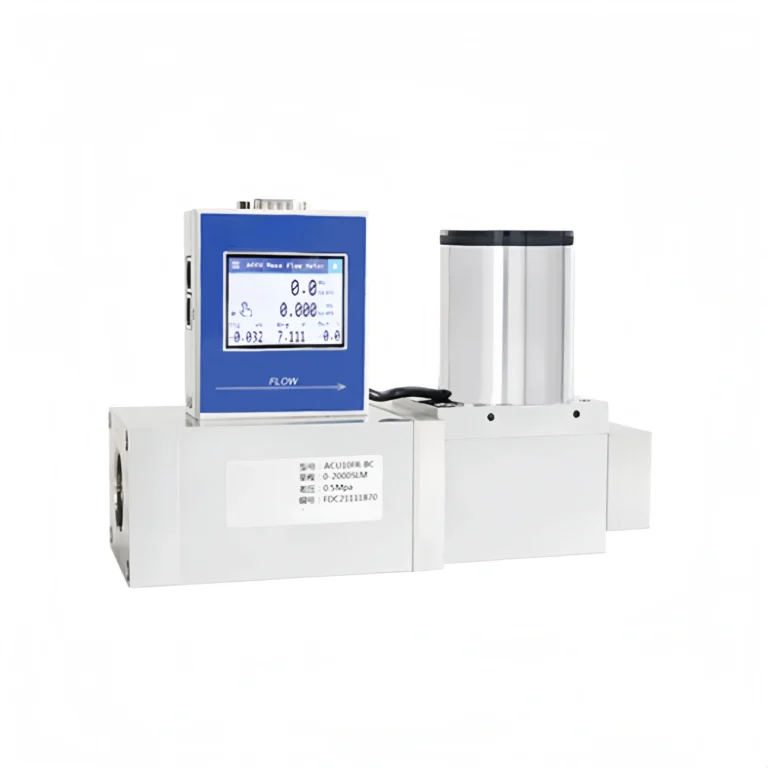
The primary driver behind the flow controllers mass price is the specific physical principle utilized to measure the fluid or gas. Sino-Inst offers three primary technologies, each engineered for specific operational environments and budgetary parameters.
Thermal Mass Flow Controllers
Thermal technology operates by measuring the heat transfer as a fluid flows past a heated sensor element. Because the heat transfer is directly proportional to the mass flow rate, these devices do not require additional temperature or pressure compensation. From our experience, thermal MFCs offer an incredibly competitive flow controllers mass price. They are the industry standard for clean gas applications, including argon, nitrogen, and oxygen dosing in metallurgy and semiconductor fabrication. Their relatively simple construction keeps manufacturing costs low while maintaining excellent sensitivity.
Differential Pressure (Laminar Flow) Mass Controllers
Laminar differential pressure technology forces the gas or fluid through a flow restrictor (laminar flow element), creating a pressure drop that is linearly proportional to the flow rate. Sino-Inst utilizes internally compensated laminar differential pressure technology to account for any slight variations in fluid viscosity. The flow controllers mass price for DP technology sits in the mid-range. We recommend these units for applications requiring lightning-fast response times and the ability to handle multiple gas types without recalibration, as the physical measurement is not dependent on the thermal capacity of the specific gas.
Coriolis Mass Flow Controllers
Coriolis MFCs represent the pinnacle of fluid measurement. They operate on the Coriolis effect, measuring the subtle twisting of a vibrating tube as fluid passes through it. This provides a direct, true mass measurement of both liquids and gases, completely independent of fluid properties like density, temperature, or viscosity. Consequently, the flow controllers mass price for Coriolis units is the highest among the three. We recommend Coriolis controllers for ultra-critical applications, such as pharmaceutical dosing, catalyst injection, and high-precision liquid blending, where absolute accuracy is paramount and justifies the premium flow controllers mass price.
3. Key Factors Influencing the Flow Controllers Mass Price in 2026
Beyond the core measurement technology, several other engineering and supply chain variables will heavily influence the flow controllers mass price in 2026.
- Material of Construction: Standard applications utilize 316L stainless steel wetted parts. However, highly corrosive environments (such as those handling chlorine or hydrochloric acid) require exotic alloys like Hastelloy or specialized elastomeric seals (Kalrez/FFKM). Upgrading materials will significantly increase the flow controllers mass price.
- Intelligent Sensor and Digital Integration: As Industry 4.0 becomes the standard, the inclusion of digital display technology and advanced communication protocols (EtherCAT, PROFINET, Modbus RTU) is expected. While these intelligent sensor technologies slightly elevate the base flow controllers mass price, they drastically reduce installation and integration costs.
- Flow Range Capacity: Micro-flow controllers designed to measure standard cubic centimeters per minute (sccm) require microscopic precision machining, while extreme high-flow controllers require massive valves and sensors. Both extremes of the spectrum command a higher flow controllers mass price compared to standard mid-range units.
- Calibration and Certification: Devices requiring highly specialized multi-gas calibration, NIST-traceable certificates, or explosion-proof ATEX certifications will inherently carry a higher flow controllers mass price due to the rigorous laboratory testing involved prior to shipment.
4. 2026 Pricing Trends and Industrial Outlook
Analyzing the global supply chain, we project that the flow controllers mass price in 2026 will experience stabilization. The semiconductor shortages that previously drove up the cost of control electronics have largely subsided. However, the rising cost of raw materials, specifically high-grade stainless steel and rare earth metals used in sensor manufacturing, will establish a firm baseline for the flow controllers mass price.
For budget forecasting, facility managers can expect Thermal mass flow controllers to remain the most cost-effective solution, generally ranging between $600 and $1,500 depending on flow rates and digital outputs. Differential Pressure models will likely occupy the $1,000 to $2,500 range. Finally, due to their intricate mechanical design, Coriolis controllers will maintain a premium flow controllers mass price, typically starting around $3,500 and scaling upwards for high-capacity or sanitary-grade liquid applications.
5. Integrating MFCs with Broader Process Control Systems
A mass flow controller rarely operates in isolation. In complex scientific experiments, environmental monitoring, or wastewater treatment, precise flow control must be integrated with other analytical parameters. We recommend evaluating your complete system architecture to maximize the value of your flow controllers mass price investment.
For instance, in environmental and air quality systems, an MFC ensures a precise flow of air sample is delivered to advanced Dust Monitors, guaranteeing that the volumetric calculations for particulate matter are perfectly accurate. You can explore our comprehensive Mass Flow Controllers/Meters catalog to find the exact instrument to pair with your analytical equipment.
In liquid applications such as chemical dosing or water neutralization, the flow rate of the reagent must be dynamically adjusted based on the chemical state of the process fluid. An MFC paired with a high-accuracy pH/ORP Controller creates a flawless automated dosing loop. Depending on the harshness of the chemicals involved, we provide both standard Plastic-Shell Electrode solutions for general water treatment and highly resilient Glass pH/ORP Sensor options for aggressive high-temperature industrial effluents.
6. Summary Table: Flow Controllers Mass Price Guide
To assist in your 2026 procurement strategy, we have compiled a summary of the technologies, their optimal applications, and relative flow controllers mass price expectations.
| Measurement Technology | Operating Principle | Optimal Industrial Applications | Relative Flow Controllers Mass Price |
|---|---|---|---|
| Thermal Mass | Heat transfer proportional to mass flow. | Clean gases, semiconductor fabrication, burner control, shielding gas. | Low to Moderate (Most Cost-Effective) |
| Laminar Differential Pressure | Pressure drop across a laminar flow element. | Multi-gas applications, fast response requirements, analytical instrumentation. | Moderate |
| Coriolis | Coriolis forces on a vibrating tube. | Liquid dosing, unknown gas mixtures, pharmaceutical blending, ultra-high accuracy. | Premium (Highest Investment) |
7. Frequently Asked Questions (FAQs)
8. Authoritative References
To further understand the physics of fluid measurement, calibration standards, and industrial automation protocols, we recommend reviewing the following authoritative resources:
- National Institute of Standards and Technology (NIST) – Comprehensive guidelines on fluid flow measurement standards and metrology traceability.
- United States Department of Energy (DOE) – Research on advanced industrial process controls and energy-efficient fluid management systems.
- Environmental Protection Agency (EPA) – Regulations and standards regarding precise gas flow control for environmental monitoring and emissions testing.