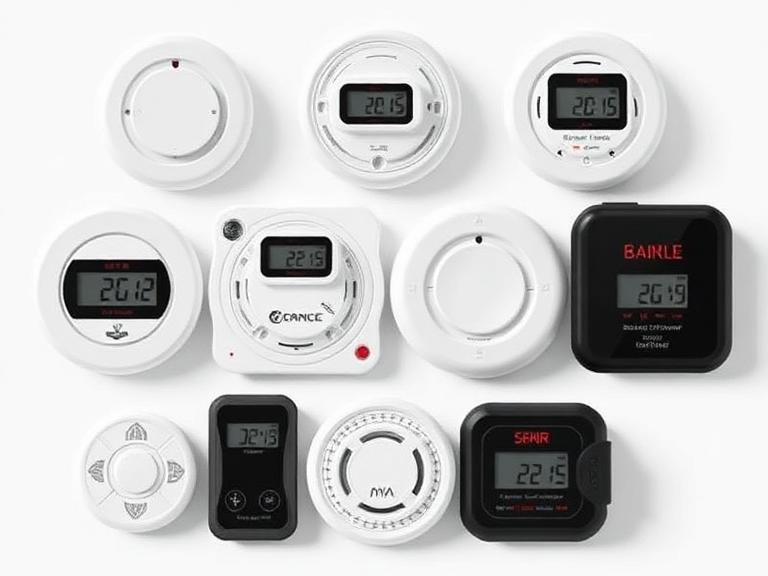
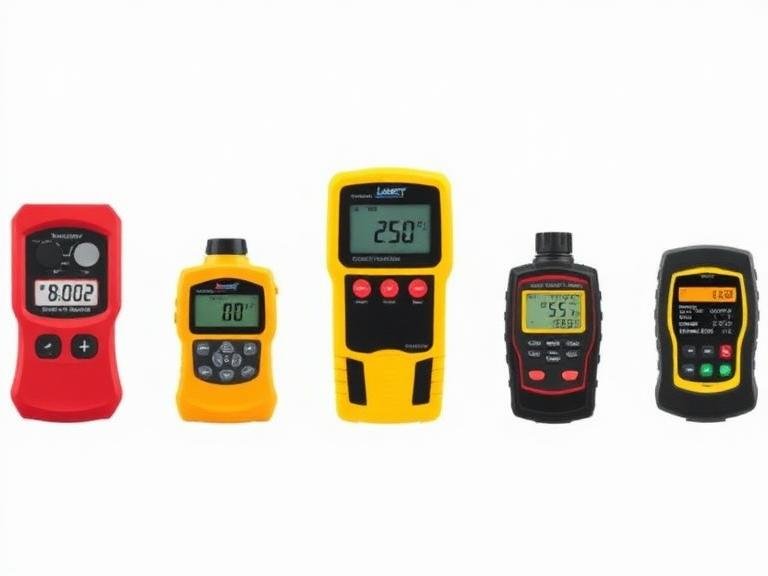
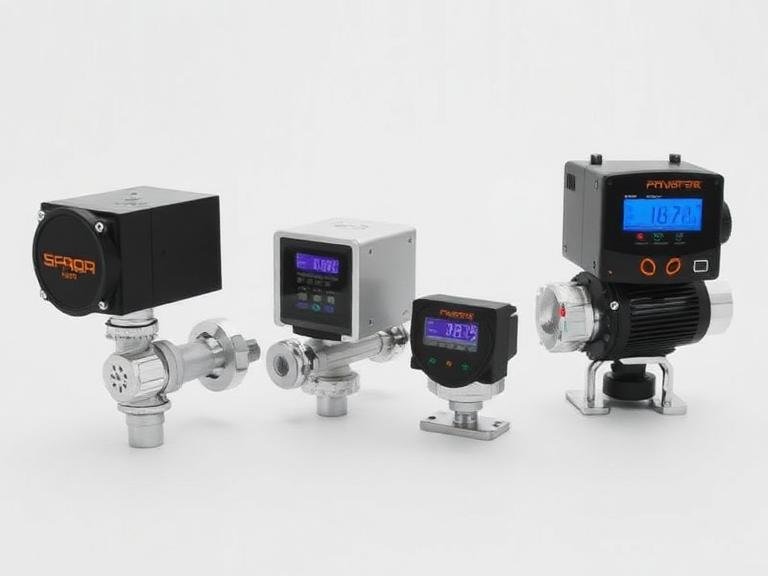
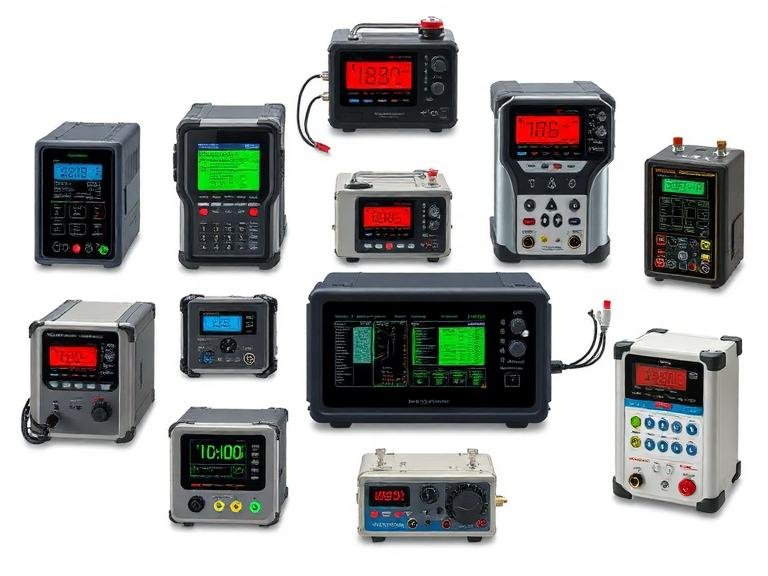
.png)
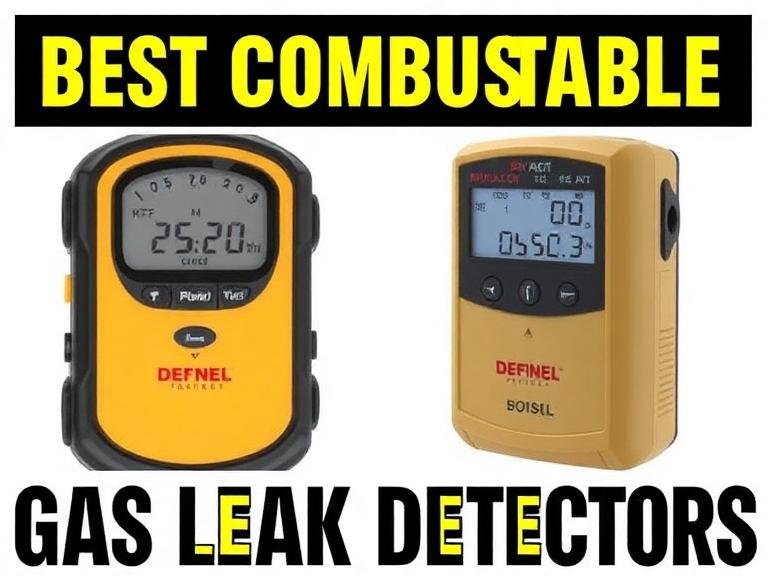
In industrial processing, petrochemical manufacturing, and municipal utility management, the threat of uncontained explosive gases is a continuous operational risk. Protecting human life and facility infrastructure requires uncompromising reliability in gas sensing technology. As we navigate the technological landscape of 2026, the Best combustible gas leak detectors have evolved far beyond basic alarms. Modern systems incorporate highly sensitive micro-electromechanical systems (MEMS), non-dispersive infrared (NDIR) sensors, and seamless Internet of Things (IoT) connectivity for real-time facility monitoring.
Sino-Inst is a professional supplier of industrial process and analytical instruments, including gas detectors, gas analyzers, dust detectors, mass flow controllers, and dust monitors. We can help you obtain reliable measurement and analysis solutions while saving procurement costs. Customized products and OEM services are available. We will be your most trusted partner!
From our experience engineering and deploying analytical instruments across global facilities, selecting the Best combustible gas leak detectors requires a deep understanding of your specific environmental variables. A catalytic bead sensor that performs perfectly in a clean indoor facility may suffer from sensor poisoning in a harsh, sulfur-heavy refinery. We recommend approaching procurement systematically, prioritizing intrinsic safety (IS) certifications, sensor lifespan, and ease of calibration.
In this authoritative guide, we leverage decades of industry expertise to evaluate and rank the 8 Best combustible gas leak detectors available in 2026. Whether you require localized handheld protection or plant-wide fixed monitoring networks, this comprehensive breakdown will guide your investment.
Table of Contents
- Summary Table: Top Combustible Gas Leak Detectors
- 1. Sino-Inst Fixed Gas Detectors
- 2. Honeywell BW MicroClip Series
- 3. MSA Ultima X5000
- 4. Dräger Polytron 8000 Series
- 5. Teledyne OLCT-100-XP-MS
- 6. FLIR GF77 Optical Gas Imaging Camera
- 7. Ion Science Tiger XTL
- 8. Sino-Inst Portable Gas Detectors
- Expert Buying Guide: Evaluating Sensor Technologies
- Frequently Asked Questions (FAQs)
- Industry References
Summary Table: Top Combustible Gas Leak Detectors
To assist safety managers and procurement engineers in their evaluation, we have compiled a summary of the Best combustible gas leak detectors for 2026, categorizing them by deployment type and core technological advantage.
| Rank | Manufacturer & Model | Deployment Type | Primary Sensor Technology | Best Suited For |
|---|---|---|---|---|
| 1 | Sino-Inst Fixed Series | Fixed / Wall-Mounted | Catalytic Bead & NDIR | Continuous plant-wide monitoring and OEM integration |
| 2 | Honeywell BW MicroClip | Portable / Wearable | Catalytic Bead | Confined space entry and daily worker protection |
| 3 | MSA Ultima X5000 | Fixed Transmitter | Advanced NDIR (TruCal) | Offshore oil rigs and harsh environmental conditions |
| 4 | Dräger Polytron 8000 | Fixed / Explosion-Proof | IR / Catalytic | Chemical manufacturing and high-risk Zone 1 areas |
| 5 | Teledyne OLCT-100-XP-MS | Fixed System | MEMS Technology | Detecting multiple combustible gases simultaneously |
| 6 | FLIR GF77 OGI | Handheld / Drone Mount | Optical Gas Imaging | Visualizing large-scale methane and hydrocarbon leaks |
| 7 | Ion Science Tiger XTL | Portable / Handheld | PID (Photoionization) | Low-level VOC and combustible vapor pinpointing |
| 8 | Sino-Inst Portable Series | Portable / Wearable | Multi-Sensor Integration | Cost-effective fleet deployment for field technicians |
1. Sino-Inst Fixed Gas Detectors

When establishing a permanent safety perimeter within an industrial facility, continuous monitoring is non-negotiable. Earning the top spot on our list of the Best combustible gas leak detectors, our Fixed Gas Detectors provide unyielding reliability for continuous environmental sampling. Engineered with rugged, explosion-proof housings, these units are designed to integrate seamlessly into existing DCS or SCADA systems via standard 4-20mA or RS485 outputs.
From our experience, the ability to customize sensor payload is critical. We utilize our advanced 800 Series Gas Sensor Module within these fixed units, allowing clients to specify whether they require catalytic combustion sensors for general Lower Explosive Limit (LEL) monitoring, or NDIR sensors for environments where catalytic poisons (like silicones or heavy sulfur) are present. We recommend these units as the backbone of any comprehensive Gas Monitoring System in petrochemical and wastewater treatment plants.
2. Honeywell BW MicroClip Series
For wearable protection, the Honeywell BW MicroClip series remains an industry standard in 2026. This compact, lightweight device easily clips to a worker’s lapel, providing continuous four-gas monitoring (including combustibles, oxygen, hydrogen sulfide, and carbon monoxide). It is undeniably one of the Best combustible gas leak detectors for personnel executing confined space entry protocols.
We appreciate the operational simplicity of the MicroClip. Its one-button operation ensures that workers wearing heavy personal protective equipment (PPE) can easily interface with the device. The integration with Honeywell’s Safety Suite software allows safety managers to track fleet compliance and bump test logs seamlessly.
3. MSA Ultima X5000
MSA Safety represents the pinnacle of premium, heavy-duty fixed detection. The Ultima X5000 is widely regarded as one of the Best combustible gas leak detectors for extreme offshore and refinery applications. The standout feature of the X5000 is its proprietary TruCal technology. This internal self-checking mechanism compensates for sensor drift caused by environmental changes, effectively extending the physical calibration interval from a standard 3 months to up to 24 months.
From an operational expenditure standpoint, we highly recommend the Ultima X5000 for facilities where accessing fixed detectors requires scaffolding or significant downtime. The dual-sensor capability allows two sensing technologies to share a single transmitter, reducing wiring and installation costs drastically.
4. Dräger Polytron 8000 Series
Dräger has built a formidable reputation in industrial safety, and their Polytron 8000 series exemplifies German engineering precision. This explosion-proof transmitter is highly modular, meaning the same base unit can house different sensor technologies depending on the changing needs of the facility. It stands as one of the Best combustible gas leak detectors for Class I, Div 1 (or ATEX Zone 1) hazardous locations.
The Polytron series utilizes DrägerSensor technology, known for its rapid response time and exceptional resistance to long-term degradation. We frequently recommend this system to clients managing chemical synthesis plants where complex, highly reactive combustible vapors are present.
5. Teledyne OLCT-100-XP-MS
As the industrial landscape shifts in 2026, Teledyne Technologies has disrupted the market with the OLCT-100-XP-MS. This system utilizes next-generation Micro-Electromechanical Systems (MEMS) sensor technology. Unlike traditional catalytic beads that degrade over time when exposed to high gas concentrations, the MEMS technology provides a highly robust, poison-resistant alternative.
This unit is recognized among the Best combustible gas leak detectors because it can accurately measure over 14 different combustible gases with a single sensor profile. For facilities handling variable hydrocarbon mixes, this eliminates the need to install multiple distinct sensor heads, streamlining facility safety architecture.
6. FLIR GF77 Optical Gas Imaging Camera
While traditional point detectors trigger alarms when gas reaches the sensor, Optical Gas Imaging (OGI) allows operators to literally see the leak from a safe distance. The FLIR GF77 is an uncooled infrared camera specifically tuned to detect methane and other hydrocarbon emissions. It is undeniably the Best combustible gas leak detector format for preventative maintenance and fugitive emission tracking.
We recommend OGI technology for massive pipeline inspections and tank farm monitoring. By scanning thousands of connections, valves, and flanges in minutes, maintenance teams can identify microscopic leaks before they reach the lower explosive limit, making the FLIR GF77 an invaluable asset for proactive safety.
7. Ion Science Tiger XTL
Not all combustible risks begin as massive volumetric leaks; many start as low-level volatile organic compound (VOC) emissions. The Ion Science Tiger XTL utilizes advanced Photoionization Detection (PID) technology to measure gases down to parts per billion (ppb) levels. This makes it one of the Best combustible gas leak detectors for early-stage hazard identification and pinpoint leak locating.
The intrinsically safe certification of the Tiger XTL ensures it can be carried directly into explosive atmospheres without serving as an ignition source. Its humidity-resistant sensor design prevents false readings in damp industrial environments, an issue that plagues lower-tier PID instruments.
8. Sino-Inst Portable Gas Detectors

Rounding out our list of the Best combustible gas leak detectors is our proprietary line of Portable Gas Detectors. At Sino-Inst, we engineered these devices to bridge the gap between premium performance and procurement feasibility. Our portable units feature ruggedized, IP-rated housings capable of surviving extreme industrial abuse, complete with heavy-duty alligator clips and high-decibel auditory, visual, and vibrating alarms.
From our experience, large contracting firms and municipal utility departments require massive fleets of reliable detectors. We provide customizable sensor configurations—allowing clients to mix LEL sensors with specific toxic gas sensors—delivering the exact safety profile required for their unique field operations. By partnering directly with Sino-Inst, facilities achieve world-class safety compliance while optimizing their operational budgets.
Expert Buying Guide: Evaluating Sensor Technologies
Procuring the Best combustible gas leak detectors requires matching the underlying sensor physics to your environmental reality. Installing the wrong sensor type will lead to false alarms, rapid sensor death, and ultimately, a compromised safety perimeter. We recommend focusing on the following technological distinctions:
- Catalytic Bead Sensors: The traditional workhorse for combustible gas detection. They are highly accurate and cost-effective. However, they require the presence of oxygen to function and can be permanently “poisoned” by silicones, lead, and high concentrations of hydrogen sulfide. Use these in clean, oxygen-rich environments.
- Non-Dispersive Infrared (NDIR) Sensors: These sensors use light wavelengths to detect gas. They do not require oxygen to function, making them the Best combustible gas leak detectors for inert environments (like inside purged tanks). They are immune to catalytic poisons but cannot detect hydrogen gas.
- Ultrasonic Leak Detectors: Rather than sensing the gas chemically, these detect the high-frequency acoustic noise generated by pressurized gas escaping a pipe. They are unaffected by wind direction, making them excellent for outdoor offshore platforms.
Furthermore, regardless of the sensor type, regular calibration is a strict regulatory requirement. We highly advise pairing your fleet with automated bump testing and calibration docking stations to ensure 100% compliance without relying on manual technician logs.
Frequently Asked Questions (FAQs)
What is the difference between an LEL detector and a toxic gas detector?
An LEL (Lower Explosive Limit) detector—which represents the Best combustible gas leak detectors—measures the concentration of flammable gases as a percentage of the level required to cause an explosion. A toxic gas detector measures gases (like Carbon Monoxide or Hydrogen Sulfide) in parts per million (ppm) to protect workers from poisoning long before the gas reaches an explosive concentration.
How often should combustible gas leak detectors be calibrated?
Regulatory bodies generally recommend a functional “bump test” before each day’s use to verify sensor response and alarm functionality. A full span calibration using certified calibration gas should be performed according to the manufacturer’s guidelines, which typically ranges from every 30 days to every 6 months depending on the harshness of the environment.
What does “Intrinsically Safe” mean in gas detection?
Intrinsically Safe (IS) is a highly regulated design standard for electrical equipment. The Best combustible gas leak detectors carry IS certifications (such as ATEX, IECEx, or UL Class I, Div 1), guaranteeing that the internal electronics cannot generate a spark or thermal energy sufficient to ignite the surrounding explosive atmosphere, even in the event of a catastrophic internal short circuit.
Can one gas detector detect all types of combustible gases?
Catalytic bead and MEMS sensors respond to a wide range of combustible hydrocarbons (methane, propane, butane, etc.), but their sensitivity varies depending on the specific gas. It is crucial to calibrate the detector using the target gas you expect to encounter, or apply the manufacturer’s specific cross-sensitivity correction factors.
Industry References
To ensure the highest level of industrial safety and regulatory compliance, the technical guidelines and operational recommendations provided in this article align with the standards set forth by the following authoritative organizations: