.png)
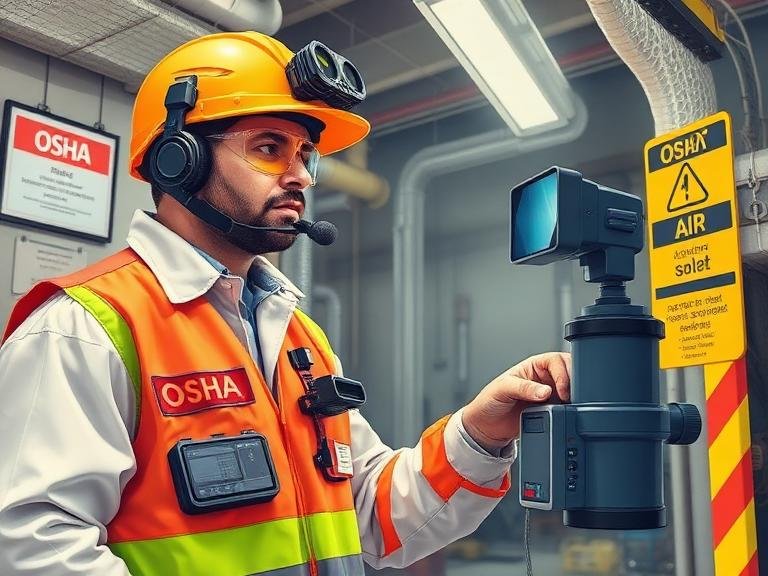
Carbon monoxide (CO) is often characterized as the silent killer because it is colorless, odorless, and tasteless. While standard residential alarms are designed to prevent immediate fatalities by alarming at high concentrations over time, they often fail to protect users from chronic, low-level exposure. For industrial hygienists, HVAC technicians, and safety managers, Carbon Monoxide Detectors with PPM Displays are indispensable tools. These professional-grade devices provide real-time digital readouts in parts per million (PPM), allowing for the detection of CO leaks long before they reach life-threatening levels.
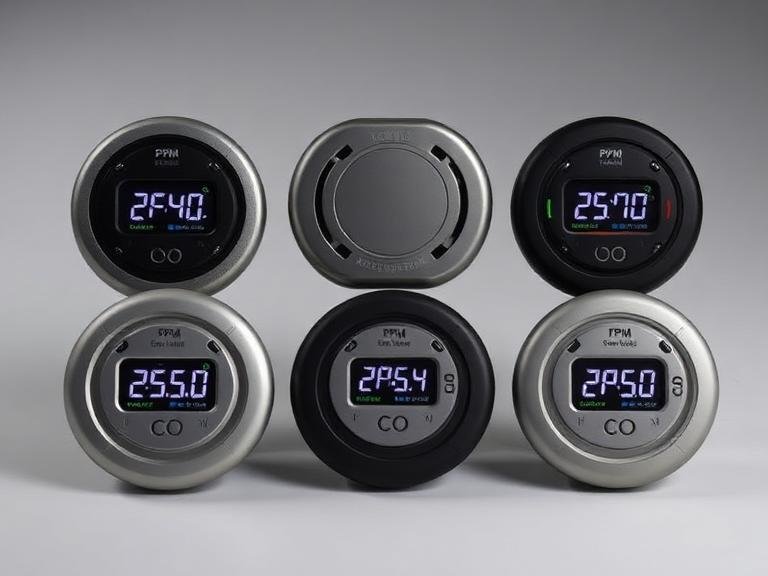
From our experience at Sino-Inst, the transition from simple binary alarms to precision instrumentation is critical for workplace safety. Whether you are monitoring a boiler room or ensuring the safety of a confined space, seeing the exact concentration—from 1 PPM to 1,000 PPM—is the only way to perform a proper risk assessment. In this guide, we analyze six of the best professional Carbon Monoxide Detectors with PPM Displays available in 2026, focusing on accuracy, sensor longevity, and specialized applications.
Table of Contents
- The Significance of PPM Displays in CO Detection
- Summary: Top 6 Carbon Monoxide Detectors with PPM Displays
- 1. Sino-Inst 900 Series Portable Single Gas Detector
- 2. Sino-Inst 900A Multi-Gas Detector (2-6 Gases)
- 3. Honeywell BW Solo Wireless CO Detector
- 4. MSA Altair 2P Single Gas Detector
- 5. Dräger Pac 6500 Professional CO Monitor
- 6. Industrial Scientific Tango TX1
- Technical Buying Guide for Professional CO Monitors
- Frequently Asked Questions
- References
The Significance of PPM Displays in CO Detection
Standard retail CO alarms typically follow UL 2034 standards, which often prevent the display of CO levels below 30 PPM to avoid nuisance alarms. However, for professionals, levels as low as 10 PPM can indicate faulty ventilation or the early stages of appliance failure. We recommend Carbon Monoxide Detectors with PPM Displays specifically because they offer the first-strike capability needed to diagnose environmental issues before they escalate.
In industrial settings, Carbon Monoxide Detectors with PPM Displays allow for the calculation of Time Weighted Averages (TWA). OSHA limits CO exposure to an average of 50 PPM over an 8-hour workday. Without a digital display showing the exact concentration, safety officers cannot accurately track cumulative exposure. At Sino-Inst, we integrate high-precision electrochemical sensors into our devices to capture these slight changes in gas concentration, ensuring that potential safety hazards are discovered in a timely manner.
Summary: Top 6 Carbon Monoxide Detectors with PPM Displays
| Model | Sensor Type | Display Range | Key Advantage |
|---|---|---|---|
| Sino-Inst 900 Series | Electrochemical (Pump-Suction) | 0-1000 PPM | Active sampling for remote leak detection |
| Sino-Inst 900A Multi-Gas | Customizable (Electrochemical/IR) | 0-2000 PPM | Monitors 2-6 gases simultaneously |
| Honeywell BW Solo | 1-Series Electrochemical | 0-1000 PPM | Wireless connectivity for fleet management |
| MSA Altair 2P | XCell Pulsed Technology | 0-1500 PPM | Extreme durability and 4-year sensor life |
| Dräger Pac 6500 | DrägerSensor XXS | 0-2000 PPM | Fastest response time in the industry |
| Industrial Scientific Tango TX1 | DualSense Technology | 0-1000 PPM | Redundant sensors for ultimate reliability |
1. Sino-Inst 900 Series Portable Single Gas Detector
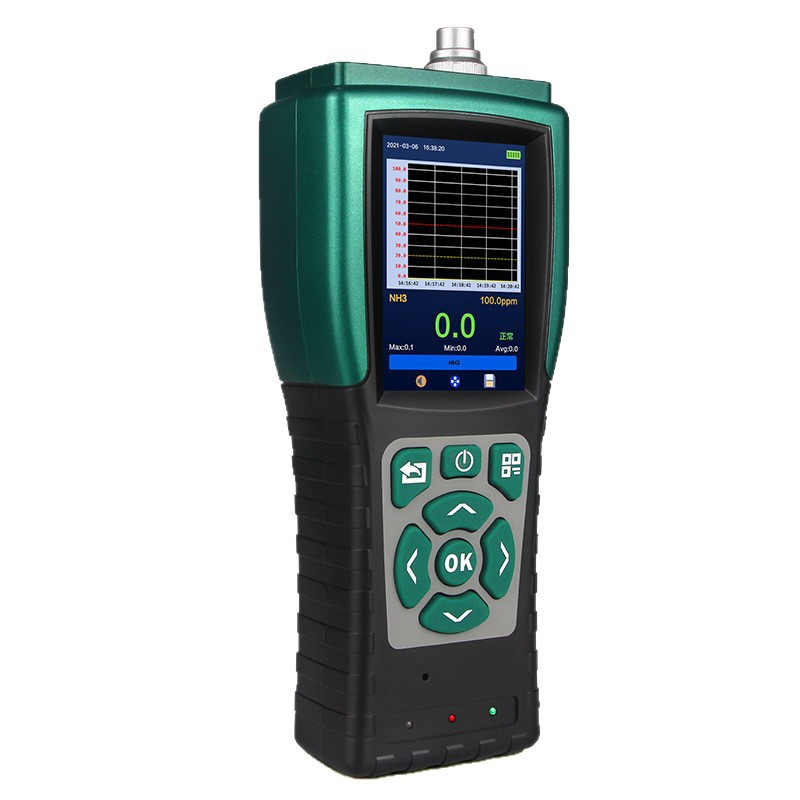
The Sino-Inst 900 series pump-suction portable gas detector is a detection device that can continuously monitor gas. Unlike diffusion-style monitors that wait for gas to reach the sensor, this device is equipped with a small internal gas pump. From our experience, active sampling is superior when you need to extract gas samples from hard-to-reach areas, such as behind boilers, inside ductwork, or in subterranean utility vaults.
The power supply drives the gas pump to extract gas samples from the test area, sending them directly to the instrument for detection. This allows for nearly instantaneous PPM readouts. The detector is equipped with an 1800mA capacity battery, which is light and easy to carry. It can accurately capture slight changes in CO concentration, providing the high-level precision required for industrial safety hazards discovery. For HVAC pros, we recommend the 900 series because of its ability to perform “point-and-shoot” diagnostics at flue exits.
Product link: Portable Gas Detector for Single Gas
2. Sino-Inst 900A Multi-Gas Detector (2-6 Gases)
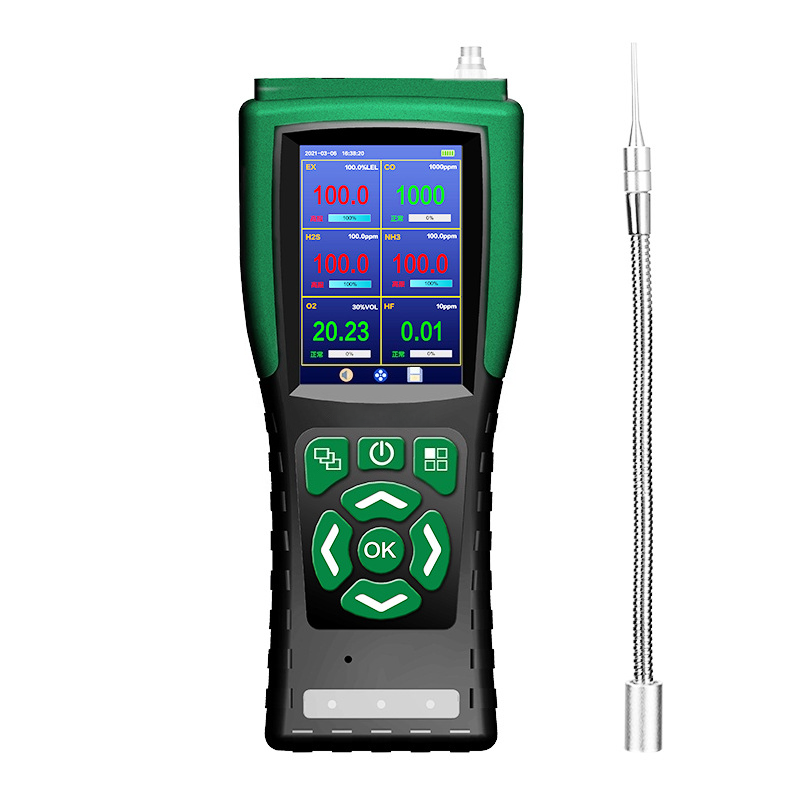
In many complex environments, carbon monoxide is rarely the only threat. The 900A Portable Multi Gas Detector is used for rapid detection of multiple gas concentrations, temperature, and humidity measurement. From our experience, multi-gas Carbon Monoxide Detectors with PPM Displays are essential in the wastewater, mining, and oil and gas industries where methane (CH4) or hydrogen sulfide (H2S) may coexist with CO.
This high-precision gas sensor utilizes multiple detection principles—including electrochemical, infrared, and PID photoionization—providing more accurate measurements and faster response. It allows for customizable gas configurations (2 to 6 gases). For example, it can detect concentrations of carbon monoxide, oxygen, and combustible gases simultaneously, with audible, visual, and vibration alarms. This is particularly valuable in situations involving multiple harmful and flammable gases, where a single-gas monitor might leave a technician blind to other atmospheric dangers.
Product link: Portable Multi Gas Detector for 2~6 Gases
3. Honeywell BW Solo Wireless CO Detector
Honeywell is a titan in the gas detection industry, and the BW Solo stands out as a reliable single-gas Carbon Monoxide Detector with a PPM Display. One of its primary innovations is the use of the 1-Series sensor, which provides high accuracy in extreme temperatures and humidity. We recommend the BW Solo for large-scale fleet management because of its wireless connectivity. Safety managers can view real-time PPM data from their team members via mobile apps, allowing for remote oversight in dangerous environments.
4. MSA Altair 2P Single Gas Detector
When durability is the top priority, the MSA Altair 2P is often the professional choice. It utilizes MSA’s patented XCell sensor technology, which includes a pulse check feature. This allows the device to verify sensor functionality without needing a full calibration gas test every single day (though bump tests are still recommended). From our experience, the Altair 2P is built for the “rough and tumble” nature of construction sites. Its display is clear and provides a stable PPM readout even in high-interference environments.
5. Dräger Pac 6500 Professional CO Monitor
Dräger is synonymous with precision German engineering. The Pac 6500 is a robust single-gas monitor that offers a high-resolution PPM display. What sets this device apart is the DrägerSensor XXS, which is designed for extremely fast T90 response times. In a gas leak scenario, every second counts. The Pac 6500 provides a nearly immediate digital readout, ensuring that workers can evacuate or don respiratory gear immediately. It is also designed with a “D-light” indicator to show that the device is tested and ready for use.
6. Industrial Scientific Tango TX1
The Tango TX1 is unique among Carbon Monoxide Detectors with PPM Displays because of its DualSense Technology. It uses two identical sensors to detect the same gas. The device then processes both signals through a proprietary algorithm to provide a single, highly accurate PPM readout. We recommend the Tango TX1 for critical safety applications where sensor failure is not an option. By having redundant sensors, the likelihood of a “missed” detection is reduced by a factor of hundreds compared to single-sensor devices.
Technical Buying Guide for Professional CO Monitors
When selecting Carbon Monoxide Detectors with PPM Displays, it is essential to look past the brand name and focus on the sensing technology and operational features. From our experience at Sino-Inst, the following criteria are non-negotiable for professional applications:
1. Sensing Principle: Electrochemical Cells
Virtually all high-quality Carbon Monoxide Detectors with PPM Displays use electrochemical sensors. These work by reacting with CO gas and producing an electrical signal proportional to the gas concentration. However, not all electrochemical cells are equal. Look for sensors with “filter” layers that prevent cross-sensitivity to hydrogen (H2), which can cause false positives in environments like battery charging stations.
2. Active Sampling vs. Diffusion
Diffusion monitors rely on natural air currents to bring gas to the sensor. While lighter and more affordable, they are slower to respond. Active sampling monitors, like the Sino-Inst 900 series, use an internal pump. If you are performing inspections or leak-seeking, active sampling is mandatory. If you are simply wearing the device for personal protection, a diffusion monitor is usually sufficient.
3. Data Logging and TWA Calculations
For safety compliance, simply seeing the PPM is not enough; you need a record of it. Professional Carbon Monoxide Detectors with PPM Displays should have data-logging capabilities that allow you to download history to a PC. This is vital for OSHA record-keeping and for identifying patterns in CO spikes throughout a shift.
4. Environmental Robustness
Industrial environments are often harsh. Ensure your detector has an IP rating (Ingress Protection) of at least IP66 or IP67. This ensures the device can withstand dust, rain, and accidental drops. At Sino-Inst, we also recommend considering devices that offer temperature and humidity compensation, as these factors can shift the baseline of an electrochemical sensor.
Beyond gas detection, Sino-Inst provides a full spectrum of process control instrumentation. For instance, in laboratory or industrial settings where gas monitoring is required, you may also need to manage fluid dynamics with Mass Flow Controllers/Meters or monitor aqueous environments using a pH/ORP Controller. A holistic approach to safety includes monitoring both atmospheric and liquid process variables.
Frequently Asked Questions
Why does my detector show 2 PPM even in “clean” air?
Electrochemical sensors can be sensitive to “background noise” or cross-sensitive to other gases like hydrogen. In some urban environments, a 1-3 PPM baseline is actually normal due to traffic exhaust. However, if the reading persists in a known clean environment, the device may require a “fresh air zero” calibration.
How often should I calibrate Carbon Monoxide Detectors with PPM Displays?
Most manufacturers recommend a “bump test” before each use and a full calibration every 6 to 12 months. Bump testing ensures the alarms and sensors react to a known concentration of gas, while calibration adjusts the sensor’s accuracy to account for natural drift over time.
Can these detectors be used for flue gas analysis?
While some Carbon Monoxide Detectors with PPM Displays can handle high levels, most personal safety monitors are limited to 1,000 or 2,000 PPM. Direct flue gas can exceed 10,000 PPM, which will “poison” or saturate a safety sensor. For flue analysis, a dedicated combustion analyzer is required.
What is the lifespan of a professional CO sensor?
Typically, electrochemical CO sensors last between 2 and 5 years. The electrolyte inside the sensor is eventually depleted. Most professional units will give an “End of Life” (EOL) warning when the sensor output becomes too weak for reliable detection.
References
- Occupational Safety and Health Administration (OSHA). (2026). Carbon Monoxide Standards. osha.gov
- National Institute for Occupational Safety and Health (NIOSH). (2026). Pocket Guide to Chemical Hazards: Carbon Monoxide. cdc.gov
- World Health Organization (WHO). (2026). Housing and Health Guidelines: Carbon Monoxide Levels. who.int
- Sino-Inst Gas Detection Lab. (2026). Technical Principles of Electrochemical Sensing. process-inst.com
In conclusion, professional Carbon Monoxide Detectors with PPM Displays are the gold standard for atmospheric safety. By providing real-time, low-level data, they empower professionals to make informed decisions and prevent chronic health issues. At Sino-Inst, we continue to innovate in the field of gas detection and liquid process control, providing everything from portable gas monitors to Conductivity and TDS Sensors. Safety is a multi-layered discipline; start with the best atmospheric monitoring available.