.png)
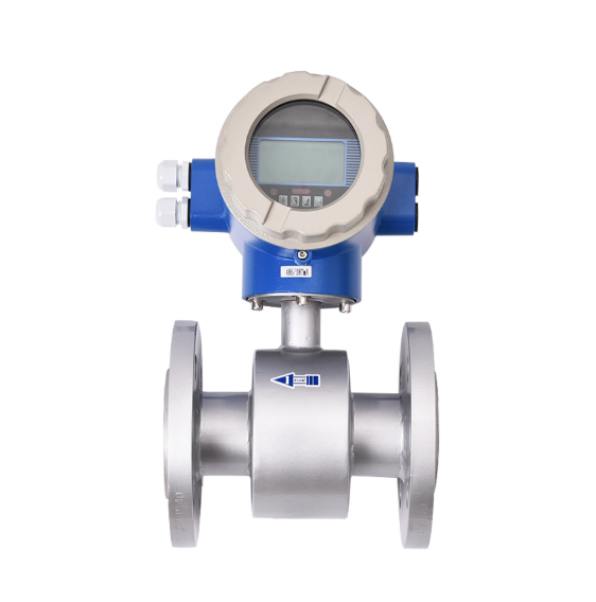
Flow meters are instruments for measuring the flow of fluid (liquid, gas and steam) in pipes or open channels and are one of the essential elements of industrial automation process control and energy metering. Flow meters monitor volumetric flow, mass flow or cumulative flow to give accurate flow data support for manufacturing process control, trade settlement, energy consumption management, environmental monitoring and other applications in real time. They are widely employed in many sectors of national economy, such as water supply, chemical industry, petroleum, power, metallurgy, food, medicines and environmental protection.
★★★★★
Quick product navigation
Basic definitions and technical jargon for flow meters
Basic Meaning
- Flow rate: The amount of fluid that moves past a certain point in a pipeline over a specified time period. There are two types of flow rate: instantaneous flow rate and cumulative flow rate.
- The instantaneous flow rate is the flow rate per unit of time (m 3 /h, L/s, t/h etc.
- Cumulative flow rate is the total amount of fluid flowing over a certain period of time and is measured in units such as m3, t, L, etc.
- Volume flow rate: The flow rate in terms of volume units, such as m ³ /h and L/min.
- Mass flow rate: Flow rate in mass units , e.g. kg/h , t/h .
Core performance parameters
- Measurement range The range between the minimum and maximum flow rates measurable by a flowmeter with acceptable accuracy. The range is sometimes quoted as a range ratio.
- Range Ratio: is the ratio of the maximum flow rate to the minimum flow rate. The bigger the ratio the larger the measurement range of the flowmeter.
- Accuracy / precision level: The closeness of the measured value of the flowmeter to the true value, usually given as a percentage of error, for example, ± 0.5%, ± 1.0%.
- Repeatability: This is the amount by which a flow rate can be measured numerous times under the same conditions and get a similar result.
- Response time: The time it takes for the flow meter output value to become steady after a change in flow rate.
- Pressure loss : The pressure decrease that occurs after the fluid passes through the flowmeter , and the larger the pressure drop , the more energy consumption .
- Nominal diameter (DN): This refers to the nominal diameter of the flowmeter interface in millimetres, and it should be equal to the size of the pipeline.
- Nominal pressure (PN) – is the maximum operating pressure of a flowmeter. It is expressed in MPa or bar.
Fluid property definitions
- Conductivity The capacity of conducting electricity per unit distance. This is an important metric for the application of electromagnetic flow meters, usually needing a conductivity of > 5 μ S/cm.
- Reynolds number (Re) A dimensionless number that characterises the condition of fluid flow such as laminar, transitional and turbulent flow and impacts the accuracy of a flowmeter’s measurement.
- Viscosity The measure of how thick a fluid is. The higher the viscosity the more resistance to flow. This has a big impact on mechanical flow meters such as floats and turbines.
- Gas content: The volume fraction of bubbles in a liquid. High gas content may adversely impact the measurement accuracy of electromagnetic, ultrasonic and other flow meters.
- Corrosivity: The fluid determines the corrosiveness of the flowmeter material chosen for the measurement tube, electrode and other flowmeter components.
Key points in flowmeter selection
Properties of fluids
- Liquids / gases / vapour Water / sewage / corrosive liquid / granular slurry
- Conductivity: Electromagnetic flowmeter needs conductivity ≥ 5μ S/cm
- Viscosity : High viscosity fluids are not suited for mechanical flow meters such as floats and turbines
- Corrosiveness: Strong acid and alkali need the associated anti-corrosion materials (such as PTFE lining, Hastelloy electrode)
- Particles/gas: Particles are more suitable for electromagnetic or Doppler ultrasound. Gas needs to install an air filter.
Parameters of operating conditions
- Flow range: within measurement range, minimum flow, maximum flow, common flow
- Pipeline diameter: The nominal diameter must be compatible with the pipeline
- Operating pressure: The flowmeter’s pressure resistance level needs to be higher than the actual operating pressure
- Working temperature: Fluid temperature should be within the permissible range of the flow meter
- Installation environment: indoor/outdoor, explosion-proof requirements, electromagnetic interference, vibration scenario
Accuracy and functional requirements
- Accuracy level: High precision (± 0.2%~± 0.5%) is selected for trade settlement, and slightly lower precision is optional for process control
- Output signal: 4-20mA, pulse, RS485, Modbus, HART and other communication methods
- Display function: Do you need to display instantaneous flow and cumulative flow on-site
- Power supply mode: 220VAC, 24VDC, battery power supply
- Data storage: Do you need functions such as historical data recording and IC card prepayment
Application Industry
- Water industry: flow measurement and monitoring of inflow and outflow of water plants, pipeline transmission, inflow and outflow of sewage treatment plants, and reuse of reclaimed water.
- Petrochemical industry: flow measurement and process control of crude oil, refined oil, chemical raw materials, intermediate products, wastewater, etc.
- Power industry: flow measurement of boiler feedwater, circulating water, cooling water, desulfurization and denitrification slurry, etc.
- Metallurgical industry: flow measurement of cooling water, circulating water, slurry, chemical agents, etc.
- Food and beverage: Flow measurement in the production process of purified water, beverages, dairy products, alcoholic beverages, sauces, etc.
- Pharmaceutical industry: flow measurement of purified water, injection water, drug solutions, process water, etc.

Why choose us?
Deeply involved in the field of water quality monitoring, with a mature product system and rich project experience, we can provide one-stop procurement and customized solutions. The product is stable and reliable, easy to operate and maintain, with a high pass rate, which can effectively help enterprises reduce costs, comply with emissions regulations, and provide reliable support for environmental protection.
Technical Support

How to Raise The pH in a Pool: Everything You Need to Know for 2026
How to Calibrate pH Meter: A Step-by-Step Guide for Accurate Readings
Top 5 Heavy-Duty Plastic pH Meter Sensors for Wastewater (2026)
Flow meters are important basic devices for industrial production, energy measurement and environment monitoring . Flowmeters with different measuring principles have their own advantages and areas of application. Sino Inst has four flowmeter product series, including electromagnetic flowmeter, float flowmeter, ultrasonic flowmeter and open channel flowmeter. It can meet the flow measurement needs of all industries such as water, chemical, power, environmental protection, food and pharmaceutical, and provide users with stable, dependable, accurate and efficient flow measurement solutions.
Request a Quote