.png)
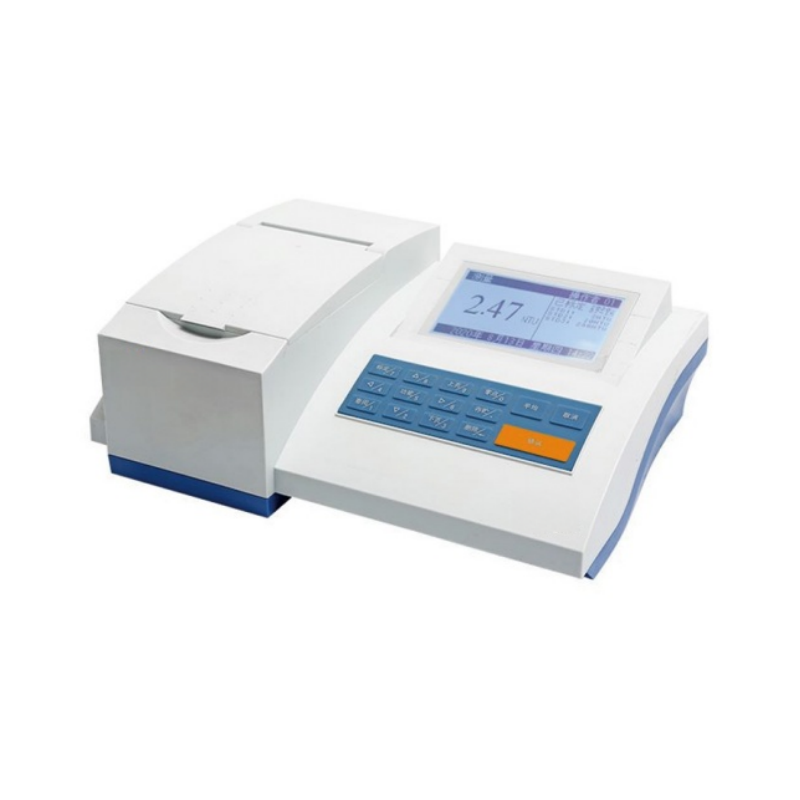
Laboratory turbidity meter WZS-185A strictly follows ISO 7027 and HJ 1075 standards. It has an 850nm LED light source, scattering transmission light measuring mechanism, automated chromaticity compensation, three-level range switching, and automatic zero adjustment. The instrument can store 2000 sets of data, allows USB communication and data export, and meets GLP standards. It also supports zero point and 6-point standard sample calibration. This robust and dependable solution for high turbidity and high-precision detection is compatible with REXDC2.0 data collecting software and is ideal for environmental monitoring, water quality analysis, and scientific research experiments.
★★★★★
Features
- LED light source, using 850 nm wavelength, meets ISO 7027 standard and HJ 1075 standard
- Adopting the principle of scattered transmitted light measurement, ratio calibration, and automatic chromaticity compensation
- Automatic range switching
- Supports zero point and up to 6-point calibration
- Supports average measurement function, compensating for reading fluctuations caused by random floating of suspended solids in the sample through average calculation
- Compliant with GLP standards, supports data retrieval and deletion, with a data storage capacity of up to 1000 sets
- Equipped with power-off protection function
Configuration List
- WZS-185A turbidity meter
- 5 turbidity bottles
- International universal power cord
- USB communication cable
- REXDC2.0 Thunder Magnetic Data Acquisition Software
- Instruction Manual
- Product Qualification Certificate
- Fuse Φ 5 × 20 (0.5A)
- Turbidity calibration solution (400NTU)
Parameters
| Category | Specifications |
|---|---|
| Measurement Principle | Scatter-transmitted light method, automatic color compensation, ratio calibration |
| Range & Accuracy | Measurement range: 0-20.00NTU / 20.0-200.0NTU / 200-1000NTU (auto-range); Error: ≤±6%; Repeatability: ≤0.5% |
| Core Performance | Zero drift: ±0.5%FS/30min; Stability: ≤±0.5%FS/30min; Average measurement function |
| Data Storage & Output | 2000 sets of data storage (search/delete supported); USB communication interface; REXDC2.0 software included |
| Power Supply | AC (220±22)V, 50±1Hz |
| Physical Specifications | Dimension: 330×250×130mm (L×W×H); Weight: ~2.5kg; Operating temp: 5-35℃; Relative humidity: ≤90% |
| Standard Configuration | Host: WZS-185A; Turbidity bottles (1 box); Power cord; USB cable; 3 fuses (Φ5×20 0.5A); Manual, Certificate & REXDC2.0 software |
Core Highlights
- The device has three ranges (0-1000NTU), automatic switching, ± 6% indication error, and 0.5% repeatability.
- The scattering transmission light measuring method stabilizes data, while the 850nm LED light source and automatic chromaticity compensation prevent sample color interference.
- Smart and simple, it can zero and calibrate six standard samples with nine preset settings. Reading changes as scattered particles move randomly, but average measurement function compensates.
- Good data management: 2000 data sets provide large-scale sample testing, date searches, single deletions, and batch cleaning. A PC can print GLP-compliant data from USB;
- The small, light body is easy to maintain and takes up little desk space. Turbidity bottle cleaning and power-off protection are standardized to protect calibration data and history.
Featured Applications
- Environmental monitoring: turbidity detection of surface water, groundwater, and industrial wastewater (high turbidity) to meet environmental monitoring compliance requirements;
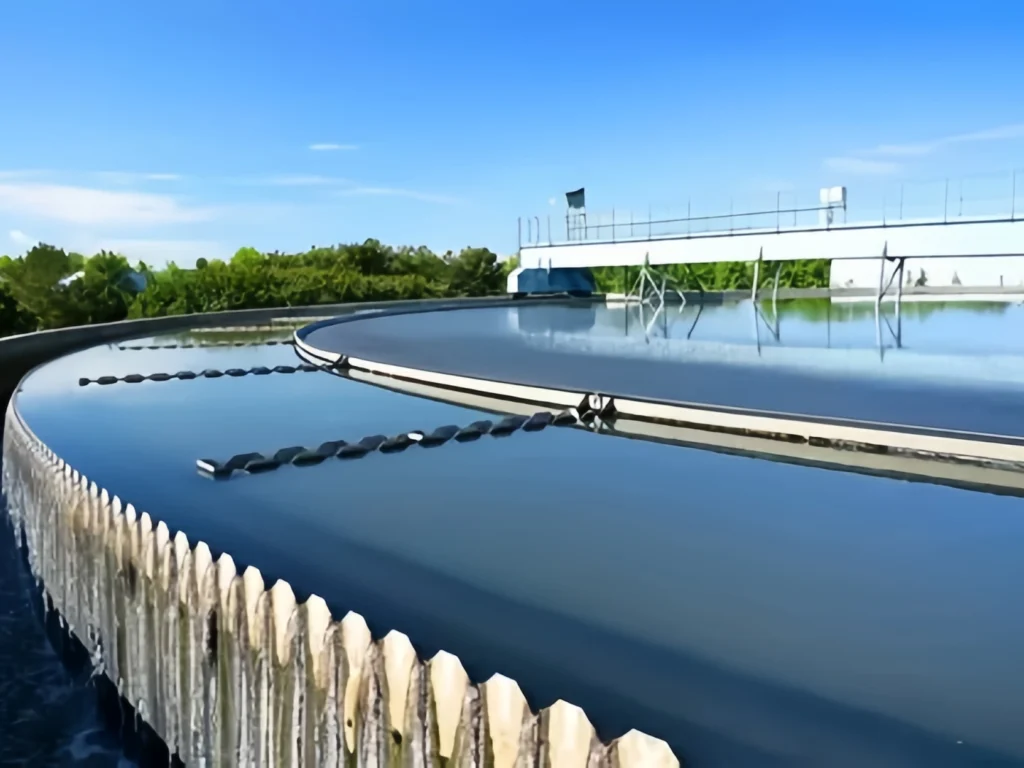
- Water industry: turbidity analysis of raw water from water plants and inlet and outlet water from sewage treatment plants, suitable for high turbidity inlet scenarios;
- Research experiments: Laboratory water quality research, analysis of sample turbidity characteristics, providing high-precision data support;
- Industrial quality inspection: Control water turbidity in production processes of chemical, printing and dyeing, power and other industries to ensure stable production processes.
Daily maintenance and precautions
Key points for operation and use
- Preparing samples Choose a haze-free turbidity bottle, rinse it with zero-turbidity water, then rinse the sample 2-3 times. Fill the bottle to the “+” mark and wipe out bubbles and fingerprints on the bottle wall;
- To calibrate, press “Zero / 0” to use automatic zero adjustment, then “Calibration / 7” to start the calibration procedure. Put standard samples in order of concentration, pick the standard value, and then click “OK.” Once it’s steady, wait one minute to calibrate;
- Put the sample bottle on the instrument’s line to measure and save data. When the reading stabilizes, press “Store /.” to save time, operator, etc. Optimize fluctuating data with “Average”.
- Data Export: Connect the PC via USB, install the FT232R driver and REXDC2.0 software, and export data at 9600bps, no parity, 8 data bits, and 1 stop bit.
Key points for preparing standard samples
- Zero turbidity water: Filter distilled water through a microporous membrane with a pore size of ≤ 0.2 µ m at least twice to obtain zero turbidity water;
- Standard solution: GBW12001 series Formazine standard substances can be selected, or 4000NTU mother liquor (5.0g hexamethylenetetramine+0.5g hydrazine sulfate, left at 25 ℃ for 24 hours) can be prepared according to ISO 7027 method, and then diluted to the desired concentration;
- Storage requirements: The mother liquor should be refrigerated at 4-8 ℃ and stored away from light. Diluted standard samples should be prepared as needed and cannot be stored for a long time.
Technical Support
Top 6 Industrial Gas Analyzers Manufacturers 2025
6 Best Industrial Gas Detector Manufacturers in the World
9 Best Portable Carbon Dioxide Detector 2025 – Complete Buying Guide
Top 7 portable combustion analyzer Tested
The WZS-185A laboratory turbidity analyzer, with its core advantages of wide range, high precision, and intelligent convenience, is suitable for high turbidity and high-precision detection needs. Automatic zeroing, multi-point calibration, efficient data management and other functions, combined with standard data acquisition software, simplify the experimental process, ensure accurate and traceable data, making it a reliable assistant for environmental monitoring, scientific research experiments and industrial quality inspection.
Request a Quote