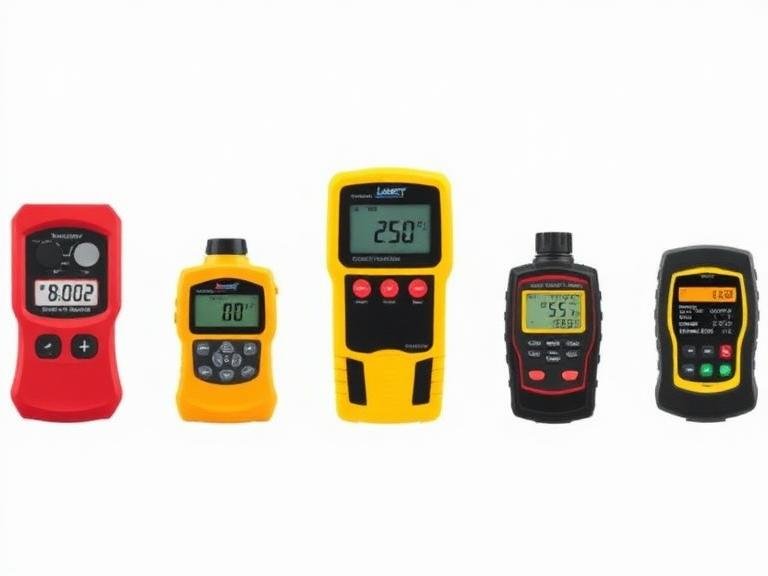
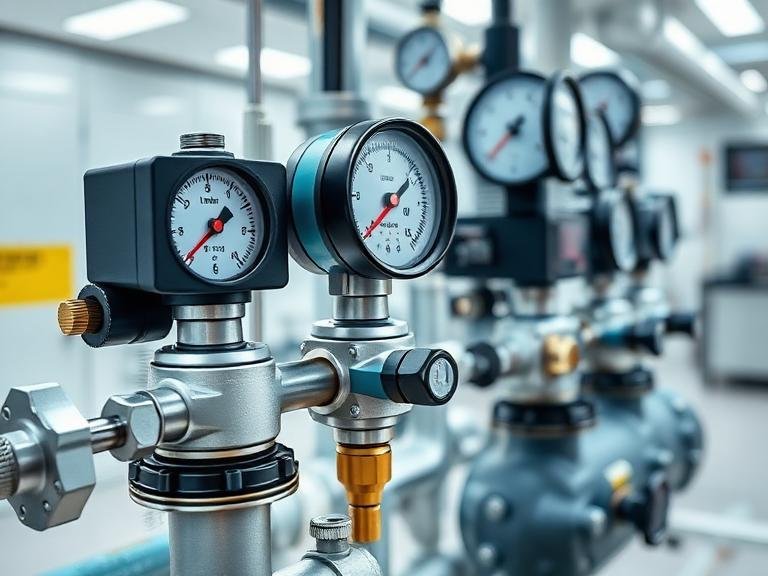
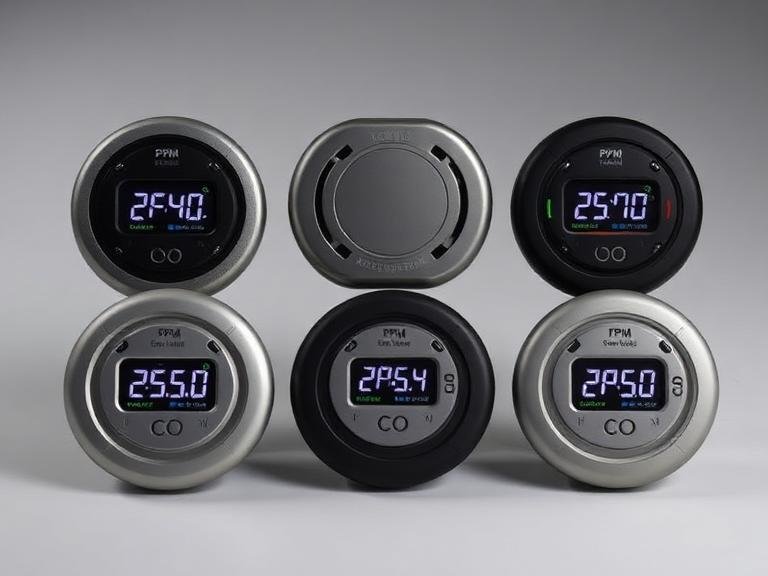
.png)
Industrial safety protocols have evolved significantly, but the fundamental dangers of confined spaces remain an ever-present threat. Workers in utilities, oil and gas, wastewater management, and manufacturing face invisible hazards daily. To mitigate these risks, deploying the Best 4 Gas Monitor for Confined Space is not just a regulatory requirement; it is a critical life-saving measure.
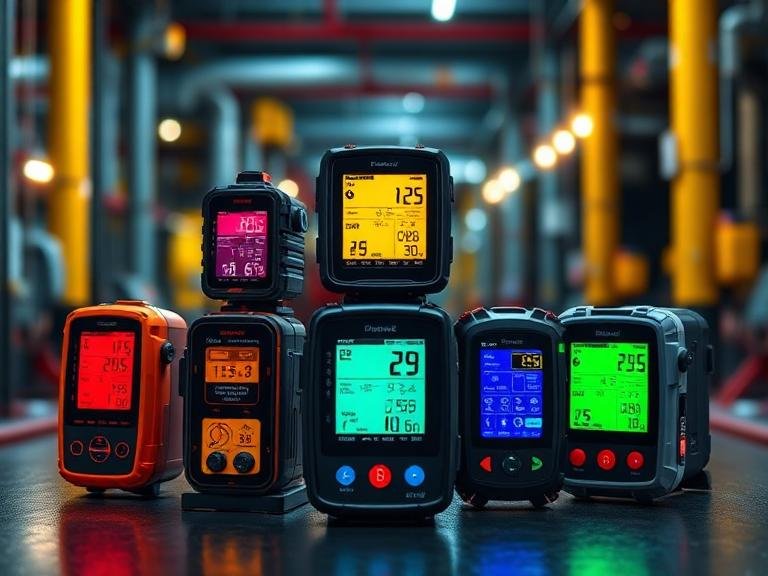
Table of Contents
- 1. Introduction to Confined Space Safety in 2026
- 2. How to Choose the Best 4 Gas Monitor for Confined Space
- 3. The 5 Best 4 Gas Monitor for Confined Space 2026
- 4. The Critical Role of Mass Flow Controllers in Monitor Calibration
- 5. Summary Table: Top Confined Space Monitors
- 6. Frequently Asked Questions (FAQs)
- 7. References and Standards
1. Introduction to Confined Space Safety in 2026
A standard 4 gas monitor detects the four most common atmospheric hazards found in enclosed environments: Lower Explosive Limit (LEL) for combustible gases, Oxygen (O2) deficiency or enrichment, Carbon Monoxide (CO), and Hydrogen Sulfide (H2S). From our experience at Sino-Inst, possessing the Best 4 Gas Monitor for Confined Space is only the first step. The monitor must be highly responsive, mechanically rugged, and, crucially, calibrated with absolute precision. In 2026, technology has introduced connected safety ecosystems, infrared sensor advancements, and unparalleled data logging capabilities, making the selection process more nuanced than ever.
2. How to Choose the Best 4 Gas Monitor for Confined Space
Identifying the Best 4 Gas Monitor for Confined Space requires a thorough understanding of your specific industrial environment. We recommend evaluating devices based on the following professional criteria:
- Sampling Method: Active pumped monitors draw air from the confined space before entry, which is essential for pre-entry clearance. Diffusion monitors rely on natural air movement and are worn by the user during the job.
- Sensor Technology: While catalytic bead sensors have been the standard for LEL detection, Non-Dispersive Infrared (NDIR) sensors are becoming prevalent in 2026 due to their immunity to sensor poisoning and operation in oxygen-depleted environments.
- Connectivity: The Best 4 Gas Monitor for Confined Space in 2026 should feature wireless connectivity (Bluetooth, Wi-Fi, or cellular) to transmit real-time data and man-down alarms to safety supervisors.
- Durability: Look for high IP ratings (IP68) ensuring the device is impervious to water and fine industrial dust.
3. The 5 Best 4 Gas Monitor for Confined Space 2026
Based on rigorous industry standards, sensor accuracy, and operational durability, here is our expert analysis of the top configurations that represent the Best 4 Gas Monitor for Confined Space in 2026.
3.1. The Ultra-Rugged Pumped Monitor
For pre-entry clearance, a pumped monitor is non-negotiable. The leading models in this category feature integrated motorized pumps capable of drawing samples from up to 100 feet away. The Best 4 Gas Monitor for Confined Space in this class utilizes dual-sensor technology, minimizing the footprint while maximizing detection speed. From our experience, we recommend these heavy-duty units for municipal sewer entry and deep-shaft mining operations, where sampling vertical drops is a daily necessity.
3.2. The Smart Connected Wearable
In 2026, the Internet of Things (IoT) has transformed industrial safety. The connected wearable is frequently cited as the Best 4 Gas Monitor for Confined Space for large-scale operations. These lightweight diffusion monitors pair with smartphone applications or facility mesh networks. If a worker is exposed to dangerous H2S levels or suffers a fall (detected via built-in accelerometers), the device instantly relays the exact location and gas reading to a central dashboard. This drastically reduces emergency response times.
3.3. The Extreme Battery Life Diffusion Monitor
Downtime due to uncharged safety equipment is a major operational bottleneck. The Best 4 Gas Monitor for Confined Space for continuous shift work utilizes advanced low-power sensors and high-density lithium-ion batteries, offering run times exceeding 60 hours on a single charge. We recommend these units for extended turnaround projects in refineries where workers operate in 12-hour shifts and instrument charging logistics are challenging.
3.4. The NDIR Sensor Integrated Monitor
Traditional catalytic bead LEL sensors require oxygen to function and can be permanently damaged by silicones or heavy sulfur compounds. The Best 4 Gas Monitor for Confined Space dealing with inert environments incorporates NDIR sensors. NDIR technology uses infrared light to detect combustible gases, completely bypassing the need for oxygen and remaining immune to standard industrial poisons. For petrochemical tank cleaning, this is the superior technological choice.
3.5. The Compact Tactical Monitor
Often used by emergency responders and specialized tactical teams, this iteration of the Best 4 Gas Monitor for Confined Space prioritizes extreme compactness and rapid deployment. Despite being barely larger than a smartphone, it features aggressive visual, vibrating, and 100-decibel audible alarms. Its robust casing can withstand drops onto concrete from 20 feet, making it the most durable option for high-intensity extraction scenarios.
4. The Critical Role of Mass Flow Controllers in Monitor Calibration
Even the Best 4 Gas Monitor for Confined Space is rendered useless if its sensors are out of calibration. Regular bump testing and certified calibration are mandated by OSHA. This process involves exposing the sensors to a known concentration of calibration gas to verify accuracy.
From our professional standpoint at Sino-Inst, the integrity of this calibration gas delivery is paramount. Calibration benches and automated docking stations rely on high-precision mass flow controllers to mix and dispense these gases accurately. Variations in pressure or flow can lead to false calibrations, putting lives at risk.
4.1. Sino-Inst Flow Control Solutions for Gas Mixing

We recommend integrating advanced fluid measurement technologies into any facility that maintains a fleet of gas monitors. Our proprietary flow control instruments ensure that calibration gases are delivered with flawless precision.
- SI-10FDR Series Low Differential Pressure Gas Mass Flow Controller: The SI-10FDR LOW-ΔP Mass Flow Controller is designed for mass flow control in systems with minimal available pressure. Equipped with a proprietary high-flow electromagnetic valve, its low pressure drop ensures minimal system impact, enabling flow control near atmospheric pressure conditions and reducing system response time. We customize valve and PID control functionality based on your application parameters, ensuring rapid, stable control while maintaining low pressure loss—ideal for delicate sensor calibration setups.
- SI-10FC Gas Mass Flow Controller with Laminar Differential Pressure (DP) Technology: The SI-10FC laminar differential pressure mass flow controller is designed based on the law of conservation of mass, Bernoulli’s equation, and Hagen-Poiseuille’s law. It calculates the mass flow rate of a fluid by measuring the pressure difference across the pipe. It features no thermal drift and no response hysteresis, and can simultaneously display and output instantaneous flow rate, cumulative flow rate, pressure, and temperature. For additional control functions, an electromagnetic proportional control valve and built-in PID control can be added, making it perfect for dynamic gas mixing stations supporting the Best 4 Gas Monitor for Confined Space.
- SI-30FC Compact DP Mass Flow Controller for Gases: The SI-30FC is a high-precision DP Mass Flow Controller for Gases series. It features a compact design with a large screen for enhanced convenience and user-friendliness. This series utilizes a differential pressure mass measurement principle with no thermal drift and no response hysteresis. It can simultaneously display and output instantaneous flow rate, cumulative flow rate, pressure, temperature, etc. Its compact footprint makes it highly suitable for mobile calibration carts used in the field.
5. Summary Table: Top Confined Space Monitors
| Monitor Archetype | Best Application | Sensor Tech Advantage | Battery Life | Connectivity |
|---|---|---|---|---|
| Ultra-Rugged Pumped | Pre-entry clearance, Deep shafts | Active sampling, long-distance draw | ~14 to 18 Hours | Standard / Bluetooth |
| Smart Connected Wearable | Large industrial plants, Lone workers | Man-down alarms, real-time data | ~20 Hours | Wi-Fi, Cellular, Mesh |
| Extreme Battery Diffusion | Turnarounds, Shift work | Low power consumption sensors | 60+ Hours | Bluetooth Low Energy |
| NDIR Integrated | Petrochemical, Inert environments | Immune to sensor poisons, no O2 needed | ~24 Hours | Standard |
| Compact Tactical | Emergency response, Rescue teams | Rapid response, extreme shock resistance | ~18 Hours | Bluetooth / Local Radio |
6. Frequently Asked Questions (FAQs)
7. References and Standards
To ensure total compliance and safety, we recommend consulting the following authoritative bodies regarding confined space monitoring and instrument calibration standards: