.png)
In the high-stakes environment of emergency response, occupational safety is the paramount concern for firefighters. Structural fires, confined space rescues, hazmat incidents, and overhaul operations all present severe atmospheric hazards. Fire personnel routinely encounter toxic gases, oxygen-deficient environments, and explosive combustible limits. Identifying the Best 4 gas monitor for fire Department use is an absolute necessity to ensure that crews return home safely after every call. At Sino-Inst, we specialize in high-precision measurement instrumentation, and we understand the unforgiving demands placed on gas detection technology in extreme environments.
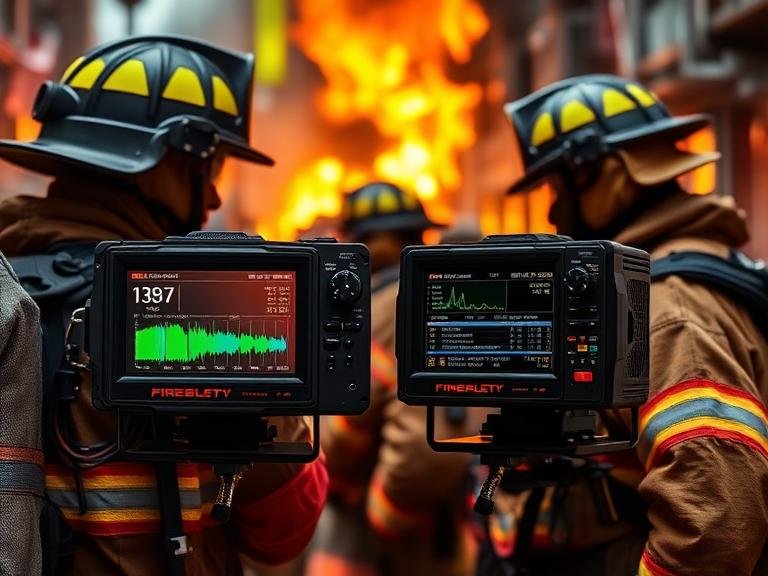
A standard 4 gas monitor typically detects oxygen (O2), carbon monoxide (CO), hydrogen sulfide (H2S), and combustible gases (LEL – Lower Explosive Limit). However, modern firefighting demands go beyond the basics. From our experience, the Best 4 gas monitor for fire Department applications must be incredibly rugged, feature rapid sensor response times, and provide unmistakable audible, visual, and vibrating alarms. Furthermore, as overhaul phases introduce unique particulate hazards, integrating comprehensive air quality monitoring is becoming a vital standard operating procedure.
In this authoritative guide, we will analyze the vital features required for emergency response gas detection and review the six top options on the market. We recommend reviewing these choices carefully to equip your department with the lifesaving technology required for modern fire ground operations.
Table of Contents
Summary Table: The 6 Best 4 Gas Monitors
To assist procurement officers and safety chiefs, we have compiled a summary table of the premier gas detection devices suitable for emergency responders. Choosing the Best 4 gas monitor for fire Department deployment depends on your specific operational needs and budget constraints.
| Rank | Product Model | Target Gases/Hazards | Key Advantage for Fire Departments |
|---|---|---|---|
| 1 | Sino-Inst Portable Multi Gas Detector | O2, CO, H2S, LEL (Up to 6 gases) | Customizable sensors (PID, Infrared), ultra-rapid response |
| 2 | MSA Altair 4XR | O2, CO, H2S, LEL | Military-grade ruggedness, Bluetooth connectivity |
| 3 | Honeywell BW MicroClip X3 | O2, CO, H2S, LEL | Compact, lightweight, extended battery life |
| 4 | Dräger X-am 2500 | O2, CO, H2S, LEL | Highly durable catalytic ex-sensor for combustible gases |
| 5 | Industrial Scientific Ventis MX4 | O2, CO, H2S, LEL | Highly adaptable with slide-on pump compatibility |
| 6 | Sino-Inst Portable Dust Monitor | PM0.3, PM0.5, PM1.0, PM2.5, PM5.0, PM10 | Critical for fire overhaul and particulate matter hazard detection |
Why Fire Departments Need Specialized Monitors
Firefighters operate in dynamic environments where atmospheric conditions can deteriorate in seconds. A standard industrial gas meter is often insufficient for fire ground use. When evaluating the Best 4 gas monitor for fire Department use, one must consider the extremes of temperature, water exposure from fire hoses, and physical impact. During the overhaul phase of a fire, where visible smoke has cleared, deadly concentrations of Carbon Monoxide and Hydrogen Cyanide (the “toxic twins”) often remain. Without the Best 4 gas monitor for fire Department operations, firefighters might prematurely remove their Self-Contained Breathing Apparatus (SCBA), exposing themselves to long-term health risks.
Furthermore, confined space rescues (such as trench collapses or sewer rescues) require accurate reading of Oxygen levels and Hydrogen Sulfide. The Best 4 gas monitor for fire Department applications provides the critical data needed by the Incident Commander to determine the appropriate level of personal protective equipment (PPE) and tactical approach.
Key Features of the Best 4 Gas Monitor for Fire Department Use
From our experience in instrumentation manufacturing, we recommend that fire departments prioritize the following technical specifications when selecting a gas detection unit:
- Sensor Technology: Look for devices offering a mix of catalytic bead (for LEL), electrochemical (for toxic gases and oxygen), and infrared or PID (Photoionization Detector) options for complex volatile organic compounds (VOCs).
- Ingress Protection (IP) Rating: The Best 4 gas monitor for fire Department use must have an IP68 rating, ensuring it is highly resistant to fine dust and can withstand continuous immersion in water.
- Alarm Mechanisms: In a noisy fireground, a visual screen is not enough. The device must feature high-decibel audible alarms (usually 95dB or higher), bright flashing LED lights, and a strong vibrating alarm to alert the wearer through thick turnout gear.
- Data Logging and Connectivity: Modern incident command requires real-time data. Devices with Bluetooth telemetry can transmit atmospheric readings directly to a command tablet outside the hazard zone.
- Pump vs. Diffusion: For confined space entry, a monitor that can attach to a motorized sampling pump is crucial to test the air prior to a firefighter entering the space.
Detailed Reviews of the Top 6 Monitors
1. Sino-Inst Portable Multi Gas Detector for 2~6 Gases

When versatility and precision are required, the Sino-Inst 900A Portable Multi Gas Detector stands out as a top contender for the Best 4 gas monitor for fire Department use. This device is engineered for portable and rapid detection of multiple gas concentrations, temperature and humidity measurement, and alarms when exceeding the standard.
While standard monitors are limited to four gases, our detector can be customized for 2 to 6 gases. For example, it can detect concentrations of carbon monoxide, oxygen, hydrogen sulfide, methane (combustible gas), carbon dioxide, or other toxic and hazardous gases, with audible, visual, and vibration alarms. This high-precision gas sensor utilizes detection principles such as infrared, electrochemical, laser, catalytic combustion, thermal conductivity, and PID photoionization, providing more accurate measurements and faster response. The Portable Multi Gas Detector is widely used in complex, changeable, and potentially dangerous working environments, making it arguably the Best 4 gas monitor for fire Department specialized hazmat and overhaul teams.
2. MSA Altair 4XR
The MSA Altair 4XR is widely considered an industry standard and is frequently cited as the Best 4 gas monitor for fire Department line personnel. Its standout feature is its extreme ruggedness; it is drop-tested to military standards and features an IP68 waterproof rating. The Altair 4XR utilizes proprietary XCell sensors that offer incredibly fast response and clear times. Furthermore, its integrated Bluetooth connectivity allows the device to pair with a smartphone app, sending real-time hazard alerts and man-down alarms directly to incident commanders.
3. Honeywell BW MicroClip X3
For departments prioritizing weight and simplicity, the Honeywell BW MicroClip X3 is an excellent choice. Finding the Best 4 gas monitor for fire Department use often means finding a device that firefighters will actually wear comfortably without it interfering with their gear. The MicroClip X3 is ultra-compact and operates with a simple one-button interface, which is crucial when wearing thick structural firefighting gloves. It boasts an extended battery life and reliable electrochemical and catalytic bead sensors for standard four-gas detection.
4. Dräger X-am 2500
Dräger has a long history of providing elite safety equipment to the fire service. The X-am 2500 is specifically designed for personal protection and excels in detecting O2, CO, NO2, SO2, and H2S. It earns its place on the list of the Best 4 gas monitor for fire Department options due to its highly mature and durable catalytic Ex-sensor. This sensor has a high resistance to silicone and hydrogen sulfide poisoning, which frequently degrades inferior sensors. Its ergonomic design and excellent battery management make it a reliable workhorse for any firehouse.
5. Industrial Scientific Ventis MX4
The Ventis MX4 by Industrial Scientific is highly regarded for its adaptability. What makes it one of the Best 4 gas monitor for fire Department choices is its seamless transition between personal monitoring and confined space sampling. The device can be used as a standard diffusion monitor on a firefighter’s lapel or quickly attached to a slide-on motorized pump to draw air samples from deep trenches or manholes up to 50 feet away. Its rugged overmold protects against impact, and it integrates perfectly with the company’s iNet docking stations for automated maintenance.
6. Sino-Inst Portable Dust Monitor
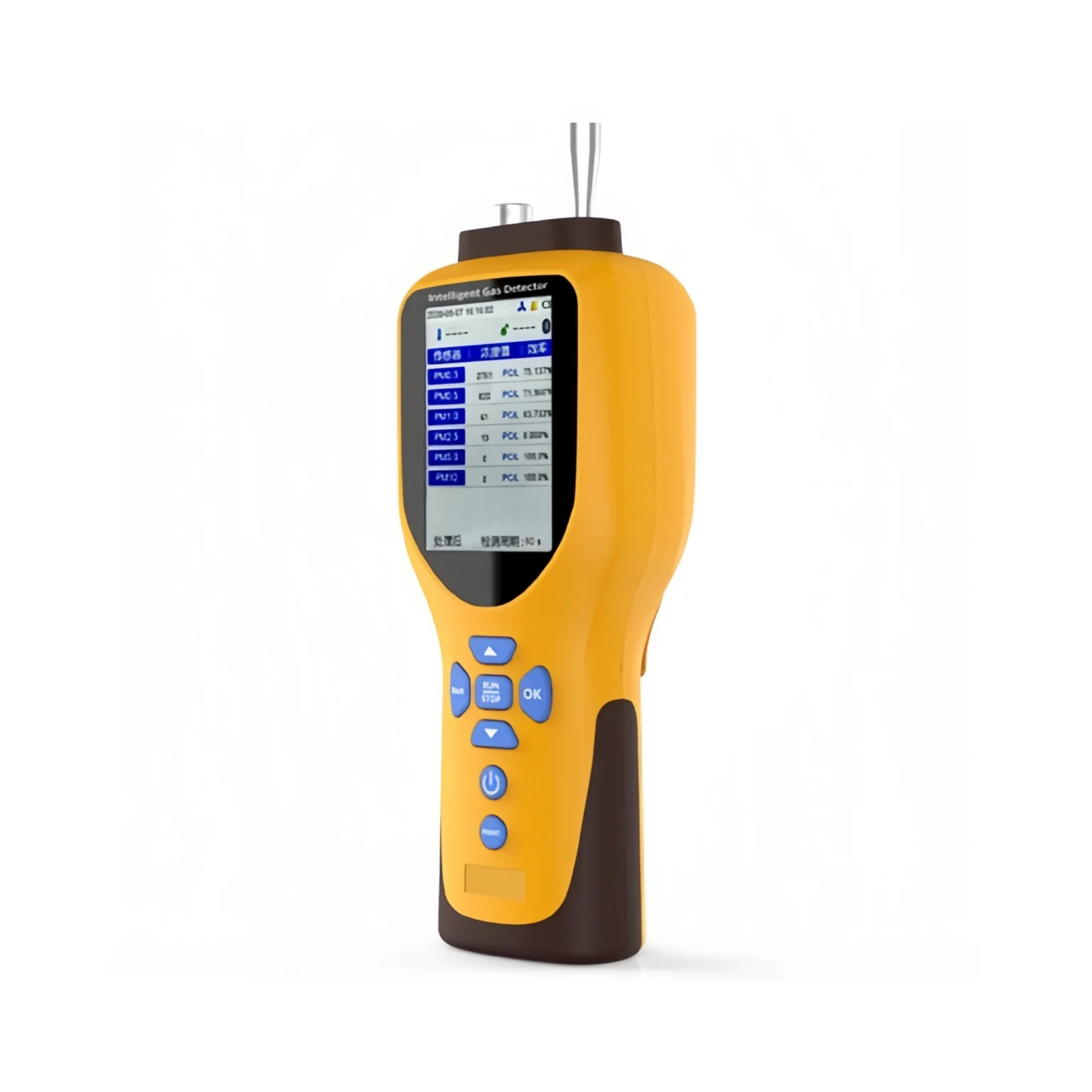
While not a traditional gas monitor, no list regarding fire department air quality is complete without addressing particulate hazards. During the overhaul phase of a fire, toxic dust and carcinogenic particulates remain suspended in the air. We recommend pairing your gas detection strategy with the Sino-Inst Portable Dust Monitor.
The Portable Dust Monitor is mainly used to quickly detect the concentration of dust and particulate matter such as PM2.5 and PM10 in the environment. Sound, light, and vibration alarms are issued when the concentration exceeds the limit. It can measure the number of dust particles of various sizes at the same time. It can detect up to 4-6 particle sizes simultaneously: PM0.3, PM0.5, PM1.0, PM2.5, PM5.0, and PM10. It can also be equipped with a temperature and humidity measurement function. Using this alongside the Best 4 gas monitor for fire Department use provides a comprehensive shield against invisible respiratory threats.
Expert Advice on Calibration and Maintenance
Possessing the Best 4 gas monitor for fire Department use is entirely useless if the device is not properly maintained. From our experience in sensor manufacturing, sensor drift is an unavoidable physical reality. Electrochemical sensors deplete over time, and catalytic sensors can be poisoned by external contaminants.
We recommend a strict protocol of daily bump testing. A bump test briefly exposes the monitor to a known concentration of test gas to verify that the sensors respond and the alarms activate. This is the only way to know the device will function during an actual emergency. Furthermore, full calibration should be conducted every 30 days, or according to the manufacturer’s specific guidelines. Utilizing automated docking stations can streamline this process for busy fire departments, ensuring that every monitor in the fleet is compliant and ready for service.
Frequently Asked Questions (FAQs)
The standard four gases are Oxygen (O2), Carbon Monoxide (CO), Hydrogen Sulfide (H2S), and Combustible Gases (measured as a percentage of the Lower Explosive Limit, or LEL). Finding the Best 4 gas monitor for fire Department use ensures accurate detection of these specific, common hazards.
PID (Photoionization Detector) technology allows the monitor to detect Volatile Organic Compounds (VOCs) at very low parts-per-million (ppm) levels. This is critical during hazmat responses and fire overhaul, where burning synthetic materials release complex, toxic chemicals. The Sino-Inst Portable Multi Gas Detector can integrate PID sensors, elevating it to the Best 4 gas monitor for fire Department hazmat teams.
From our experience and in accordance with leading safety standards, a bump test should be performed prior to each day’s use. For a fire department, this means integrating bump testing into the morning apparatus and equipment checkout routine.
While the Best 4 gas monitor for fire Department applications detects invisible toxic gases, it does not detect physical particulate matter. Fire environments, especially during demolition and overhaul, are thick with carcinogenic ash, asbestos, and PM2.5 particles. The Sino-Inst Portable Dust Monitor bridges this gap in safety protocols.
References
For further authoritative guidance on gas detection protocols, confined space entry, and occupational safety for emergency responders, we recommend consulting the following regulatory bodies: