.png)
Helium is a unique element. It is the second lightest element in the universe, chemically inert, non-flammable, and possesses the smallest atomic size of any gas molecule. These properties make it invaluable for everything from cooling MRI magnets to pressurizing rocket fuel tanks. However, because it is colorless, odorless, and tasteless, detecting its presence or absence presents a significant engineering challenge.

Whether you are a quality assurance engineer ensuring a vacuum seal is tight, or a safety officer monitoring gas levels, the question remains: how do you test for helium accurately and reliably? Unlike reactive gases that can be detected via chemical sensors, helium requires physical detection methods. This guide delves deep into the methodologies, equipment, and best practices for helium detection in 2026.
- 1. Why is Testing for Helium Critical?
- 2. The Physics: How Do You Test for Helium?
- 3. Helium Mass Spectrometry (The Gold Standard)
- 4. Thermal Conductivity Detectors (TCD)
- 5. Practical Leak Detection Methods: Sniffer vs. Vacuum
- 6. Industrial Solutions: Sino-Inst Technologies
- 7. Challenges in Helium Testing
- 8. Summary Comparison of Methods
- 9. Frequently Asked Questions (FAQs)
- 10. References
1. Why is Testing for Helium Critical?
Before understanding the “how,” we must understand the “why.” Helium is predominantly used as a tracer gas. Because its atoms are so small, they can pass through leaks that other gases (like nitrogen or oxygen) cannot. If a vessel can hold helium, it can hold almost anything.
The question of how do you test for helium is usually asked in three specific contexts:
- Leak Detection: This is the most common application. Manufacturers of HVAC systems, automotive fuel tanks, and semiconductor vacuum chambers use helium to find microscopic leaks.
- Purity Analysis: In welding and medical applications, the purity of helium is paramount. Contamination can lead to poor welds or equipment malfunction.
- Flow Measurement: In industrial processing, measuring the exact mass flow of helium is essential for mixing and pressurization consistency.
2. The Physics: How Do You Test for Helium?
Since helium does not react chemically, you cannot use standard electrochemical sensors found in typical carbon monoxide or oxygen detectors. Instead, engineers rely on physical properties.
The two primary physical properties exploited are:
- Ionization Potential/Mass: Used in mass spectrometry. Helium is ionized and separated by its specific atomic mass (Mass 4).
- Thermal Conductivity: Helium conducts heat much faster than air or nitrogen. By measuring the cooling rate of a heated filament, one can determine the concentration of helium.
When you ask an expert how do you test for helium, they will likely ask about the sensitivity required. Do you need to find a leak that releases one bubble every ten years? Or do you need to know if a tank is 99% or 95% helium?
3. Helium Mass Spectrometry (The Gold Standard)
For high-sensitivity applications, the Helium Mass Spectrometer Leak Detector (HMSLD) is the industry standard. This device is essentially a particle accelerator in miniature.
How it Works
The process inside an HMSLD is fascinating and precise:
- Inlet: Gas is drawn from the test area into the analyzer cell, which is under high vacuum.
- Ionization: A filament emits electrons that collide with the gas molecules, stripping away electrons and turning them into positively charged ions.
- Acceleration: These ions are accelerated by an electric field.
- Separation: The ion beam passes through a magnetic field. Because lighter ions deflect more than heavier ions in a magnetic field, the system is tuned specifically to bend Helium-4 ions at a precise angle (usually 90 degrees).
- Detection: Only the helium ions hit the detector plate, creating a small electrical current. This current is directly proportional to the amount of helium present.
This method answers how do you test for helium with extreme precision, capable of detecting leaks as small as 1 x 10^-12 mbar·l/s.
4. Thermal Conductivity Detectors (TCD)
While mass spectrometry is sensitive, it is also expensive and requires a high vacuum. For applications involving higher concentrations of helium (percent level rather than parts per million), Thermal Conductivity Detectors (TCD) are preferred.
Helium has a thermal conductivity approximately six times higher than that of nitrogen or air. A TCD sensor typically contains two cells: a reference cell containing a known gas (like air) and a measurement cell containing the sample gas. Heated filaments are suspended in both cells.
If helium enters the measurement cell, it pulls heat away from the filament faster than the air in the reference cell. The temperature of the measurement filament drops, changing its electrical resistance. A Wheatstone bridge circuit measures this resistance change and converts it into a helium concentration reading. This is often how you test for helium in welding mixtures or balloon gas purity.
5. Practical Leak Detection Methods: Sniffer vs. Vacuum
In industrial manufacturing, the methodology is just as important as the sensor technology.
The Vacuum Method (Inside-Out)
This is used for sealed parts like airbags or refrigeration components. The part is placed inside a vacuum chamber. The part is pressurized with helium. If there is a leak, helium escapes into the vacuum chamber, where it is detected by the mass spectrometer. This provides a quantitative measurement of the total leak rate.
The Sniffer Method (Outside-In)
The part is pressurized with helium. An operator uses a probe (sniffer) connected to the detector and moves it along the seams and joints of the part. If helium is escaping, the sniffer sucks it in and the alarm sounds. This answers how do you test for helium leaks location-wise, allowing for repair.
6. Industrial Solutions: Sino-Inst Technologies
Finding reliable equipment to implement these testing strategies is critical for operational success. Whether you need precise flow measurement during the filling process or multi-gas detection for safety, partnering with an experienced manufacturer is key.
Sino-Inst: Your Partner in Precision Measurement
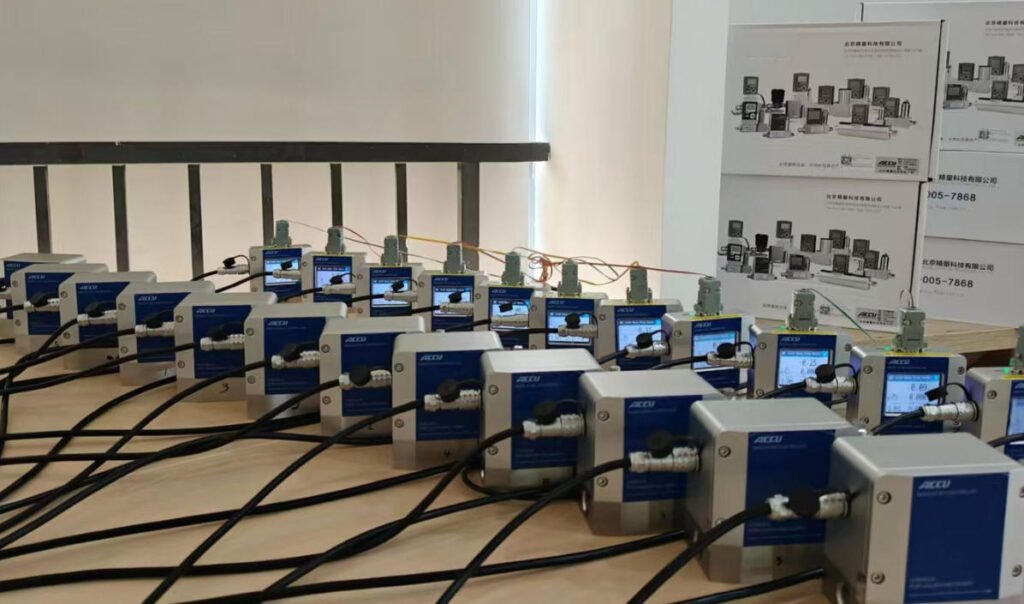
Sino-Inst is a professional supplier of industrial process and analytical instruments, including gas detectors, gas analyzers, dust detectors, mass flow controllers, and dust monitors. We can help you obtain reliable measurement and analysis solutions while saving procurement costs. Customized products and OEM services are available. We will be your most trusted partner!
When considering how do you test for helium flow and presence in complex systems, we recommend the following solutions:
Recommended Tester for Helium Applications:
- SI-20FD-HM High Accuracy Mass Flow Meter Ultra-Large Range: Specifically designed to handle the unique flow characteristics of noble gases like helium. It ensures that the exact amount of tracer gas is injected into your system for testing.
- VOC Gas Detector | Customized Multi-Gas Detection: While standard VOC detectors target organic compounds, our customized multi-gas solutions can be configured to monitor the environment for various gases, ensuring overall safety in testing facilities.
- Portable VOC Gas Detector: Essential for mobile safety checks in industrial environments where multiple gas types may be present.
Visit us online to complete your setup and obtain the remaining items for your helium testing rig.
7. Challenges in Helium Testing
Even with advanced equipment, answering how do you test for helium accurately involves overcoming environmental hurdles.
Helium Saturation (The Background Problem)
The atmosphere naturally contains about 5 ppm (parts per million) of helium. However, in a testing facility where helium is vented after tests, the background level can rise significantly. If the background levels get too high, the sensitive mass spectrometers cannot distinguish between a leak and the ambient air. Good ventilation and helium recovery systems are essential.
Temperature Effects
Helium permeation (the gas passing through solid materials) increases with temperature. Materials like O-rings or plastics can allow helium to diffuse through them if they get hot, creating “virtual leaks” that are actually just permeation. Testing protocols must account for temperature stability.
Cleanup Time
If a large leak is encountered during a vacuum test, the entire chamber can become contaminated with helium. It takes time to pump this helium out before the next test can begin, leading to production downtime.
8. Summary Comparison of Methods
| Method | Sensitivity | Cost | Primary Use Case |
|---|---|---|---|
| Mass Spectrometry | Very High (10^-12 mbar·l/s) | High | High-precision leak detection, vacuum systems, aerospace. |
| Thermal Conductivity (TCD) | Medium (10^-5 mbar·l/s) | Medium | Purity testing, welding gas analysis, large leak detection. |
| Bubble Testing | Low (10^-3 mbar·l/s) | Very Low | Quick visual checks on pressurized pipes. |
| Pressure Decay | Low/Medium | Low | General integrity testing (indirect helium measurement). |
9. Frequently Asked Questions (FAQs)
Can I use a standard combustible gas detector for helium?
No. Standard combustible gas detectors (catalytic bead or infrared) rely on the flammability or specific IR absorption of hydrocarbons. Helium is non-flammable and does not absorb IR light in the same spectrum. You must use a device specifically designed for noble gases, like a TCD or Mass Spectrometer.
How do you test for helium balloons at home?
For consumer applications, there is no simple chemical test strip. The only way to verify if a tank contains helium is by its buoyancy (filling a balloon to see if it floats) or by using a thermal conductivity meter designed for balloon gas purity.
Is helium dangerous to test with?
Helium itself is non-toxic and inert. However, it is an asphyxiant. If a large volume of helium is released into a small room, it can displace oxygen, leading to suffocation. Always ensure proper ventilation when asking how do you test for helium in enclosed spaces.
Why is helium used for leak testing instead of hydrogen?
Helium is safer because it is non-flammable. Hydrogen is cheaper and also has small molecules, but it poses an explosion risk. Some industries use “Forming Gas” (a mix of 5% Hydrogen and 95% Nitrogen) as a cheaper alternative to helium, using specialized hydrogen sniffers.
10. References
1. American Society for Nondestructive Testing (ASNT). “Leak Testing Method.” Nondestructive Testing Handbook, 4th Edition. 2024.
2. Vacuum Technology & Coating Magazine. “Helium Leak Detection Fundamentals.” Accessed 2026.