.png)
As the popularity of cold-weather camping, overlanding, and extended backcountry expeditions continues to rise, the integration of portable heating and cooking equipment inside temporary shelters has become standard practice. This shift in outdoor recreation habits brings a severe, often overlooked industrial-grade hazard into the recreational space: carbon monoxide poisoning. At Sino-Inst, a professional supplier of industrial process and analytical instruments, we analyze gas dynamics and atmospheric hazards daily. We frequently receive inquiries from outdoor outfitters and individual adventurers asking if they need a carbon monoxide detector in a tent. The answer relies heavily on the physics of combustion and the specific equipment utilized within your shelter.
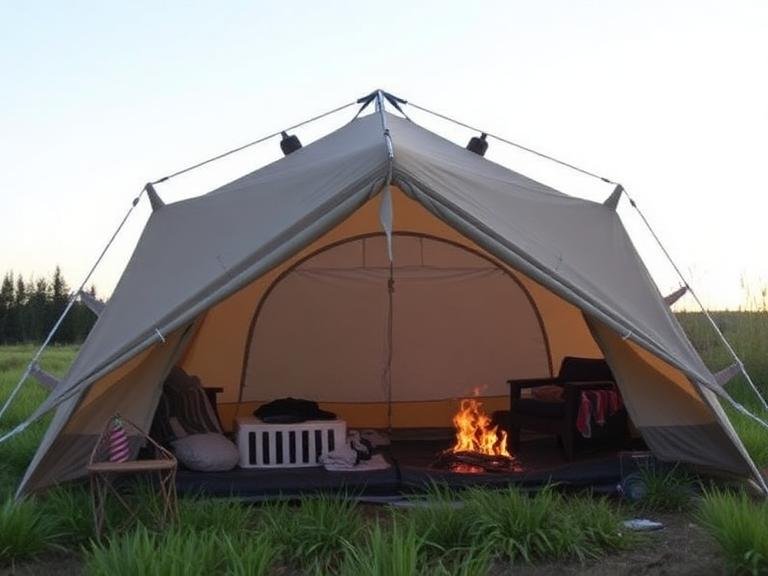
Carbon monoxide is an odorless, colorless, and tasteless gas produced by the incomplete combustion of fossil fuels. In expansive industrial environments, we deploy massive sensor networks to monitor this lethal byproduct. In the confined, increasingly well-insulated space of a modern nylon or canvas tent, the accumulation of this gas accelerates rapidly. From our experience in occupational safety and gas monitoring, treating a tent as a sealed atmospheric environment is the only way to ensure survival when utilizing internal combustion sources. In this authoritative guide, we will dissect the mechanisms of carbon monoxide generation, evaluate the specific scenarios that dictate whether you need a carbon monoxide detector in a tent, and detail the professional-grade instrumentation required to keep you safe.
Table of Contents
- Summary Table: Risk Assessment and Equipment Requirements
- Understanding Carbon Monoxide Dynamics in Confined Spaces
- Evaluating the Risk: Do You Need a Carbon Monoxide Detector in a Tent?
- Primary Combustion Sources That Elevate Risk
- The Science of Gas Sensing Technology
- Sino-Inst: Industrial-Grade Analytical Instruments
- Expert Best Practices for Tent Ventilation
- Frequently Asked Questions (FAQs)
- Industry References
Summary Table: Risk Assessment and Equipment Requirements
To provide immediate clarity on whether you need a carbon monoxide detector in a tent, we have structured a risk assessment matrix. This table cross-references common camping activities with the corresponding necessity for atmospheric monitoring.
| Camping Scenario / Equipment Used | Carbon Monoxide Risk Level | Do You Need a Detector? | Recommended Sino-Inst Technology Integration |
|---|---|---|---|
| Sleeping with no internal heat or cooking sources | Zero | No, but highly recommended if near vehicle exhaust. | None required |
| Using a catalytic propane heater inside the tent | High | Yes, absolutely mandatory. | Portable Gas Detectors |
| Cooking with a butane/propane stove inside the vestibule | Moderate to High | Yes, mandatory due to gas migration into the sleeping area. | Portable Gas Detectors |
| Burning charcoal or wood inside a tent stove | Extreme | Yes, absolutely mandatory. | Portable Gas Detectors with low-PPM alarms |
| Large expedition base camps with diesel generators | Extreme | Yes, mandatory across all structural enclosures. | Gas Monitoring System |
Understanding Carbon Monoxide Dynamics in Confined Spaces
To accurately answer whether you need a carbon monoxide detector in a tent, one must first understand how this gas behaves. Carbon monoxide (CO) has a molar mass slightly less than that of standard air. Consequently, it does not settle exclusively on the floor nor rise exclusively to the ceiling; it diffuses evenly throughout the enclosed space. Modern camping tents are engineered to be highly weather-resistant, utilizing silicon-coated nylons and robust seam taping to prevent moisture and wind intrusion. While excellent for thermal retention, this design creates an almost hermetically sealed environment.
When a combustion source operates inside this sealed environment, it rapidly consumes the available oxygen. As oxygen levels deplete, the combustion process becomes incomplete, leading to a drastic spike in carbon monoxide production. Because humans cannot detect CO through olfactory or visual senses, the gas binds to hemoglobin in the bloodstream with an affinity 200 times greater than oxygen, leading to rapid cellular hypoxia. From our experience monitoring industrial confined spaces, atmospheric degradation happens much faster than occupants anticipate, often rendering them unconscious before they realize they are in danger.
Evaluating the Risk: Do You Need a Carbon Monoxide Detector in a Tent?
We recommend a straightforward binary approach to this question. If you introduce any form of combustible fuel into your tent or its fully enclosed vestibule, you unequivocally need a carbon monoxide detector in a tent. There is no acceptable margin of error when dealing with asphyxiating gases. Many campers mistakenly believe that cracking a small window zipper provides adequate ventilation for a propane heater. This is a fatal misconception. Passive ventilation relies on wind currents and thermal drafts, which are entirely unpredictable and often insufficient to evacuate heavy concentrations of CO.
Conversely, if your camping trip involves sleeping in a tent with zero internal combustion sources—meaning no heaters, no lanterns that burn fuel, and no cooking equipment—the internal risk of CO generation is zero. However, even in this scenario, external risks exist. If you are camped in a high-density RV park or directly adjacent to a running vehicle or generator, exhaust fumes can easily infiltrate your tent structure. Therefore, even summer campers often decide they need a carbon monoxide detector in a tent simply as a defensive measure against external, uncontrollable environmental hazards.
Primary Combustion Sources That Elevate Risk
Understanding exactly which devices produce CO will further clarify why you need a carbon monoxide detector in a tent. The following are the most common culprits responsible for atmospheric contamination in recreational shelters:
- Catalytic Propane Heaters: Often marketed as “tent safe,” these devices still rely on combustion. While they produce significantly less CO than an open flame, any malfunction, dust accumulation on the catalyst pad, or drop in ambient oxygen will cause them to off-gas lethal amounts of carbon monoxide.
- Cooking Stoves (Isobutane/Propane): Operating a cooking stove inside a tent during a rainstorm is a common practice that carries immense risk. The open flame rapidly consumes oxygen and generates high volumes of CO in a matter of minutes.
- Wood-Burning Tent Stoves: Hot tenting with a titanium wood stove is highly popular. While these stoves feature a chimney to vent smoke and gases outside, downdrafts, leaking stovepipes, or an improperly sealed firebox will quickly flood the tent with CO.
- Gasoline and Kerosene Lanterns: Though largely replaced by LED lighting, legacy liquid-fuel lanterns emit substantial carbon monoxide and should never be used in an unventilated space.
The Science of Gas Sensing Technology
If you determine that you need a carbon monoxide detector in a tent, you must understand that not all detectors are engineered equally. Standard residential CO alarms purchased at a hardware store are calibrated for stable, climate-controlled environments. They frequently fail or produce false alarms when exposed to the high humidity, freezing temperatures, and condensation found in a winter camping tent.
Professional detection relies on electrochemical sensors. Inside these sensors, gas diffuses through a porous membrane and interacts with a working electrode immersed in an electrolyte. This chemical reaction generates a precise electrical current proportional to the gas concentration in parts per million (PPM). For outdoor and variable-climate applications, the sensor must be ruggedized and temperature-compensated. This is the exact engineering principle we utilize in our advanced instrumentation.
Sino-Inst: Industrial-Grade Analytical Instruments
Sino-Inst is a professional supplier of industrial process and analytical instruments, including gas detectors, gas analyzers, dust detectors, mass flow controllers, and dust monitors. We can help you obtain reliable measurement and analysis solutions while saving procurement costs. Customized products and OEM services are available. We will be your most trusted partner in environmental safety, whether you are managing a petrochemical plant or designing expedition-grade outdoor gear.
When our clients ask if they need a carbon monoxide detector in a tent for commercial guiding or remote research stations, we direct them away from inadequate residential alarms and toward our Portable Gas Detectors. These units are built to industrial specifications, featuring heavy-duty ingress protection (IP65 or higher) against water and dust, extreme temperature tolerances, and instantaneous PPM readouts. Unlike standard alarms that only trigger at high thresholds, our portable units alert users to low-level, chronic exposure long before it becomes lethal.

Furthermore, for manufacturers of specialized outdoor heating equipment, integrating reliable sensing technology is critical. Sino-Inst supplies the raw Gas Sensor Module technology to OEMs worldwide, allowing them to build fail-safes directly into their products. For permanent glamping setups or large outfitter base camps featuring multiple yurts and canvas tents, our Fixed Gas Detectors wired into a centralized Gas Monitoring System provide facility-wide oversight, ensuring every occupant is protected. While our Mass Flow Controllers/Meters and Dust Monitors serve distinct industrial process roles, the same rigorous calibration standards apply to our life-safety gas detection equipment.
Expert Best Practices for Tent Ventilation
Possessing the correct instrumentation is only half of the safety equation. From our experience, technology must be paired with strict operational protocols. We recommend the following best practices for managing atmospheric hazards in a tent:
- Cross-Ventilation is Mandatory: If you are operating a heater, you must open a lower vent to draw in fresh oxygen and an upper vent to exhaust warm, spent gases. Never rely on the breathability of the tent fabric alone.
- Detector Placement: Because CO mixes evenly with air, you do not need to place the detector on the floor or the ceiling. We recommend hanging your Portable Gas Detector at breathing level, near your head/pillow, so the alarm is immediately audible if you are asleep.
- Equipment Maintenance: A poorly maintained heater burns fuel inefficiently, skyrocketing CO production. Clean your equipment regularly and inspect all gas lines for leaks before departing for the backcountry.
- Never Sleep with an Active Heater: Regardless of how cold it gets, and regardless of whether you have determined you need a carbon monoxide detector in a tent, you should never fall asleep with a combustion heater running. Warm the tent, turn the heater off, and rely on a properly rated sleeping bag for overnight thermal regulation.
Frequently Asked Questions (FAQs)
Residential detectors are not rated for extreme cold or high humidity. The condensation inside a cold tent can short-circuit a standard home alarm or permanently damage its electrochemical sensor. When determining if you need a carbon monoxide detector in a tent, you must also recognize the need for a device specifically rated for variable, rugged environments, such as industrial Portable Gas Detectors.
No. Electric space heaters powered by portable lithium power stations or RV electrical hookups do not utilize combustion. Therefore, they do not consume oxygen or produce carbon monoxide. If you are exclusively using electric heat, you do not necessarily need a carbon monoxide detector in a tent, though external risks from nearby generators still warrant caution.
Because CO poisoning mimics common ailments, it is highly deceptive. Early symptoms include a dull headache, weakness, dizziness, nausea, shortness of breath, and confusion. If you experience these symptoms while running a stove or heater, evacuate the tent immediately into fresh air and seek medical attention.
Absolutely. Sino-Inst provides extensive OEM services. If your company manufactures heated tents, overlanding trailers, or portable stoves, we can integrate our precision Gas Sensor Module technology directly into your product designs, ensuring your customers receive the highest standard of integrated safety.
Industry References and Safety Standards
- Occupational Safety and Health Administration (OSHA): Guidelines on Carbon Monoxide Toxicity and Confined Space Atmospheric Testing.
- Centers for Disease Control and Prevention (CDC): Preventing Carbon Monoxide Poisoning in Recreational Vehicles and Tents.
- Sino-Inst Internal Engineering Specifications for Electrochemical Gas Sensor Module Calibration (2026).
- Underwriters Laboratories (UL): Standard for Single and Multiple Station Carbon Monoxide Alarms (UL 2034) versus Industrial Standards.