.png)
As 3D printing technology moves from industrial factories to home workshops and small businesses, air quality safety has become a paramount concern. Whether you are melting ABS filaments or curing toxic resins, the process releases invisible gases known as Volatile Organic Compounds (VOCs). Long-term exposure to these fumes—including styrene, formaldehyde, and benzene—can lead to respiratory issues and other health complications.
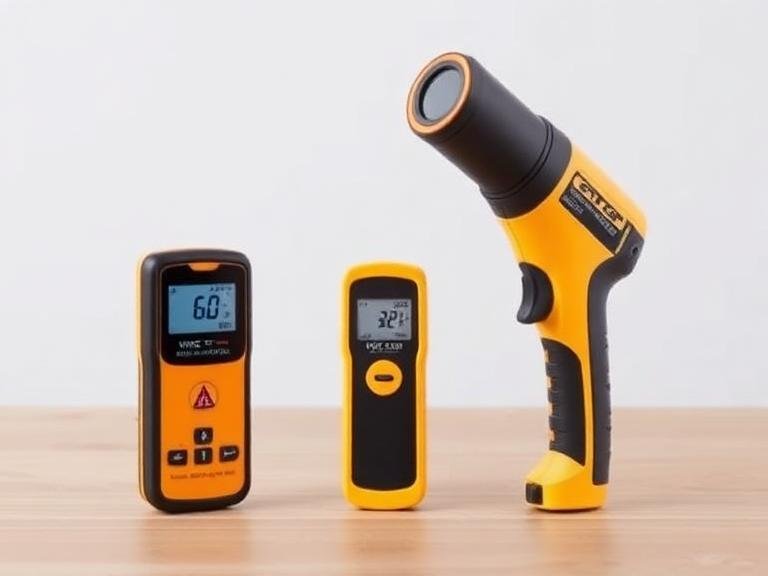
To ensure a safe working environment, investing in a reliable VOC detectors for 3D printing is essential. But not all monitors are created equal. Industrial print farms require different specifications than a hobbyist’s bedroom setup. In this guide, we review the top 9 air quality monitors, ranging from high-precision industrial fixed units to user-friendly portable smart home devices.
Why You Need a VOC Detector for 3D Printing
3D printers, particularly those using SLA (resin) or ABS/ASA filaments, emit nanoparticles and chemical vapors. While HEPA filters catch the particles, they often miss the gases. A dedicated VOC detectors for 3D printing helps you identify when ventilation is insufficient. For industrial setups, compliance with safety standards (like OSHA) requires precise measurement, not just “guesstimates.”
Top Industrial & Professional Picks
For print farms, factories, and businesses where employee safety is regulated, consumer-grade sensors are often insufficient. The following units offer high-precision electrochemical or catalytic combustion sensors.
1. Sino-Inst Fixed Gas Detector with Remote Sensor
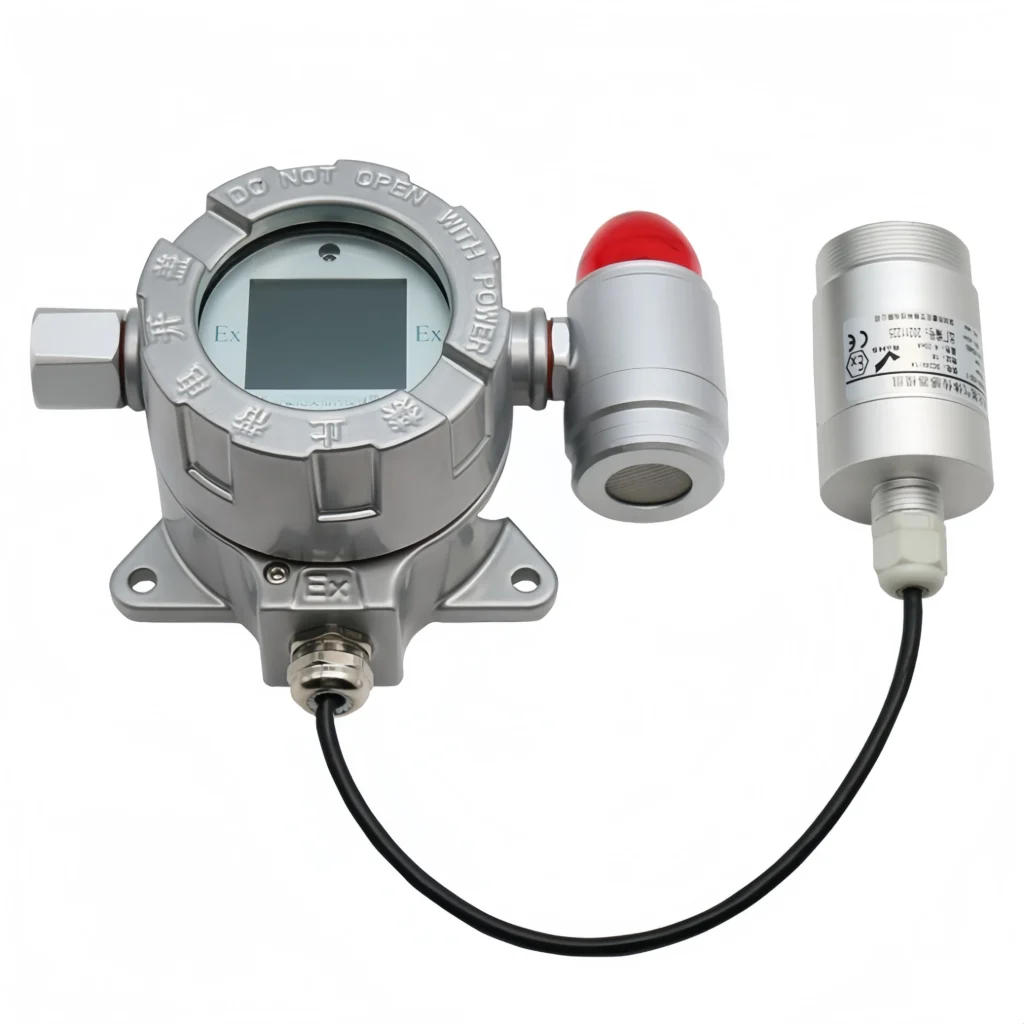
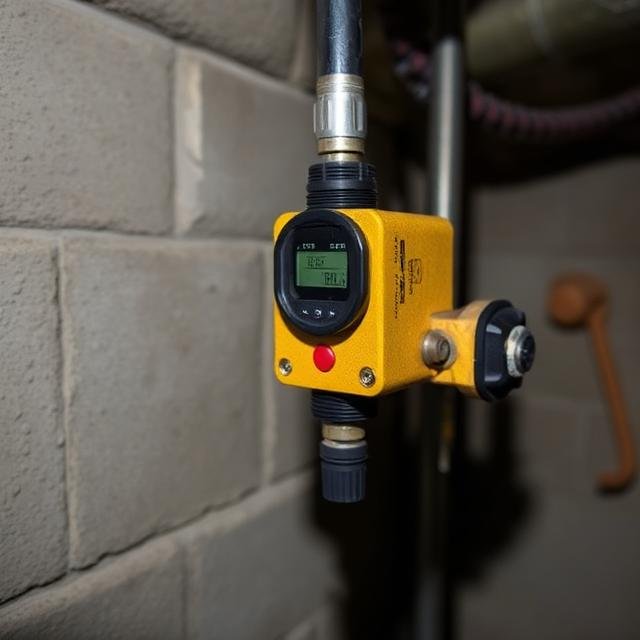
The Sino-Inst Fixed Gas Detector is the gold standard for permanent installations in 3D printing manufacturing hubs or large-scale resin curing rooms. Unlike portable units that run on batteries, this is a hard-wired industrial solution designed to run 24/7 with zero downtime. It features a robust explosion-proof design and offers high-precision remote sensing capabilities.
Technical Specifications:
| Measuring Range | 0-1000/2000/5000/10000PPM; 0-5%, 0-10%, 0-20%, 0-50%, 0-100%VOL |
|---|---|
| Detection Principle | Electrochemical (Toxic gases), Catalytic combustion, PID, Infrared/Fluorescence |
| Accuracy | <±3%(F.S) |
| Response Time | T90 <30 seconds |
| Output Signal | 4-20mA, RS485 |
| Working Temp | Customizable from -40℃ to 270℃ (Special catalytic combustion) |
| Protection Grade | IP66 (Dust and Water Resistant) |
| Explosion-Proof | Ex d IIC T6 Gb |
| Maintenance | Self-diagnosis 2 times/second; Calibration every 4-8 months |
- Extremely durable alloy or 316L stainless steel body.
- Can integrate into building automation systems via RS485.
- Wide range of sensor options including PID and Electrochemical.
- Suitable for harsh, high-temperature environments.
- Requires professional installation (wired).
- Overkill for a single home hobby printer.
2. Sino-Inst VOC Gas Detector | Customized Multi-Gas Detection

If you need mobility to check multiple printers or different areas of a workshop, the Sino-Inst Portable Multi-Gas Detector is the superior choice. It combines laboratory-grade precision with the convenience of a handheld device. It can detect up to 18 gases simultaneously, making it perfect for complex environments where both resin fumes (VOCs) and combustion gases might be present.
Technical Specifications:
| Gas Detection | VOCs (0-100ppm or 0-100%LEL), plus up to 1-6 optional gases simultaneously. |
|---|---|
| Sensor Types | Imported high-precision PID photoionization, Electrochemical, or Catalytic combustion. |
| Display | 3.5-inch high-definition color screen. |
| Data Storage | 16GB SD card optional; supports Bluetooth/WiFi/LoRa/4G transmission. |
| Battery | 3.7VDC, 5400mAh×2 high-capacity rechargeable polymer battery. |
| Response Time | T90 ≤ 20S |
| Protection | IP66, Intrinsically Safe (Ex ia IIC T4 Ga). |
| Dimensions | 255×210×125mm; Weight 3.2Kg. |
| Advanced Features | Built-in printer, GPS positioning, One-touch SOS, Wind speed/pressure detection. |
- Detects up to 18 gases at once—comprehensive safety.
- Built-in pump ensures active air sampling.
- Massive battery life (10800mAh total capacity).
- Includes data logging and optional built-in printer.
- Heavier unit (3.2kg) designed for industrial walkthroughs.
- Higher price point reflecting professional capabilities.
3. Forensics Detectors Professional VOC Meter
For serious prosumers who cannot afford a full industrial rig but need more than a smart home gadget, the Forensics Detectors VOC Meter is a solid middle ground. It uses a high-quality electrochemical sensor to detect TVOCs (Total Volatile Organic Compounds).
It is factory calibrated to isobutylene (the standard for VOCs) and offers a simple, rugged design. It is widely used by home inspectors and 3D printing enthusiasts who want to “spot check” their enclosures to ensure their ventilation fans are working correctly.
- Factory calibrated with NIST traceability.
- Simple, easy-to-read numeric display.
- Rechargeable lithium battery.
- Interface is utilitarian, no fancy apps.
- Slower response time than PID sensors.
Top Smart Home & Consumer Picks
For home hobbyists, the goal is often continuous monitoring with smartphone alerts. These devices monitor trends, alerting you when it’s time to open a window.
4. AirGradient ONE
Best for: Makers and Open Source Enthusiasts
The AirGradient ONE has taken the 3D printing community by storm because it aligns with the “maker” philosophy. It is available as a fully assembled unit or a solder-it-yourself kit. It uses the high-quality Sensirion SGP41 sensor to detect VOCs and NOx.
What makes it the best VOC detectors for 3D printing in the consumer space is its transparency. You can flash your own code to it, integrate it into Home Assistant easily, and see exactly what the sensors are reading without proprietary algorithms hiding the data.
- Open hardware and open source software.
- Excellent Home Assistant integration.
- Uses reputable Sensirion sensors.
- DIY kit requires assembly (soldered version available).
- Basic plastic enclosure aesthetics.
5. Awair Element
Best for: Aesthetic Home Offices
The Awair Element is stylish enough to sit on a desk next to a high-end resin printer. It tracks five metrics: Temperature, Humidity, CO2, Chemicals (VOCs), and PM2.5. The app is one of the most user-friendly on the market, providing “Air Scores” and actionable advice.
For 3D printing, the VOC trend line is particularly useful. You can see spikes in chemicals exactly when your print starts or during the washing/curing phase. It connects via WiFi, allowing you to check levels remotely.
- Beautiful, modern design with wood accents.
- Intuitive app with historical data graphing.
- Good sensitivity to changes in chemical levels.
- No local API (cloud dependency).
- Slightly expensive for a consumer monitor.
6. Temtop M10+ Air Quality Monitor
Best for: Budget-Conscious Users
The Temtop M10+ is a straightforward, no-nonsense monitor. It measures PM2.5, HCHO (Formaldehyde), TVOC, and AQI. Since formaldehyde is a byproduct of heating certain plastics (like ABS), having a dedicated HCHO reading is a significant advantage for 3D printing safety.
It is portable and rechargeable, allowing you to place it inside a printing enclosure for a quick check (though do not leave it in heat too long) and then move it to your desk.
- Affordable price point.
- Dedicated Formaldehyde (HCHO) reading.
- Simple, clear interface.
- Battery life is relatively short (requires frequent charging).
- No WiFi or app connectivity for data logging.
7. Atmotube Pro 2
Best for: Portable/Wearable Monitoring
The Atmotube Pro 2 is a compact, wearable air quality tracker. For 3D printing enthusiasts who attend conventions or move between a workshop and a home office, this is ideal. It connects via Bluetooth to your phone to provide real-time alerts.
Despite its small size, it packs a reliable VOC sensor. It is particularly good at detecting the “off-gassing” of prints after they have been completed, helping you determine when a print is safe to bring into a living area.
- Highly portable with a carabiner clip.
- Long battery life.
- Real-time alerts via smartphone app.
- Bluetooth range is limited (must be near phone).
- Small fan can get clogged in very dusty environments.
8. Amazon Smart Air Quality Monitor
Best for: Alexa Integration
If you already have an Echo device, this is the most cost-effective way to add VOC monitoring. The Amazon Smart Air Quality Monitor tracks 5 metrics and integrates seamlessly with Alexa routines. You can set it up so that if the VOC level rises (e.g., a print starts), Alexa automatically turns on a smart plug connected to your ventilation fan.
While the sensor is not as precise as the Sino-Inst or AirGradient, it is “good enough” for general home safety trends.
- Very low cost.
- Powerful automation potential with Alexa Routines.
- Small form factor.
- Requires an Alexa device/app to function.
- No display on the unit itself.
9. Eve Room
Best for: Apple HomeKit Users
For those in the Apple ecosystem, the Eve Room is the premier choice. It uses Thread technology for a robust connection and features a stunning e-ink display. It measures VOCs, temperature, and humidity with high accuracy.
The “Thread” connectivity is a game-changer, ensuring the device stays connected even in a garage or basement workshop where WiFi might be spotty. Like the Amazon monitor, it can trigger automations (e.g., turning on an air purifier) via HomeKit.
- High-contrast E-ink display (readable from any angle).
- Strict privacy (no cloud dependency).
- Seamless Apple HomeKit integration.
- Only works with Apple devices (iOS).
- Pricey for the feature set.
Buying Guide: How to Choose a VOC Detector for 3D Printing
1. Sensor Technology: PID vs. MOS
The heart of a VOC detectors for 3D printing is the sensor.
- PID (Photoionization Detector): Found in high-end industrial units like the Sino-Inst models. These use UV light to break down chemicals. They are extremely accurate and fast but expensive.
- MOS (Metal Oxide Semiconductor): Found in most consumer units (Awair, Amazon). They detect a broad range of gases by measuring resistance changes on a heated film. They are affordable but can suffer from “drift” over time.
2. Connectivity and Data Logging
For a 24-hour print, you need to know if VOC levels spiked at 3 AM while you were asleep. Units with data logging (like AirGradient or Sino-Inst) allow you to review the history. If you are running a print farm, look for RS485 or WiFi capability to centralize the data.
3. Specific Gases
3D printing emits specific VOCs. ABS releases Styrene; Nylon releases Caprolactam. Industrial detectors can often be calibrated to target these specifically, whereas consumer monitors give a “Total VOC” (TVOC) aggregate score.
Summary Comparison Table
| Model | Best For | Sensor Type | Smart/Data Features |
|---|---|---|---|
| Sino-Inst Fixed | Industrial/Factory | Electro/PID/Cat | RS485, Remote Sensor |
| Sino-Inst Portable | Pro Multi-Site | PID/Electro (18 gas) | GPS, Printer, BT/WiFi |
| AirGradient ONE | Makers/DIY | Sensirion SGP41 | Open Source, WiFi |
| Awair Element | Home Aesthetics | MOS | App History, Trends |
| Temtop M10+ | Budget/Portable | MOS | Display Only |
| Amazon Smart | Automation | MOS | Alexa Routines |
| Eve Room | Apple Users | MOS | HomeKit, Thread |
Frequently Asked Questions (FAQs)
1. What are safe VOC levels for 3D printing?
Ideally, VOC levels should be as close to zero as possible. Most consumer monitors use an index (0-500). A reading below 200 is generally considered acceptable for short periods, but for continuous exposure in a home, you want levels below 100 ppb (parts per billion). Industrial standards (OSHA) vary by specific chemical (e.g., Styrene has a 100 ppm limit), but residential safety thresholds are much lower.
2. Do I really need a monitor if I have an enclosure?
Yes. Enclosures trap fumes, but they must be vented. A VOC detector for 3D printing placed outside the enclosure will tell you if your enclosure is leaking or if the filter is saturated and needs replacing.
3. Can these monitors detect resin fumes?
Yes, resin fumes are composed of various VOCs. Both PID and MOS sensors will react to the isopropyl alcohol used for cleaning and the methacrylate monomers in the resin. However, keep in mind that IPA (alcohol) will cause a massive spike in readings, which is normal during the washing process.
4. How often do I need to calibrate my VOC detector?
Consumer units (MOS sensors) often have “automatic baseline calibration,” meaning they need fresh air occasionally to reset their zero point. Industrial units like the Sino-Inst detectors require manual calibration using a calibration gas every 4 to 8 months to maintain compliance accuracy.
References
- EPA. (2025). Volatile Organic Compounds’ Impact on Indoor Air Quality. United States Environmental Protection Agency.
- UL Chemical Safety. (2023). 3D Printing Safety: Particle and Chemical Emissions.