.png)
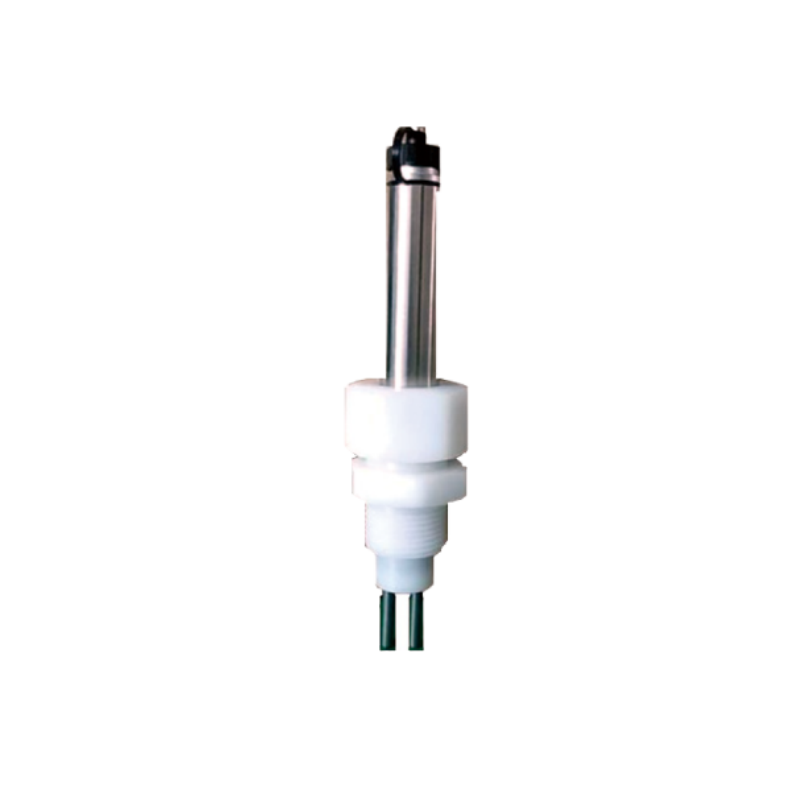
The KSCY-100DS is a high-performance online digital sensor that uses electrochemical impedance spectroscopy and the linear polarisation technique(LPR) to track the rate of corrosion.The sensor’s highly integrated detecting circuit makes sure if functions right,stays steady,and doesn’t pick up any other signals.It finds out in real time what the average rate of corrosion is for metals in industrial environments with fluids.People typically utilise online corrosion tracking to keep an eye on the environment,clean up sewage,and keep the water that flows through factories clean.
★★★★★
Parameters
| Item | Specification |
|---|---|
| Measuring Principle | LPR (Linear Polarization Resistance) & EIS (Electrochemical Impedance Spectroscopy) |
| Signal Output | RS485 + 4~20mA Analog Signal |
| Communication Protocol | MODBUS-RTU |
| Measuring Range | 0.000 ~ 1.000 mm/a |
| Measuring Resolution | 0.001 mm/a |
| Repeatability | ±0.001 mm/a |
| Response Time | 50s |
| Sensor Drift | ≤0.3%FS/24h |
| Cable Length | 5m as standard (customizable) |
| Supply Voltage | 12 – 30VDC |
| Measuring Environment | Temperature: 0 – 50℃; Water pressure: ≤4 kg/cm² |
| Protection Grade | IP68 |
| Applicable Scope | Industrial circulating water, sewage treatment, environmental monitoring, etc. |
| Product Advantages | Advanced magnetic isolation technology & anti-polarization technology; Strong anti-interference ability; No transmitter required; Stable and accurate measurement; Maintenance-free; Easy installation |
Why choose KSCY-100DS turbidity digital sensor?
- LPR+EIS dual principle measurement, precise and fast
- Magnetic isolation+anti polarization, strong anti-interference ability
- RS485+4~20mA dual output, compatible with MODBUS-RTU
- IP68 protection, suitable for harsh industrial environments
- Integrated design, maintenance free and easy to install
Featured Applications
- Continuous monitoring of corrosion in industrial circulating water systems, as well as evaluation of the effectiveness of corrosion inhibitors
- Inspection of sewage treatment equipment and pipelines for signs of corrosion
- Environmental monitoring water for the purpose of maintaining corrosion control on metal facilities
- Conducting research on metal corrosion control and conducting on-site testing of working conditions
Working principle
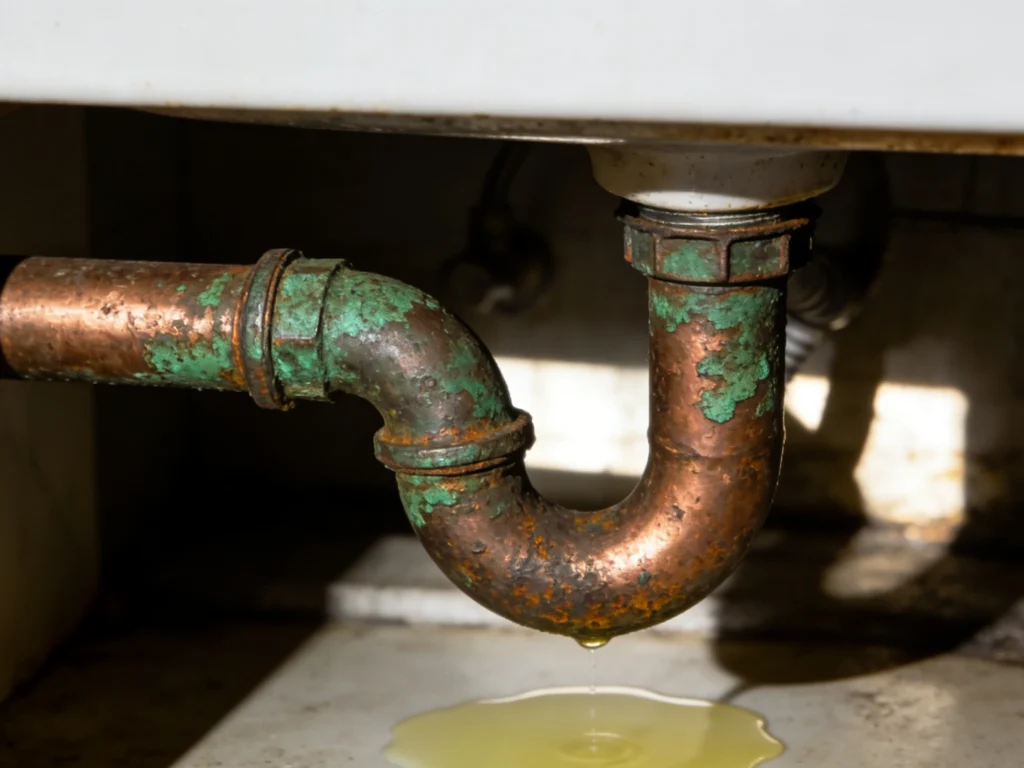
Based on the LPR linear polarization resistance method, a small current is applied near the metal corrosion potential. The instantaneous average corrosion rate of metal is accurately calculated by measuring the polarization resistance Rp and combining with the conversion formula, which reflects the corrosion development trend in real time.
Installation and wiring
Installation requirements
Adopting pipeline installation, the installation thread is 1 “NPT (1-inch pipe thread), and the water flow direction should be perpendicular to the distance between the two electrodes to avoid installing the probe in a static process fluid. It is recommended to ensure that the fluid flow rate is consistent with the actual production process to prevent measurement errors; During installation, it is necessary to correctly install the two corrosion test electrodes and sealing rings into the sensor, and it is strictly prohibited for water to enter the aviation plug on the upper end of the sensor.
Wiring method
- The sensor supports single/dual signal output, with simple and convenient wiring, as follows:
- Only 4-20mA: red (power+), blue (power -), black (4-20mA positive), a total of 3 wires;
- Only RS485 communication: red (power+), blue (power -), yellow (485-A), green (485-B), a total of 4 wires;
- Simultaneously use 4-20mA+RS485: red, blue, yellow, green, black, a total of 5 wires.
Precautions
The measurement results are affected by factors such as flow rate, temperature, corrosion products, electrode materials, etc. In practical use, it is necessary to analyze the data in conjunction with the operating conditions:
- Flow rate: Avoid static fluids as high flow rates may damage the electrode protective film and should be matched with the process flow rate;
- Temperature: Corrosion is a chemical reaction, and the measurement results only correspond to the immersion water temperature of the probe. High temperature areas need to be monitored closely;
- Corrosion products: The protective film on the electrode surface can inhibit corrosion, and attention should be paid to the effects of electrode deposits and microbial growth on measurement;
- Water quality adaptation: When it exceeds the range of “resistivity x corrosion rate<63.5”, it is recommended to compare it with the weight loss method data and calibrate the results through correction factors.
Technical Support
Top 6 Industrial Gas Analyzers Manufacturers 2025
6 Best Industrial Gas Detector Manufacturers in the World
9 Best Portable Carbon Dioxide Detector 2025 – Complete Buying Guide
Top 7 portable combustion analyzer Tested
Putting together the theories behind LPR and EIS is necessary for the KSCY-100DS digital corrosion rate sensor to perform. It is a reliable online metal corrosion monitoring choice for sewage treatment, industrial circulating water, and other uses since it is very accurate, protects against interference, and has industrial-grade security. It covers all of the real tracking needs of industrial locations, from being easy to set up and use to correctly recording the rate of corrosion in real time.
Request a Quote