.png)
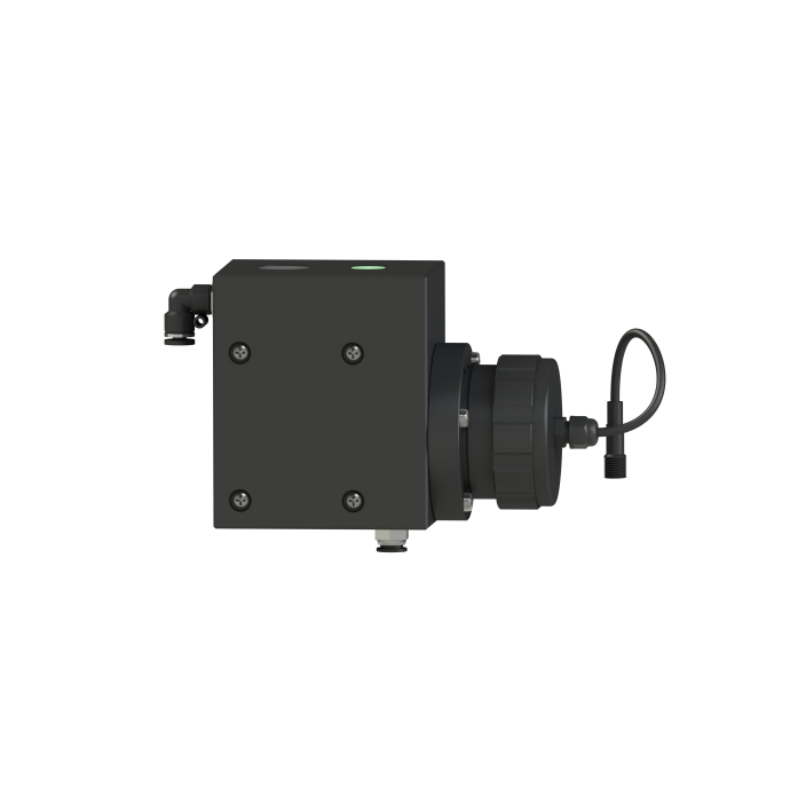
The KSA-320 low range flow type turbidity digital sensor (with pressure) is patented for online drinking water quality monitoring. The 90° laser scattering detection principle and 660nm laser light source are used. Ultra-low detection limit, high-precision measurement, pressure resistance, and long maintenance cycle are its advantages. It supports water cleanliness control with real-time and reliable turbidity monitoring in tap water production, secondary water supply, direct drinking water, and membrane filtration water. It is the water industry’s recommended online water quality monitoring service.
★★★★★
Parameters
| Item | Specification |
|---|---|
| Detection Method | 90° Light Scattering Method (Laser Light Source) |
| Light Source | 660nm Laser |
| Measuring Range | 0-20NTU (Default), 0-100NTU / 0-2000NTU (Optional) |
| Resolution | 0.0001NTU (<1NTU), 0.001NTU (≥1NTU) |
| Detection Limit | 0.005NTU |
| Accuracy | 0-20/100NTU: ≤2% or ±0.02NTU (whichever is larger); 0-2000NTU: ≤10% or ±0.5NTU (whichever is larger) |
| Zero Drift | ≤1.5% |
| Indication Stability | ≤1.5% |
| Repeatability | ≤1% or 0.006NTU (whichever is larger) |
| Response Time (T90) | ≤120s |
| Operating Temperature | -5~45℃ |
| Working Pressure | ≤0.6MPa |
| Water Inlet Flow Rate | 100-1000mL/min (Recommended 500mL/min) |
| Power Supply | DC 9-28V |
| Power Consumption | 5W |
| Signal Output | RS485 (Modbus-RTU), Optional 4-20mA Analog Output |
| Calibration Method | Single-point Calibration, Formazin Two-point Calibration, 2-6 Point Custom Calibration |
| Housing Material | ABS + POM Plastic |
| Overall Size | 192mm×125mm×78mm (Width×Height×Thickness, Including Pipe Joints) |
| Installation Method | Horizontal Installation |
Why choose KSA-320 turbidity digital sensor?
- Ultra-precision measurement: a detection limit of 0.005 NTU and a resolution of 0.0001 NTU at less than 1 NTU. The precision is ≤ 2% or ± 0.02NTU, which means it can pick up minor changes in turbidity.
- You can keep the pressure in the flow channel at up to 0.6 MPa without making bubbles. The output has a back pressure regulating valve that lets you measure accurately and change the pressure in the pipeline network.
- The 660nm laser light source and 90° scattering detector give constant readings (≤ 1.5%), reliable data that doesn’t drift, and great resistance to interference from outside light.
- Long cycle maintenance is free since the ABS+POM’s corrosion-resistant housing and the self-cleaning feature of the light window mean that maintenance is less frequent. The flow-through design not only recycles water samples, but it also means that less maintenance is needed.
Featured Applications
- RO membrane filtration, ultrafiltration turbidity tracking, filtration impact reflection, and membrane fouling warning are all types of direct drinking water and water purification equipment.
- Pool/garden Water: Control turbidity to keep pool, hot spring, and garden water clean and safe.
- Surface water tracking includes finding turbidity in rivers, lakes, and reservoirs to figure out how good the drinking water is.
- Checking the turbidity of sewer treatment plant effluent and reused water, as well as following rules for controlling discharge and reuse water quality.
Installation and wiring
Installation requirements
- It must be installed horizontally, tilting will affect the measurement effect. It is fixed with 4 M5 × 75mm screws to ensure a stable installation
- The connection of the inlet and outlet water pipelines should match the interface specifications (6mm inlet and outlet for low range version, 10mm inlet and outlet for high range version), and the inlet pressure should be ≤ 0.6MPa
- The back pressure regulating valve should be installed at the outlet (avoid installing it at the inlet), and the water flow rate can be controlled by adjusting the valve. It is recommended to install 500mL/min
- Installation of pipelines requires the installation of maintenance valves (fully open during operation), with three-way pipes arranged downwards to prevent gas from entering the circulation pool and affecting measurement
Electrical wiring (four wire system, color coded)
| Wire Color | Signal Definition | Instruction (4-Core Version, Without 4-20mA) |
|---|---|---|
| Red | V+ | DC 9-28V Power Positive |
| Black | GND | Power Negative / Ground |
| Green | 485A | RS485 Signal A |
| Yellow | 485B | RS485 Signal B |
Before wiring, be sure to cut off the power and confirm that the positive and negative poles are not connected in reverse; After the wiring is completed, check the firmness of the circuit. In humid environments, waterproof sealing treatment should be applied to the wiring terminals; Default Modbus slave address 3, baud rate 9600, no checksum, 8 data bits, 1 stop bit.
Maintenance and Care
Single point calibration (convenient on-site calibration)
- After the sensor measurement stabilizes (the gain value remains basically unchanged), write the actual turbidity value (in NTU) of the current water sample to register 0x261, and complete the calibration after a few seconds
- It is recommended to calibrate the turbidity of the water sample to not less than 0.5NTU or 80% of the average turbidity value during normal operation, and control the water quality change within 2%
Two point calibration (calibration of Formazine standard solution)
- Prepare low point standard solution (such as 0.2NTU tap water) and high point standard solution (such as 20NTU fumarate standard solution), and sequentially introduce them into the circulation pool (overflow from the outlet)
- After the gain value stabilizes, write the corresponding turbidity values of the standard solution to registers 0x263 (low point) and 0x265 (high point) respectively to complete the calibration (in two-point mode, the free point register needs to be written as 0)
Routine Maintenance
- Regularly check whether the inlet and outlet water pipelines are unobstructed, remove blockages in the pipelines, and ensure that the flow rate is within the range of 100-1000mL/min
- Regularly clean the sensor light window and the inside of the circulation pool to avoid the influence of pollutant adhesion on measurement accuracy. When measuring low turbidity, it is necessary to ensure that the circulation pool is clean
- Regularly compare the measurement accuracy with a standard turbidity meter, and if the error exceeds the requirements, calibrate and correct it in a timely manner
- Before restarting after long-term idle, it is necessary to clean the circulation pool and calibrate the zero point to ensure measurement accuracy
Technical Support
Top 6 Industrial Gas Analyzers Manufacturers 2025
6 Best Industrial Gas Detector Manufacturers in the World

9 Best Portable Carbon Dioxide Detector 2025 – Complete Buying Guide
Top 7 portable combustion analyzer Tested
The KSA-320 low range flow type turbidity sensor (with pressure) is made to check how clean drinking water is. It has very low detection limits, is stable under high pressure, and works for a long time without needing any maintenance. The 660nm laser scattering technology makes sure that measurements are correct in places with minimal turbidity. The flow channel design can handle 0.6MPa of pressure, which is good for establishing pipeline pressure. KSA-320 has been chosen to supply competent sensing technology to ensure that the drinking water is safe.
Request a Quote