.png)
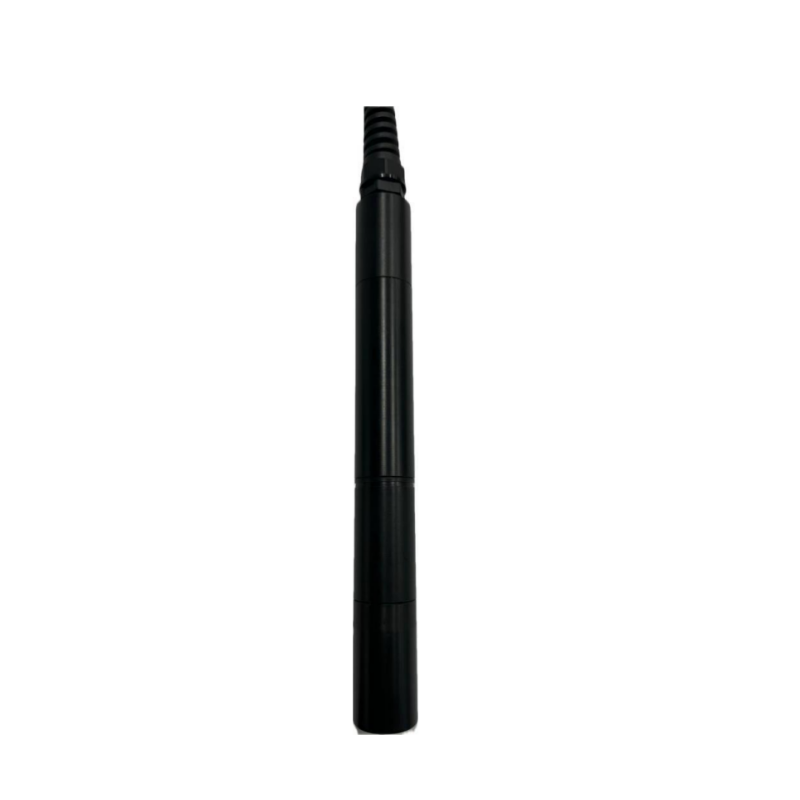
The DCL-2.2-4P intelligent membrane residual chlorine digital sensor employs polarographic sensing and a high-performance permeable membrane to keep an eye on the levels of residual chlorine in aqueous solutions all the time. For managing and controlling residual chlorine in drinking water treatment, swimming pool water, and circulating water, RS-485/Modbus RTU communication is enabled. It is a professional residual chlorine monitoring solution for water quality since it reacts quickly, is very accurate, and doesn’t need much maintenance.
★★★★★
Parameters
| Item | Specification |
|---|---|
| Measuring Principle | Polarographic Method with High-performance Permeable Membrane |
| Measuring Range | 0~20.00mg/L |
| Resolution | 0.01mg/L |
| Accuracy | ±0.1mg/L |
| Operating Temperature | 0~60℃ |
| Operating Pressure | <0.2MPa |
| Temperature Compensation | Automatic Temperature Compensation (NTC10K) |
| Power Supply | 24VDC |
| Signal Output | RS-485 (Modbus/RTU Protocol) |
| Communication Parameters | 9600 N 8 1 (Baud rate/Parity/Data bit/Stop bit, customizable) |
| Installation Interface | M30×1.5 |
| Installation Method | Flow cell installation (flow rate 60-80L/H) |
| Cable Length | 10m as standard, other lengths customizable |
| Calibration Method | Two-point / Three-point Calibration |
| Power Consumption | <0.5W |
Why choose DCL-2.2-4P digital sensor?
- High precision detection, 0.01mg/L high resolution, accuracy ± 0.1mg/L, accurate and reliable data
- Built in NTC10K, 0~60 ℃ automatic temperature compensation, offsets temperature interference, suitable for multiple temperature conditions
- RS-485+Modbus/RTU protocol, seamlessly integrated with PLC/DCS/multi parameter monitoring devices, easy to integrate
- Support two-point/three-point calibration, factory pre calibration, no need for frequent calibration for non out of tolerance, simple operation
- M30 × 1.5 standard interface, compatible with flow pool installation, flow rate 60-80L/H, more stable monitoring
Featured Applications
- Municipal drinking water: continuous monitoring of residual chlorine in waterworks, drinking water filling plants, and water supply pipelines to ensure water supply safety
- Public water quality: residual chlorine control in swimming pools, hot spring pools, and landscape water to meet hygiene standards
- Industrial water treatment: Monitoring residual chlorine in cooling circulating water and process water to prevent microbial growth in water bodies
- Environmental water treatment: Monitoring of residual chlorine in wastewater treatment plant effluent to ensure compliance with discharge standards
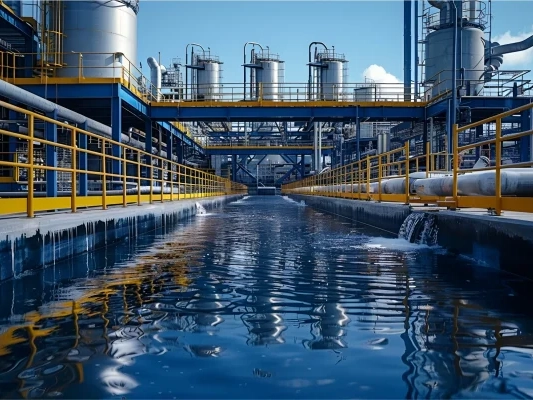
Installation and wiring
Installation requirements
- Adopting a flow pool exclusive installation to ensure a stable flow rate of the measured medium between 60-80L/H, without significant turbulence or bubbles
- Install interface matching M30 × 1.5 standard, firmly fixed to prevent probe shaking and leakage
- The installation location is convenient for later maintenance, with reserved space for electrolyte addition and membrane head replacement operations
Electrical wiring (four wire system, color coded)
- Red wire: 24VDC Power (+)
- Black wire: GND Power (-)
- White wire: RS-485A
- Blue wire: RS-485B
After the wiring is completed, it is necessary to carefully check to confirm that there is no reverse or virtual connection, in order to avoid damaging the sensor after power on; Keep the wiring connections dry to prevent moisture.
Maintenance and Care
- Daily cleaning: Regularly clean the probe, avoid touching or scratching the permeable membrane during disassembly and cleaning, and prohibit wiping the permeable membrane with filter paper
- Sealing protection: keep the cable connector clean and dry, prevent moisture and water ingress, and avoid communication failures or circuit damage
- Electrode polarization: After the sensor is connected to the device, it needs to be continuously powered on for more than 2 hours to complete polarization, and then calibrated and measured
- Electrolyte maintenance: Add/replace electrolyte every 6 months, and replace the integrated membrane head in a timely manner when the permeable membrane ruptures; After replacement, repolarization and calibration are required
- Idle disposal: When the water supply is cut off or the sensor is not used for a long time on site, the probe should be promptly removed, cleaned, covered with a protective cap, and stored properly
Technical Support
Top 6 Industrial Gas Analyzers Manufacturers 2025
6 Best Industrial Gas Detector Manufacturers in the World
9 Best Portable Carbon Dioxide Detector 2025 – Complete Buying Guide
Top 7 portable combustion analyzer Tested
The DCL-2.2-4P intelligent membrane residual chlorine sensor is ideal for continuous residual chlorine monitoring in drinking water, swimming pool water, and industrial circulating water due to its excellent precision, stability, ease of integration, and maintenance. For precise and effective data for water quality safety control, it may be readily coupled to multi-parameter water quality monitoring devices to measure temperature and residual chlorine. Monitoring residual chlorine is economical in many businesses.
Request a Quote