.png)
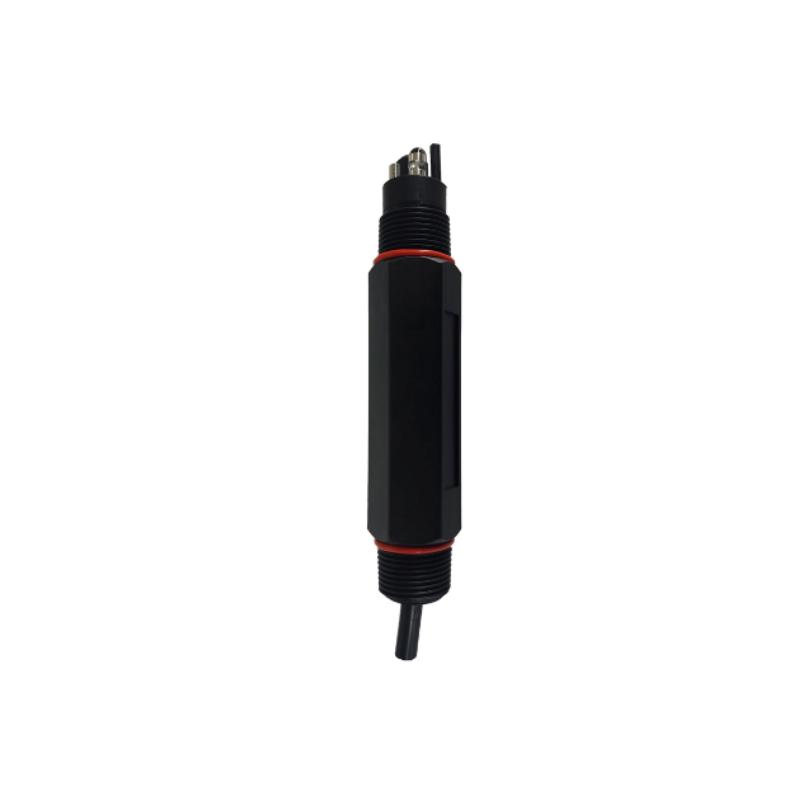
The DCL-238 intelligent residual chlorine digital sensor keeps track of residual chlorine online utilizing constant voltage in traditional water treatment. For example, industrial stability, advanced temperature control, and accurate detection. The standardized installation and communication design makes sure that you always have accurate and up-to-date information for controlling the effectiveness of water disinfection and improving processes in a wide range of situations and difficult working conditions. It is a cheap way to keep an eye on residual chlorine levels in sewage treatment, swimming pool water disinfection, municipal water supply, and other areas.
★★★★★
Parameters
| Item | Specification |
|---|---|
| Measuring Principle | Constant Voltage Method |
| Measuring Range | 0-20mg/L |
| Resolution | 0.01mg/L |
| Accuracy | ±0.1mg/L |
| Operating Temperature | 0~50℃ |
| Working Pressure | <0.2MPa |
| Temperature Compensation | Automatic Temperature Compensation (PT1000) |
| Power Supply | 24VDC |
| Signal Output | RS485 (Modbus/RTU Protocol) |
| Installation Interface | 3/4″ NPT |
| Installation Requirement | No inversion/horizontal installation, tilt ≥15°; used with residual chlorine flow cell |
| Cable Length | 10m as standard, other lengths customizable |
| Calibration Method | Two-point Calibration (Zero point + Slope) |
| Power Consumption | <0.5W |
| Communication Parameters | 9600 N 8 1 (Baud rate/parity/stop bit customizable) |
| Device Address Range | 1-255 (Modifiable via broadcast address 255) |
| Supported Function Codes | 0x03 (Read data), 0x06 (Modify parameters) |
| Pre-use Requirement | Electrode polarization for 30 minutes before measurement |
Why choose DCL-238 digital sensor?
- Automatic temperature correction from 0 to 50 ℃ with PT1000 thermistor ensures stable data under all working situations and mitigates interference from temperature variations.
- Double point calibration guarantee: supports two-point calibration (zero point+slope), factory-calibrated, calibrated using deionized water and standard solution, and compared and calibrated with a portable residual chlorine analyzer utilizing DPD method for improved accuracy.
- Standardized installation: 3/4″ NPT universal interface, suited for residual chlorine tanks and conventional water treatment pipelines, with top insertion, circulation, sinking, and pipeline (requiring ≥ 15 ° tilt)
- Communication stability: RS485 (Modbus/RTU) standard protocol, default 9600 N 8 1, adjustable settings, smooth interaction with PLC/DCS and other automation systems.
Featured Applications
- Wastewater treatment: To avoid problems with the quality of the water that comes out of a wastewater treatment plant, the effluent must be disinfected and the residual chlorine levels must be kept in check.
- Swimming Pool/Landscape Water: Monitoring residual chlorine levels in real time for pool, hot spring, and landscape water treatment to make skin less irritated.
- Monitoring the amount of chlorine left over in process water disinfection for the chemical, electrical, and pharmaceutical industries to make that the water used in production meets quality standards.
- Environmental monitoring: automatic monitoring stations that can identify residual chlorine in water quality online. This shows that the water body has been disinfected and polluted.
Installation and wiring
Installation requirements
- The 3/4 “NPT interface is securely attached for top insertion, circulation, sinking, and pipeline to keep it from coming free and leaking. It has to be at least 15° off to the side and not flat.
- To stop data from changing when it is directly exposed, it needs to be used with a pool that has residual chlorine circulation.
- Put in places where the water flows slowly to avoid dense bubbles and a lot of electromagnetic interference. There is no turbulence in the circulation pool, thus the water flows smoothly.
- To keep dirt and other things from building up on the probe and affecting the accuracy of the measurements, it is completely submerged in the circulating pool solution.
- To eliminate signal interference and make sure that data transmission is stable, install wiring and power lines separately.
Electrical wiring (four wire system, color coded)
| Wire Color | Definition | Description |
|---|---|---|
| Red | V+ | 24VDC Power Positive |
| Black | V- | 24VDC Power Negative/GND |
| White | A | RS485A Signal Terminal |
| Blue | B | RS485B Signal Terminal |
| Extension Wire | 4-20mA | 4-20mA Analog Output |
After the wiring is completed, it is necessary to carefully check to confirm that there is no reverse or virtual connection, in order to avoid damaging the sensor after power on; Keep the wiring connections dry to prevent moisture.
Maintenance and Care
Calibration Specification
- Put the sensor tip in deionized water and wait until it stops moving. This will make the calibration point zero. Send a Modbus zero point calibration command to finish the calibration.
- Slope calibration: Use a portable residual chlorine tester that employs the DPD method to compare and calibrate the results to make sure they are right. Put the probe in a flow cell with a standard solution of residual chlorine and transmit a slope calibration signal when the number is stable.
- To keep safe, you should separate the electrode 30 minutes before the calibration, make and use the standard solution as soon as possible at the proper concentration, and make sure the pool water flow stays stable during the calibration.
Routine Maintenance
- Regularly clean the surface of the circulation pool and probe, gently wipe off any attachments with a soft damp cloth, and prohibit scratching sensitive detection surfaces with hard objects
- When the sensor is idle for a long time, the probe should be cleaned and soaked in a special protective solution for storage to avoid electrode aging caused by dry storage
- Regularly check whether the wiring terminals are damp or contaminated. If so, wipe them with anhydrous alcohol and blow dry before use to keep the wiring area dry and sealed
- If there is a significant deviation in the measurement data, two-point calibration can be performed again, or a portable residual chlorine meter using DPD method can be compared to investigate whether it is probe contamination or calibration failure
Technical Support
Top 6 Industrial Gas Analyzers Manufacturers 2025
6 Best Industrial Gas Detector Manufacturers in the World
9 Best Portable Carbon Dioxide Detector 2025 – Complete Buying Guide
Top 7 portable combustion analyzer Tested
The DCL-238 intelligent residual chlorine sensor is known for being stable in industry, being able to measure voltage accurately, and being able to be used professionally. The PT1000 automatically adapts for changes in temperature, and two-point calibration and DPD method comparison correction make the measurements more accurate. DCL-238 gives you reliable, real-time data assistance for standard monitoring and process control of water quality disinfection. DCL-238 uses professional sensing technology to protect water quality so that disinfection is safe!
Request a Quote