.png)
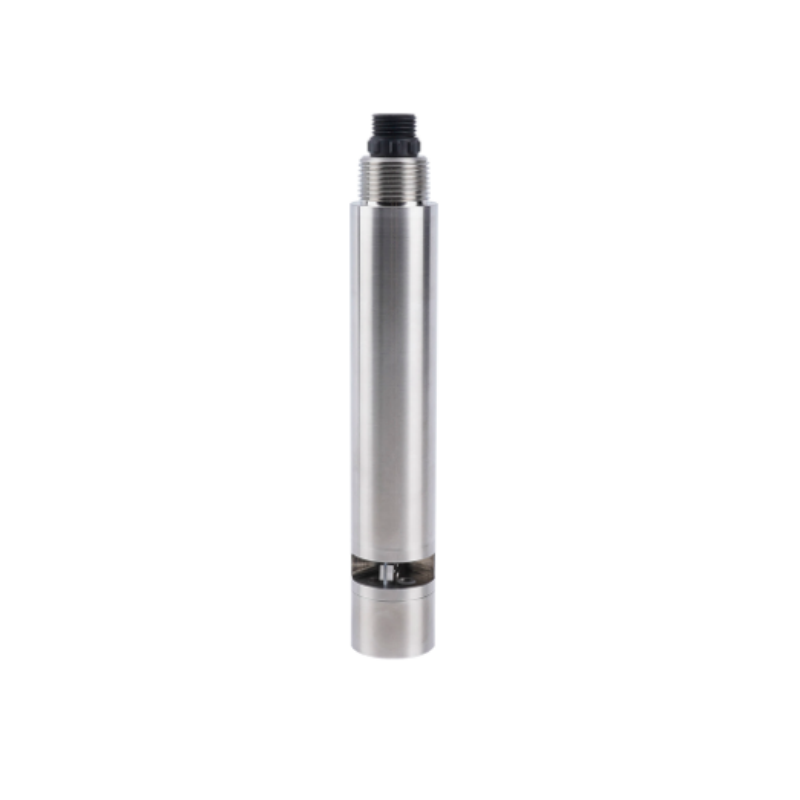
The COD-201 online COD digital sensor uses a dual wavelength UV absorption technology to quickly and accurately detect chemical oxygen demand (COD) in bodies of water. The 316L stainless steel corrosion-resistant shell can be used in many water quality situations without the need for chemical reagents or secondary contamination. It has an IP68 high protection rating, a 12-24VDC power supply, an RS485 standard output, and can be installed in water. People often use it to regulate online COD indicators in surface water, industrial wastewater, municipal sewage, and other places.
★★★★★
Parameters
| Item | Specification |
|---|---|
| Measuring Principle | Dual-wavelength UV Absorption Method |
| Measuring Range | 0-200mg/L equiv. KHP; 0-150mg/L equiv. KHP |
| Resolution | 0.1mg/L |
| Accuracy | ±5% |
| Operating Temperature | 0-50℃ |
| Storage Temperature | 5-65℃ |
| Operating Pressure | <0.2MPa |
| Power Supply | 12-24VDC |
| Power Consumption | 0.3W@12V |
| Signal Output | RS-485(Modbus/RTU) |
| Calibration Method | Two-point Calibration |
| Mounting Method | Immersion Installation |
| Housing Material | 316L Stainless Steel |
| Protection Grade | IP68 |
| Cable Length | 5m standard (Other lengths customizable) |
Why choose COD201 digital sensor?
- Dual wavelength UV method, no reagents, no secondary pollution, more environmentally friendly detection
- 0-200/0-150mg/L dual range, 0.1mg/L high-resolution, ± 5% accurate measurement
- 316L stainless steel shell, IP68 waterproof,<0.2MPa, suitable for complex working conditions from 0-50 ℃
- RS485 (Modbus/RTU) standard output, can be directly connected to industrial control systems, stable data transmission
Featured Applications
- Municipal sewage treatment: online monitoring of COD in the influent, biochemical tank, and effluent of sewage treatment plants to guide process regulation and ensure standard discharge
- Industrial wastewater monitoring: COD detection of wastewater from industries such as chemical, printing and dyeing, papermaking, and food processing to control discharge indicators
- Surface water monitoring: Long term monitoring of COD in natural water bodies such as rivers, lakes, and reservoirs to understand the pollution status of water bodies
- Industrial park control: Real time monitoring of COD at the park’s sewage outlets and pipeline networks to achieve precise monitoring of pollution sources
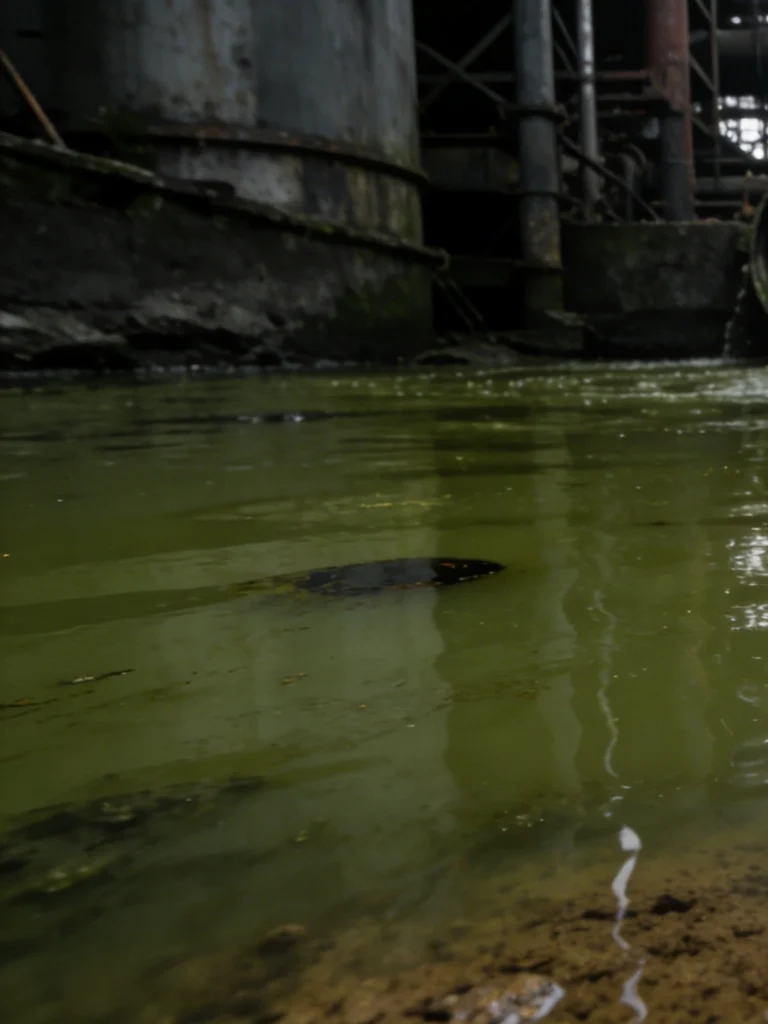
Installation and wiring
Installation requirements
- Adopting immersion installation, the sensor detection end needs to be completely immersed in the tested water body to ensure that the optical detection surface is in full contact with the water sample without obstruction;
- The installation position should avoid strong water flow impact, dead corners of the tank body, and areas with a large amount of suspended solids accumulation, to prevent the detection surface from being blocked or worn by impurities;
- After installation, the sensor should be kept stable, avoiding shaking and collision, and preventing damage to optical components from affecting measurement accuracy;
- Strict waterproof sealing treatment should be carried out at the wiring junction to prevent water infiltration. Standard cables should be fixed to prevent pulling and damage;
- Suitable for installation scenarios such as sewage tanks, reaction tanks, pipelines, etc. The installation of pipelines should ensure a stable flow rate of water samples and no interference from bubbles during detection.
Maintenance and Calibration
Routine maintenance
- Regularly clean the sensor detection end with distilled water to remove algae and other particles and prevent light from entering.
- To prevent water intrusion, make sure cables and wires are waterproof and repair any damaged or loose parts.
- Avoid high concentrations of oil, viscous contaminants, and pollution in the optical path to maintain measurement accuracy.
- If scaling is present, gently wash and wipe the detector’s end with a cloth. Don’t scratch optical components excessively.
Calibration operation
- The sensor adopts a two-point calibration method, and a standard solution corresponding to the measuring range is prepared to complete the calibration according to the instrument instructions
- It is recommended to calibrate once every 1-3 months under normal working conditions, and shorten the calibration cycle for high turbidity and high pollution water quality
- Before calibration, the sensor needs to be cleaned thoroughly to ensure that the detection end is free of impurities and to guarantee calibration accuracy
Technical Support
Top 6 Industrial Gas Analyzers Manufacturers 2025
6 Best Industrial Gas Detector Manufacturers in the World
9 Best Portable Carbon Dioxide Detector 2025 – Complete Buying Guide
Top 7 portable combustion analyzer Tested
The COD-201 online COD sensor delivers great precision, minimal chemicals, and easy operation and maintenance. Traditional chemical approaches waste reagents and cause secondary contamination, while mature dual wavelength ultraviolet detection technology allows rapid and continuous online COD indicator monitoring. Easy to run, low consumption, and stable, the COD monitoring of water quality process is ecologically friendly, efficient, and reliable from on-site installation to daily operation and maintenance. Supply is enough, and cable length can be modified. Please consult for bulk purchases and choosing!
Request a Quote