.png)
In the domains of environmental engineering and industrial water management, knowing the basic differences between surface water vs groundwater is not just an academic exercise; it is also necessary for designing systems, following the rules, and running things smoothly.
The source of your water will affect how you check the quality of the water, whether you are in charge of an industrial discharge or a municipal drinking water facility. This guide not only helps you choose the right sensor, but it also breaks down the chemical, physical, and technical differences between these two sources.
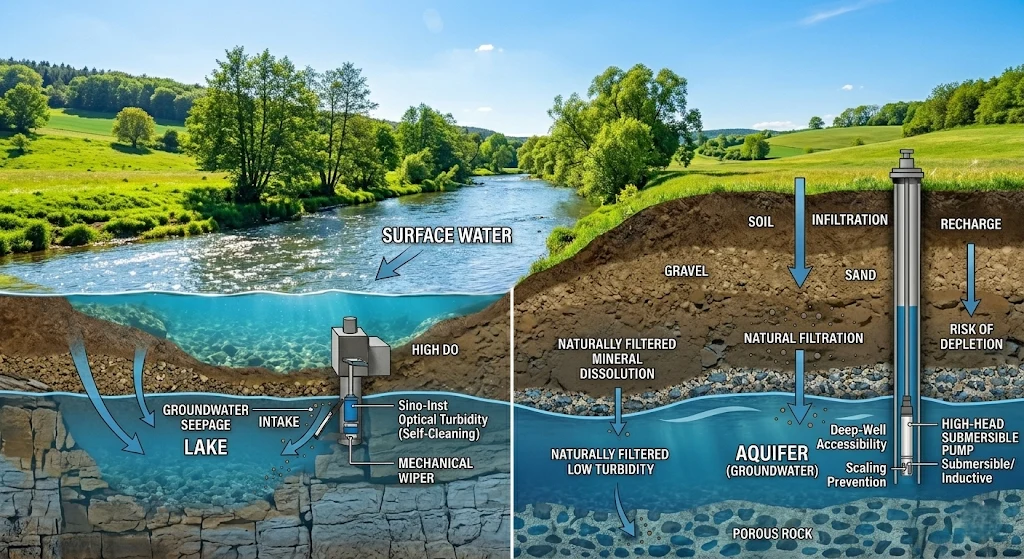
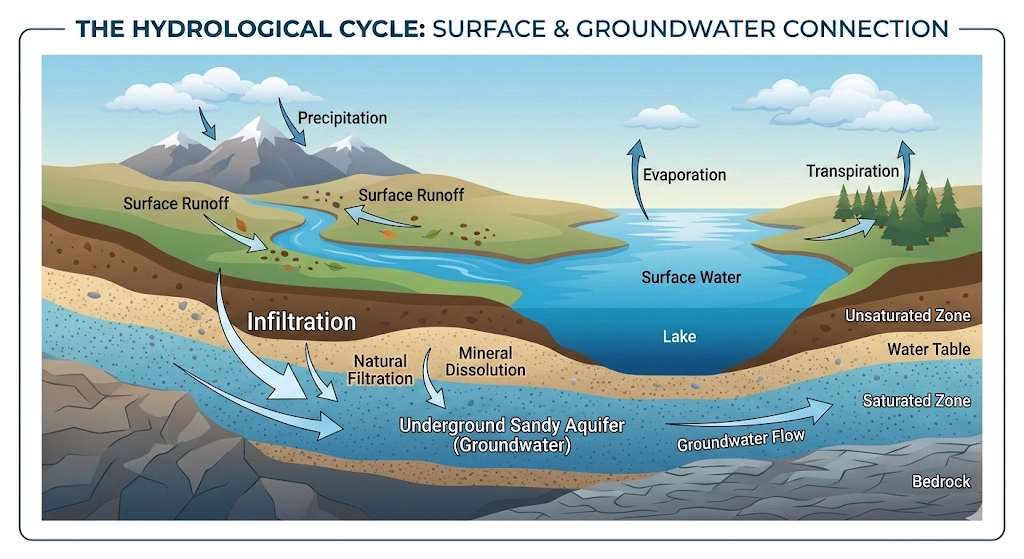
Surface water vs groundwater
Defining the Sources: More Than What You See
We need to know where water comes from before we can manage it well.
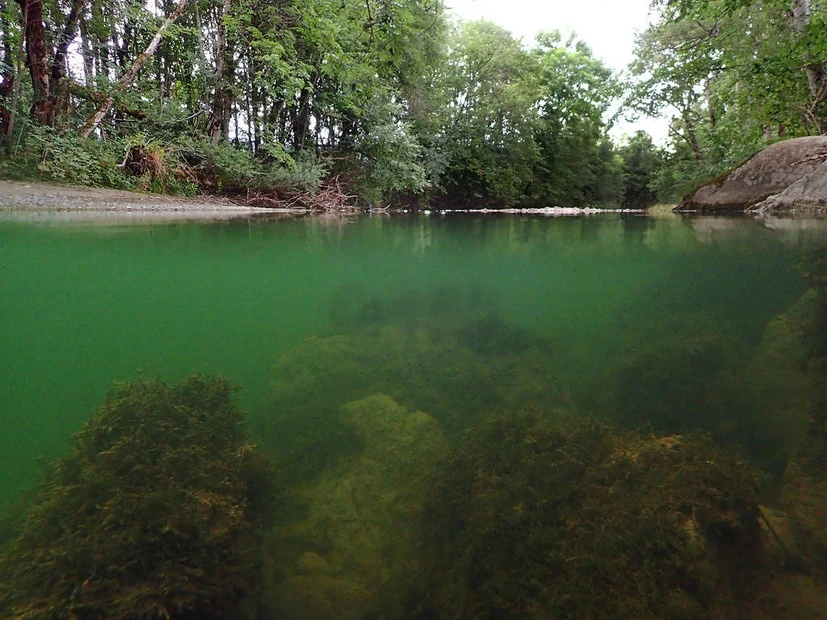
- Surface water is water that is found in lakes, rivers, and reservoirs. It is the easiest to get to, but it is also the most likely to be harmed by surface runoff contaminants, changes in temperature over the year, and interactions with the atmosphere.
- Accessibility: Easy to draw via intake pumps, but subject to seasonal scarcity or drought.
- Source: Primarily replenished by precipitation and surface runoff.
- Groundwater: Found in aquifers that are below the surface. Water naturally filters itself as it moves through soil and rock. This makes the water less cloudy but more mineral-rich and harder.
- Accessibility: Requires deep-well drilling and high-head submersible pumps.
- Source: Replenished slowly through recharge, where water seeps down from the surface over years or even decades.
| Feature | Surface Water | Groundwater |
|---|---|---|
| Location | On the Earth’s surface (rivers, lakes). | Beneath the Earth’s surface (aquifers). |
| Source | Precipitation, runoff, and melting snow. | Infiltration of rain and surface water. |
| Water Quality | More susceptible to pollution and sediments. | Generally cleaner due to filtration, but higher in minerals. |
| Flow & Storage | Flows quickly; storage changes with seasons. | Moves very slowly; stored in porous rocks. |
| Renewal Rate | Fast (days to years). | Very slow (years to millennia). |
| Main Uses | Irrigation, industry, hydropower. | Drinking water (primary source for many). |
| Vulnerability | Easily contaminated and affected by droughts. | Risk of over-extraction (depletion) and slow to clean up. |
Risks of Runoff vs. Natural Filtration
The way that groundwater naturally filters itself
Water moves through layers of sand, soil, and rock on its way from the top to an aquifer. This works like a natural sand cleaner to get rid of:
- Suspended Solids: This causes almost no haze.
- When it comes to pathogens, most bacteria and viruses are stuck in the dirt.
- The trade-off: The water is physically cleaner, but it breaks minerals in rocks, which makes them hard and conductive.
The Risk of Runoff from the Surface
This filter is not present in surface water. Water that runs over land (runoff) when it rains picks up everything in its way:
- Nitrates and phosphorus levels rise because of runoff from farms.
- Urban runoff carries heavy metals, oils, and tiny pieces of plastic.
- Because of the sunshine and organic matter, direct exposure raises the risk of microbes like E. coli and algae.
Guide to Targeted Monitoring
Surface Water: How to Handle Change
- SS and turbidity are very important for keeping an eye on stormwater increases. To keep things clean, use optical sensors with wipers.
- COD/TOC: Keeps an eye on industrial and agricultural waste. For real-time notifications, UV-Vis sensors that don’t use reagents are optimal.
- Chlorophyll and algae are important for early warning of eutrophication in reservoirs.
Groundwater: Long-Term Safety
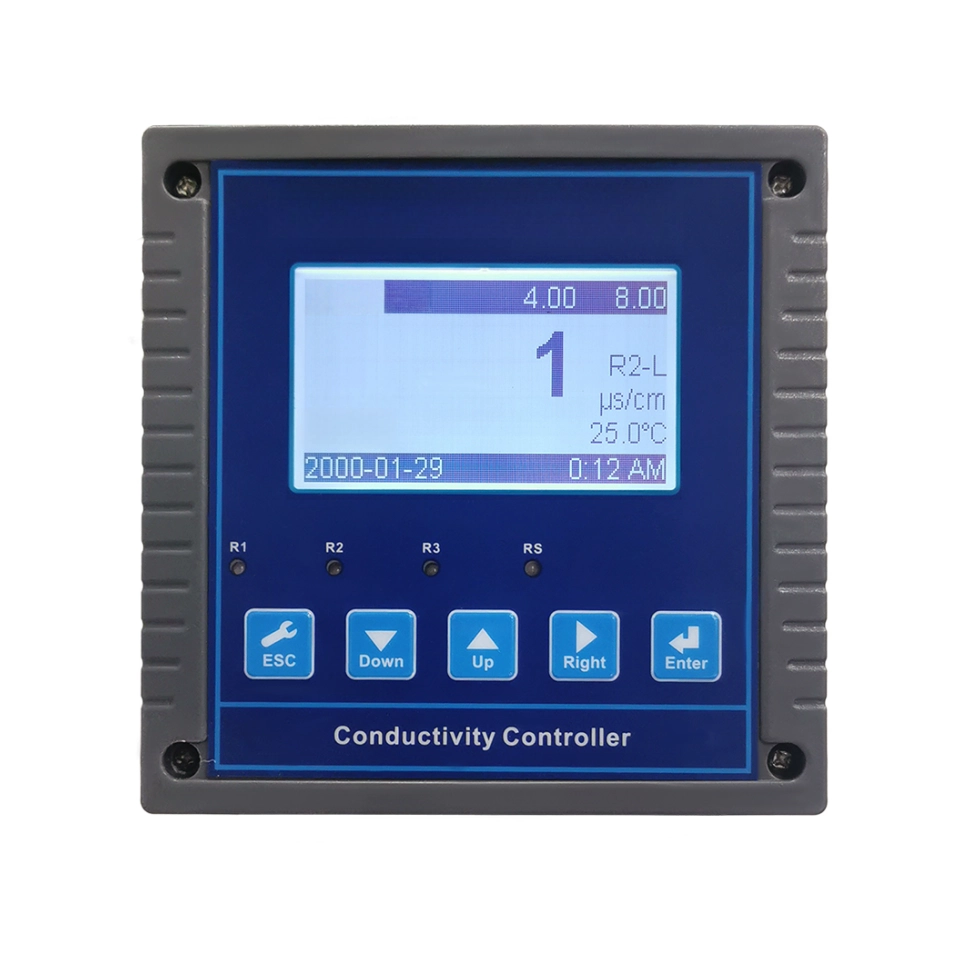
- Conductivity (EC): This tests for changes in mineralization or the presence of seawater. Inductive sensors stop problems with scaling.
- pH & DO: Watches the redox environment to find breaks in the aquifer.
- Heavy Metals: Needed for long-term trend research and to follow the rules.
Monitoring Challenges: Why “One-Size-Fits-All” Fails
The Problem with Surface Water: It Changes Quickly
The quality of surface water can alter in a matter of minutes. A strong storm can raise nitrate levels or lower pH.
Master Tip: When looking for online water analyzers for surface water, make sure they have quick reaction times and strong anti-fouling features to deal with bio-growth (algae).
The Problem with Groundwater: Hidden Pollution
Pollution in groundwater is often hard to see. It takes very accurate Industrial Conductivity Sensors to find out if an aquifer is contaminated by leaky subterranean tanks or seawater (salinity).
Master Tip: Use submersible water quality probes that can handle high hydrostatic pressure without losing data for deep-well monitoring.
Industry practical selection of sensors for different working conditions
Case 1: Treatment of municipal water (surface water)
- Challenge: After storms, the turbidity level changed, which caused chemical overdose.
- Action: Set up real-time monitoring of intake turbidity.
- The result was that automatic flocculant dosing cut chemical expenditures by 15% and made sure the water was safe.
- Sino-Inst Recommendation: For surface water monitoring, we recommend our High-Precision Optical Turbidity Series, engineered for rapid response and seamless integration with dosing control systems.
Case 2: Deep-Well Irrigation (Water from the Ground)
- Problem: Well water that is high in minerals is making the soil saltier.
- Action: Added submerged conductivity sensors to the pump.
- Result: Stopped soil from becoming salty by automatically sending water away when mineral spikes happened.
- Sino-Inst Recommendation: We recommend the Sino-Inst Industrial Conductivity Meter, specifically designed to provide high-stability data for precision irrigation and salinity control in deep-well environments.
Expert Advice: How to Lower the Total Cost of Ownership (TCO)
Sensor drift and frequent calibration are two of the hidden expenses of water monitoring.
- For surface water, focus on anti-fouling to cut down on the need for manual cleaning.
- For groundwater, you should focus on long-term stability to make the time between calibration cycles longer.
When you use Sino-Inst analyzers, you’re making an investment in long-term reliability that cuts down on the need for field visits and reagent expenditures.
Regulatory Compliance: Meeting Global Standards Accurate monitoring is not just about efficiency—it’s about compliance. Whether you are following EPA guidelines in the US, ISO 7027 for turbidity measurements, or local environmental standards for groundwater protection, using certified instrumentation like Sino-Inst ensures your data is legally defensible and scientifically sound.
Conclusion:Find out where your water comes from.
To manage water correctly, you need to grasp how surface water and groundwater affect one other. It is important to keep a constant eye on surface water since turbidity and organic debris can change quickly. On the other hand, to control mineralization and salinity in groundwater over time, you need sensors that are always under high pressure.
A well-chosen set of tools is the key to success in business. No matter what the work is, it’s very vital to make sure that the technology is suited for it. For example, Sino-Inst’s anti-fouling optical monitors are great for unstable rivers, and submersible conductivity probes are great for deep aquifers. Putting real-time data and regular testing at the top of your list can help you make sure that you follow the rules for a long time, cut down on chemical waste, and keep your water infrastructure safe.
FAQ
Related Products
Take the Next Step in Water Monitoring
Ready to optimize your water quality monitoring system? Whether you are managing a municipal intake or a deep-well irrigation project, our engineers are here to help you select the perfect instrumentation.
Explore our [Full Range of Water Quality Analyzers]
Need a custom solution? [Contact Sino-Inst Today for a Free Technical Consultation]
Request A Quote
More Resources
-
The Expert Guide to OSHA Requirements for Confined Space Air Monitoring
Navigating the complex landscape of industrial safety is a critical responsibility for any plant manager, safety officer, or environmental health professional. Among the…
-
Does Chlorine Reduce pH in Pool?Owner Needs to Know in 2026
Does chlorine reduce pH? This issue remains at the core of water quality management when maintaining a clear and transparent swimming pool. Many…
-
7 Best portable carbon monoxide detector for International travel
Carbon monoxide (CO) is a silent, invisible, and lethal threat that claims thousands of lives globally every year. For the international traveler, the…
-
7 Best Sensor Gas Detector Systems for Industrial Safety in 2026
By Sino-Inst — Industrial Instrumentation Experts In modern industrial environments, the margin for error when managing hazardous gases is absolutely zero. Whether you…
-
What Best Gas Detectors Do Fire Departments Use?
Introduction to Fire Service Gas Detection When lives are on the line and seconds count, first responders cannot rely on guesswork. Identifying hazardous…
-
Top 10 Portable Carbon Monoxide Detector for Ice Fishing
Authored by Sino-Inst. We are a leading manufacturer and supplier of professional gas detection, flow measurement, and industrial instrumentation solutions. With decades of…