.png)
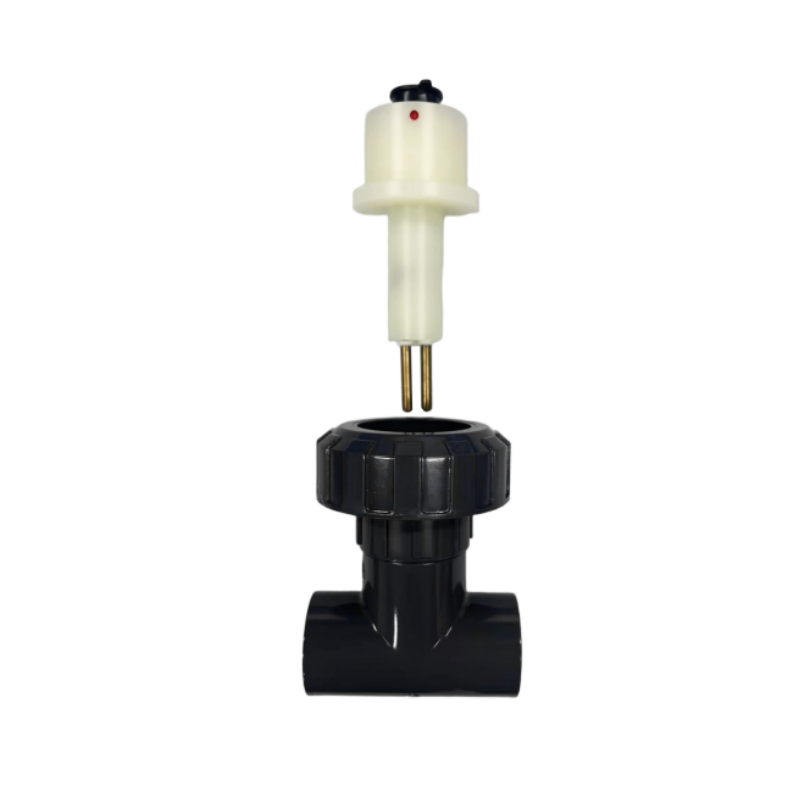
The FC-CU Copper Corrosion Rate Electrode is an extra electrode for monitoring the corrosion of copper equipment. It is compatible with pure copper corrosion rate analyzers of the dual-electrode Sino-Inst series. It is easy to install and use, and it measures corrosion in water media equipment and copper pipelines with accuracy. Because this electrode provides reliable sensing data for corrosion prevention and control in copper industrial equipment, it is widely utilized for corrosion monitoring in circulating water systems of devices containing copper.
★★★★★
Parameters
| Item | Specification |
|---|---|
| Electrode Material | Pure Copper |
| Structural Form | Two-electrode type |
| Matching Installation Fittings | DN25 tee pipe, union fitting |
| Total Electrode Length | 123mm |
| Electrode Head Size | 30mm |
| Electrode Rod Diameter | 6mm |
| Connection Section Length | 32mm |
| Applicable Medium | Aqueous medium (circulating water, cooling water, etc.) |
| Matching Analyzer | Apure FCY-100 and other series corrosion rate analyzers |
| Installation Method | Screw-in type, used with corrosion sensor |
| Waterproof Performance | Non-waterproof at wire-electrode connection (sealing required) |
| Recommended Hydration Time | 10-15 minutes (for dry-stored electrodes before use) |
Core Highlights
- Specialized material adaptation: Pure copper electrode material, matched with copper monitoring equipment of the same material, ensuring the accuracy of corrosion rate measurement from the sensing end and avoiding monitoring errors caused by material differences;
- Two electrode structure: Classic two electrode design, adapted to the principle of linear polarization corrosion rate detection, stable signal transmission, and able to quickly feedback instantaneous corrosion information of copper materials;
- Easy installation: Equipped with DN25 three-way and flexible connections, it can be directly screwed into the lower end of the corrosion sensor and aligned with the water flow direction through the red mark. It is easy to locate and has strong adaptability for on-site installation;
- Wide adaptability: Perfectly matched with FCY-100 and other series corrosion rate analyzers, it can also be adapted to industrial corrosion rate monitoring equipment based on the same principle, with high compatibility of sensing signals;
Featured Applications
- Specially designed for copper equipment, it is widely used in the corrosion monitoring of circulating water/cooling water systems for copper condensers, copper pipelines, copper heat exchangers, and other equipment in industries such as power, chemical, and municipal HVAC. It is also suitable for studying the corrosion characteristics of copper materials in laboratories.

Daily maintenance and precautions
Instructions for use
- First, take out 2 corrosion test electrodes and 2 sealing rings from the spare parts bag.
- Next, wash the test electrode with petroleum ether or anhydrous ethanol, and dry it with filter paper (weigh it if necessary).
- Then screw the sealing ring and test electrode into the screw at the bottom of the corrosion sensor, and tighten them until they are tight. Wear gauze gloves before installation to prevent electrode contamination.
- Next, insert the corrosion sensor into the matching probe holder, rotate the sensor, pay attention to the direction of water flow, and then tighten the nut. It is strictly prohibited for water to enter the aviation plug at the upper end of the corrosion sensor.
- Finally, plug in the probe.
Replacement Cycle
It is recommended to check the electrode corrosion and wear once a month. If there is severe corrosion, deformation, or scaling on the electrode surface that cannot be removed, the electrode (including the sealing ring) should be replaced in a timely manner; If the corrosiveness of the monitoring medium is weak, the inspection cycle can be appropriately extended according to actual usage to ensure measurement accuracy.
Installation precautions
- Putting on gauze gloves, take two FC-CU copper leads and two sealing rings out of the box of new parts.
- To clean the anode, you can use either pure ethanol or petroleum ether. After that, dry it off with filter paper before you weigh it.
- The copper wire and sealing ring should be put into the rust sensor’s bottom screw for a tight seal.
- Turn the nut all the way down and make sure the red mark lines up with the flow of water. This will keep water out of the fly plug. Last, put the probe signal plug and electrode into the liquid you want to measure.
Key points for daily use
- After the electrode is dried, it should be hydrated 10-15 minutes in advance before use to ensure stable measurement data;
- Before placing the measuring liquid, wipe the electrode head clean. If there is oil stains on the surface, wipe it with a cloth or clean it with detergent or dilute hydrochloric acid. After wiping dry, put it back into use;
- When used in the laboratory, the corrosion sensor can be fixed with a universal clamp to ensure that all electrodes are immersed in the measured liquid, avoiding measurement errors caused by partial exposure.
Regular Maintenance
- Check the surface of the electrode often, clean off any dirt and corrosion immediately away, and don’t let scaling affect the accuracy of the sensing.
- Check that the sensor and electrode are connected properly and that the seal is tight so that water vapor can’t seep in and mess up the signals.
- After you take the measurement, clean and dry the electrodes right away. Store them in a dry area and don’t let them get oxidized.
Electrode diagram illustration
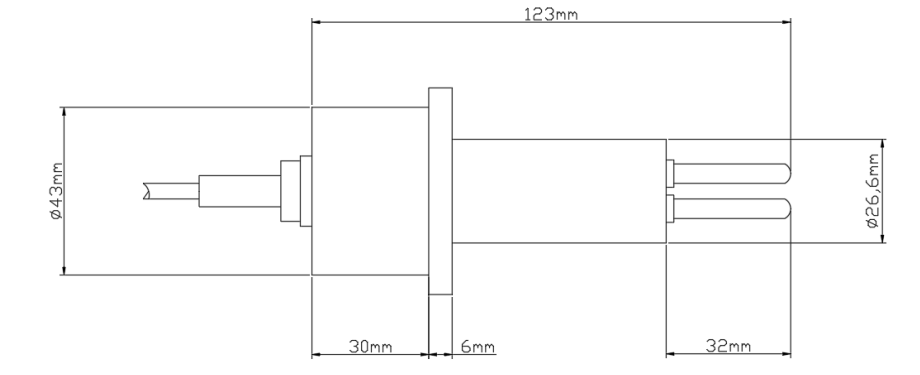
- After opening the packaging, check if there is any mechanical damage to the electrode body;
- Cooperate with DN25 tee and flexible connection installation, pay attention to the installation direction facing the red mark on the electrode;
- The connection between the electrode wire and the electrode is not waterproof, please make sure to do a good job of waterproofing.
Technical Support
Top 6 Industrial Gas Analyzers Manufacturers 2025
6 Best Industrial Gas Detector Manufacturers in the World
9 Best Portable Carbon Dioxide Detector 2025 – Complete Buying Guide
Top 7 portable combustion analyzer Tested
The FC-CU copper corrosion rate electrode has become a high-quality sensing accessory for online monitoring of copper equipment corrosion due to its high adaptability, high precision, and convenient operation and maintenance. Paired with a corrosion rate analyzer, it achieves accurate detection of copper corrosion rate, assisting in the safe operation, maintenance, and corrosion control of copper equipment.
Request a Quote