.png)
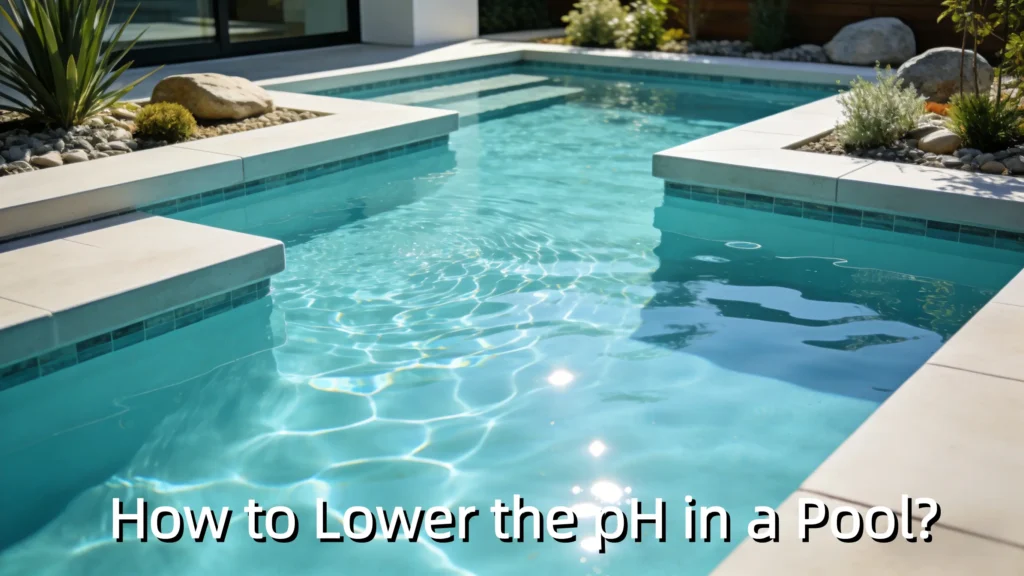
Learning how to lower the pH in a pool is the first step in ensuring clear water quality, whether in a private backyard or a large commercial swimming pool. Mastering how to reduce the pH value of the swimming pool not only protects your equipment from corrosion, but also significantly improves the disinfection efficiency of chlorine. In our guide, you will quickly master a professional and secure balance strategy.
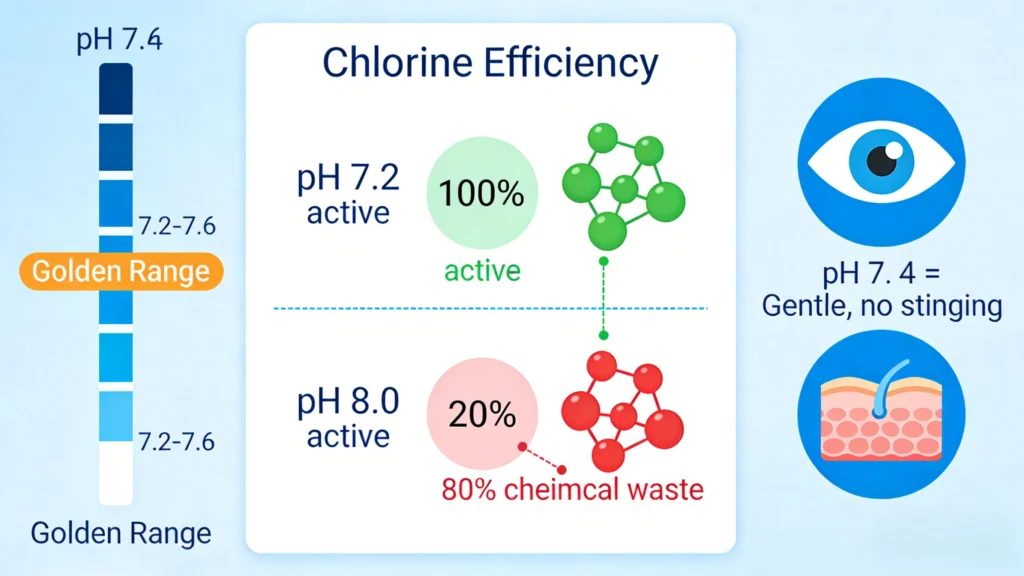
Ideal pool pH: Why is 7.2-7.6 the golden range?
Scientific basis: Within this range, chlorine has the highest activity. The disinfection effect is the best. If the pH value reaches 8.0, the effectiveness of chlorine is only about 20%, which means it will cause you 80% of chemical waste.
And within this pH range, the user’s comfort level is the highest, with a pH value of about 7.4 for the human eye and skin. Maintaining this range can prevent stinging sensations and make users feel that the water quality is more “gentle”.
What causes high pH in the swimming pool?
Before repairing the low pH of the swimming pool, you need to understand the reasons for the increase in pH. By 2026 and earlier, common triggers include:
- Newly built swimming pool: The surface of the newly built swimming pool will continuously leak alkaline substances for up to a year.
- Saltwater chlorine generator: During the process of converting salt into chlorine, by-products are generated, which naturally cause an increase in pH.
- Aeration effect: Heavy rainfall, artificial waterfalls, or intense water play can cause carbon dioxide to overflow, thereby driving an increase in pH.
- High total alkalinity TA: If TA is too high, it will lock the pH value at a high level like a “buffer”.
The impact of high pH in the swimming pool.
When the pH is high, the water becomes cloudy and:
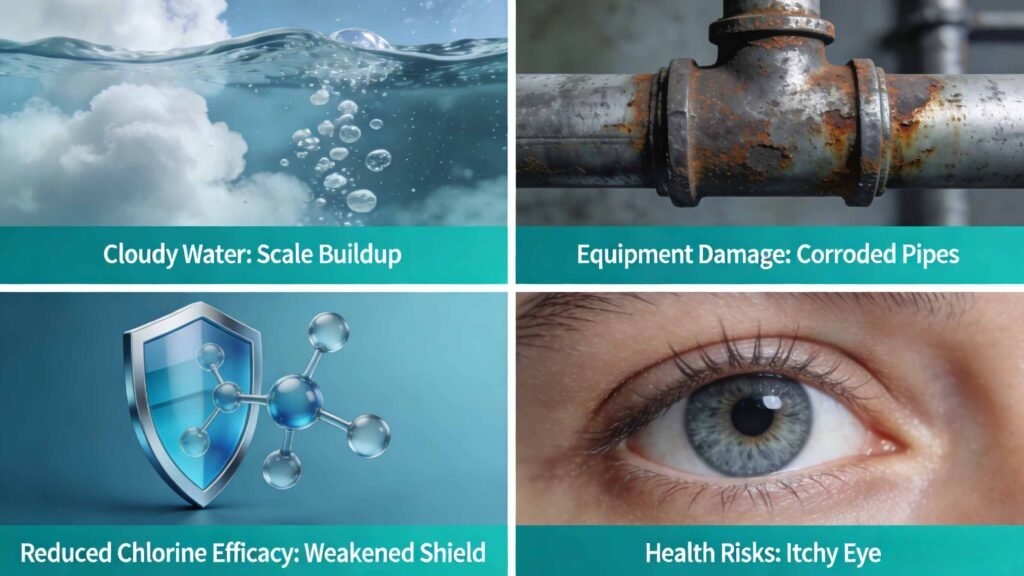
- Water quality that is cloudy and has a lot of scale: High pH levels can make calcium ions that are dissolved in water fall out of solution, which can cause calcium deposits to build up inside pool tiles and expensive heaters and stay in the water, making it look like mist.
- Shorten the life of equipment: High pH levels can cause pipelines and metal parts to corrode and pit, which makes heating less effective and shortens the life of the equipment.
- Chlorine failure: The effectiveness of chlorine as a disinfectant drops off sharply with pH. Chlorine works 65% of the time when the pH is 7.2, but only 20% of the time or less when it is 8.0.
- Health risks: If the pH of the pool water is too far off from 7.4, swimmers may get hot, burning eyes and dry, itchy skin. Strong alkaline conditions break down swimsuit fibers faster, making them less flexible and fading.
How to measure the pH level of a pool?
In the year 2026, accuracy is very important. Regular test strips can only give you rough guesses; for professional results, you need better tools.
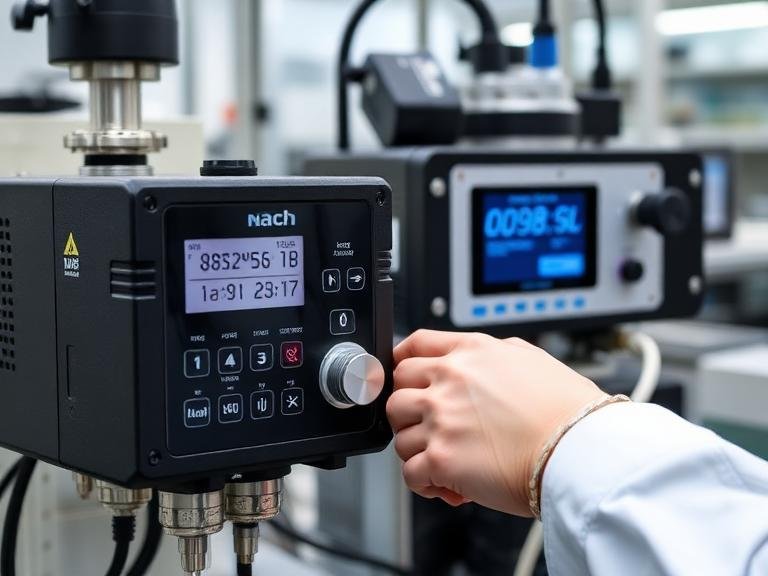
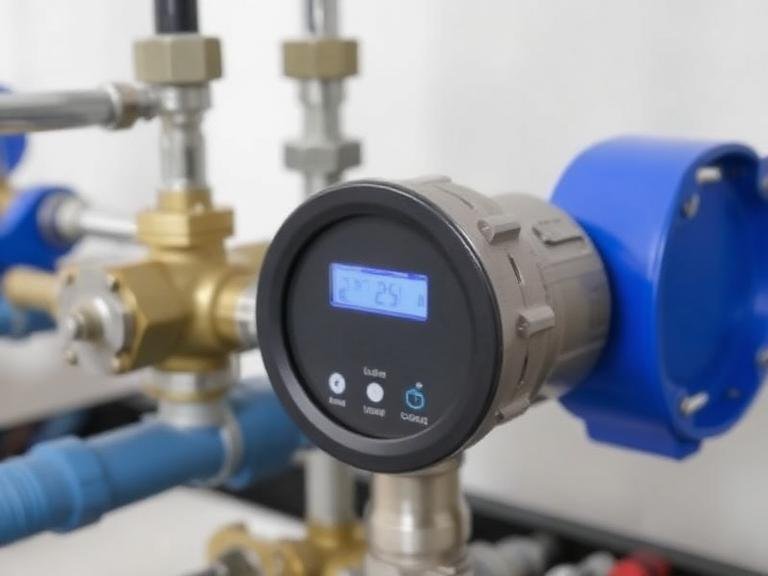
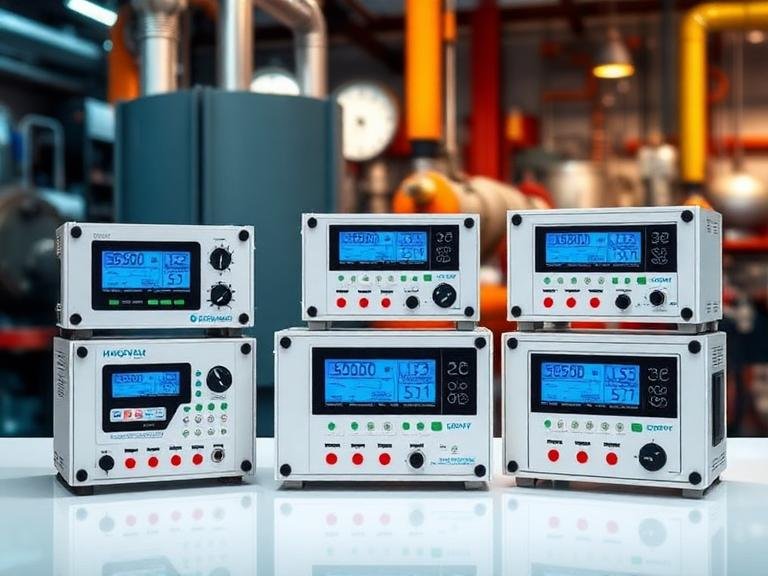
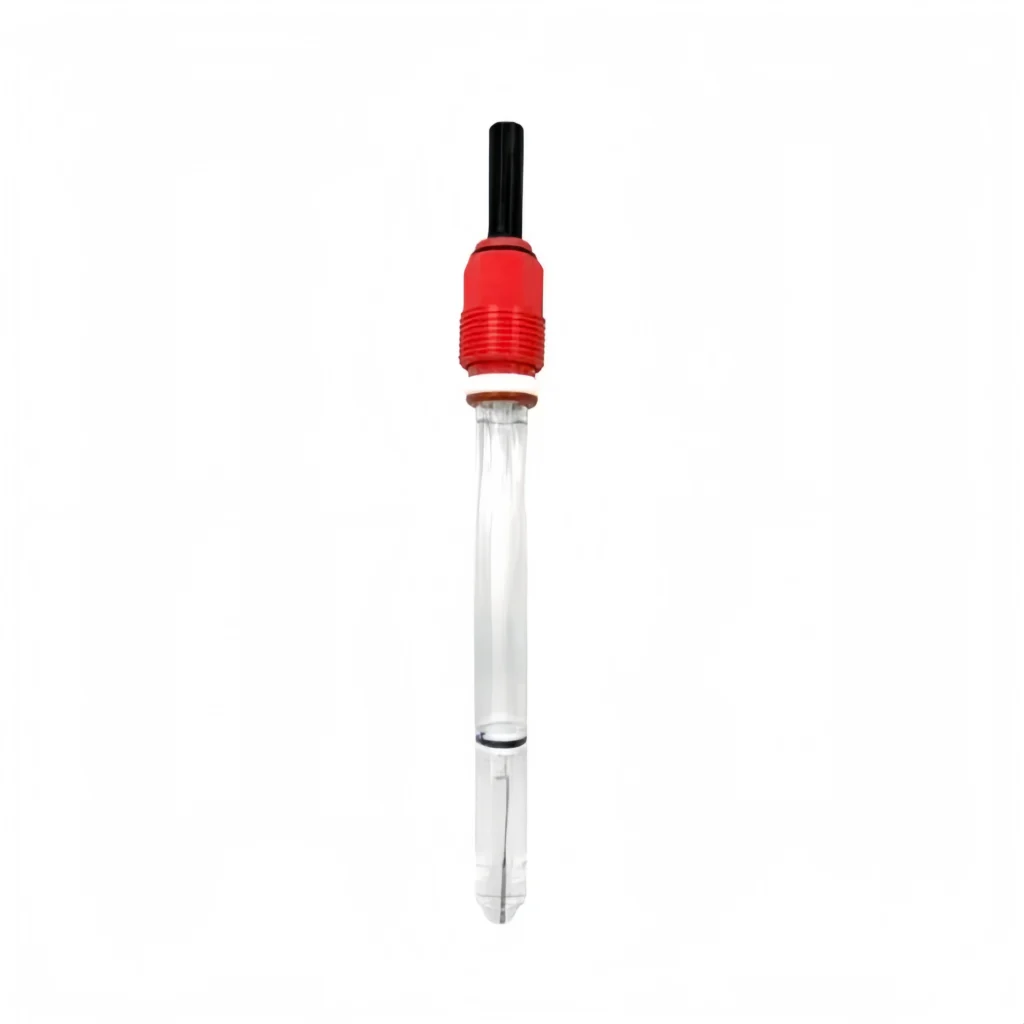
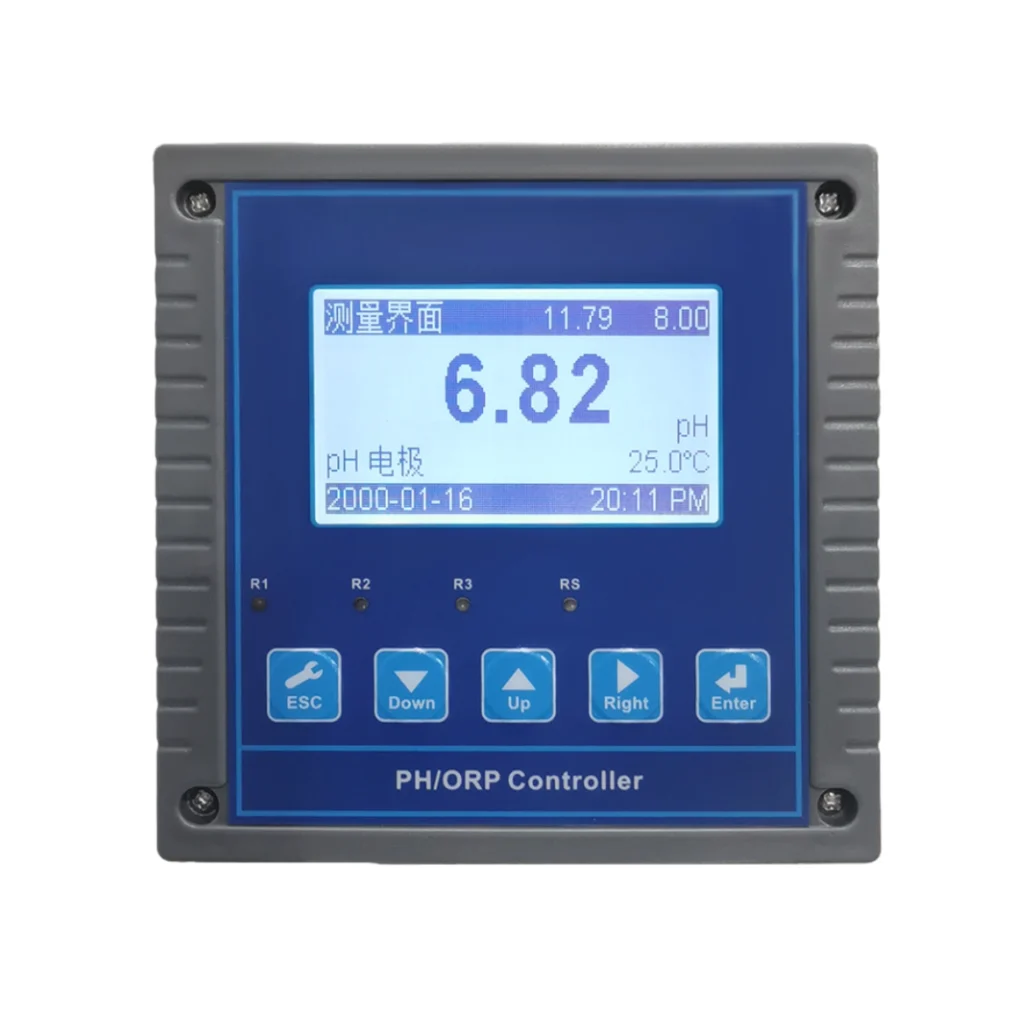
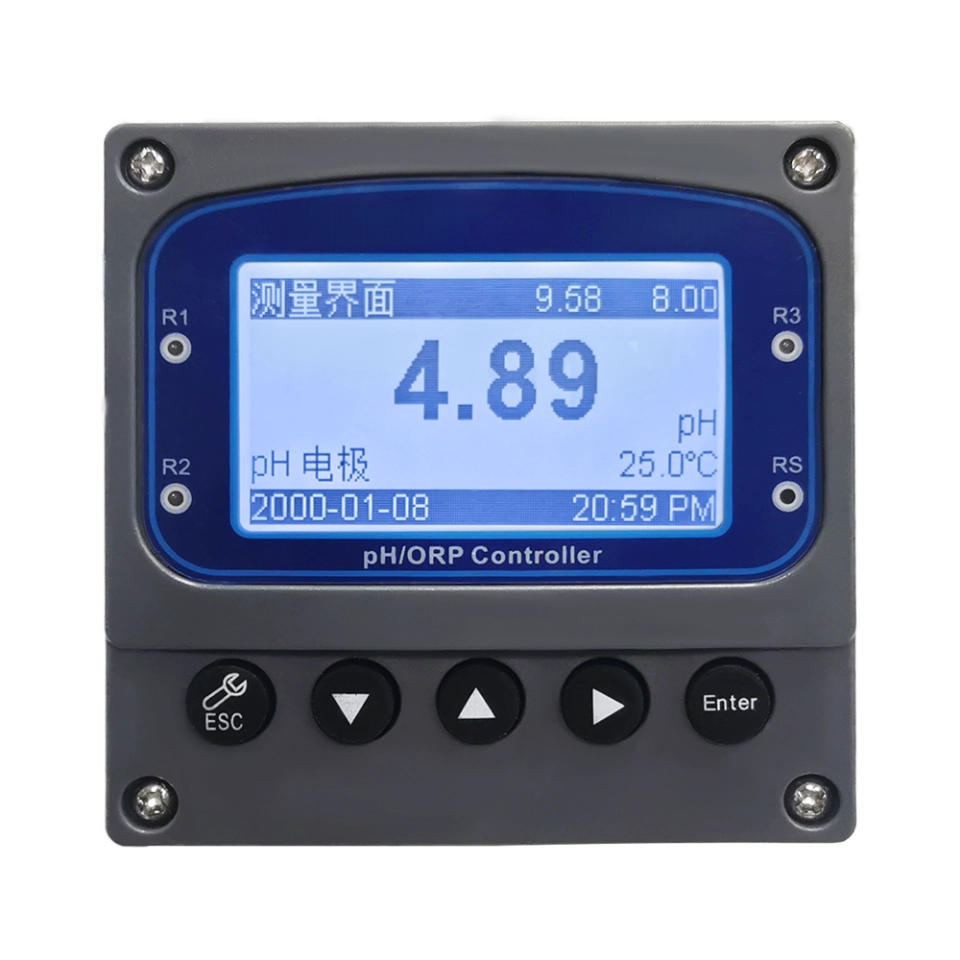
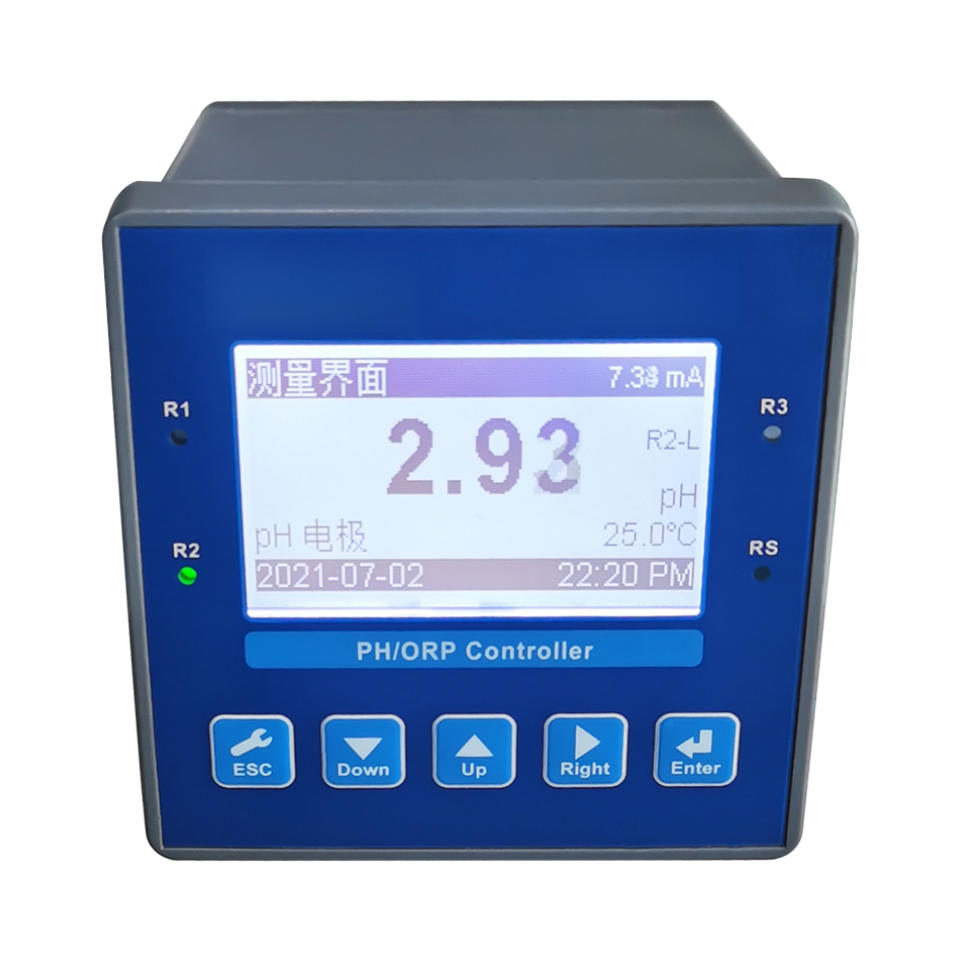
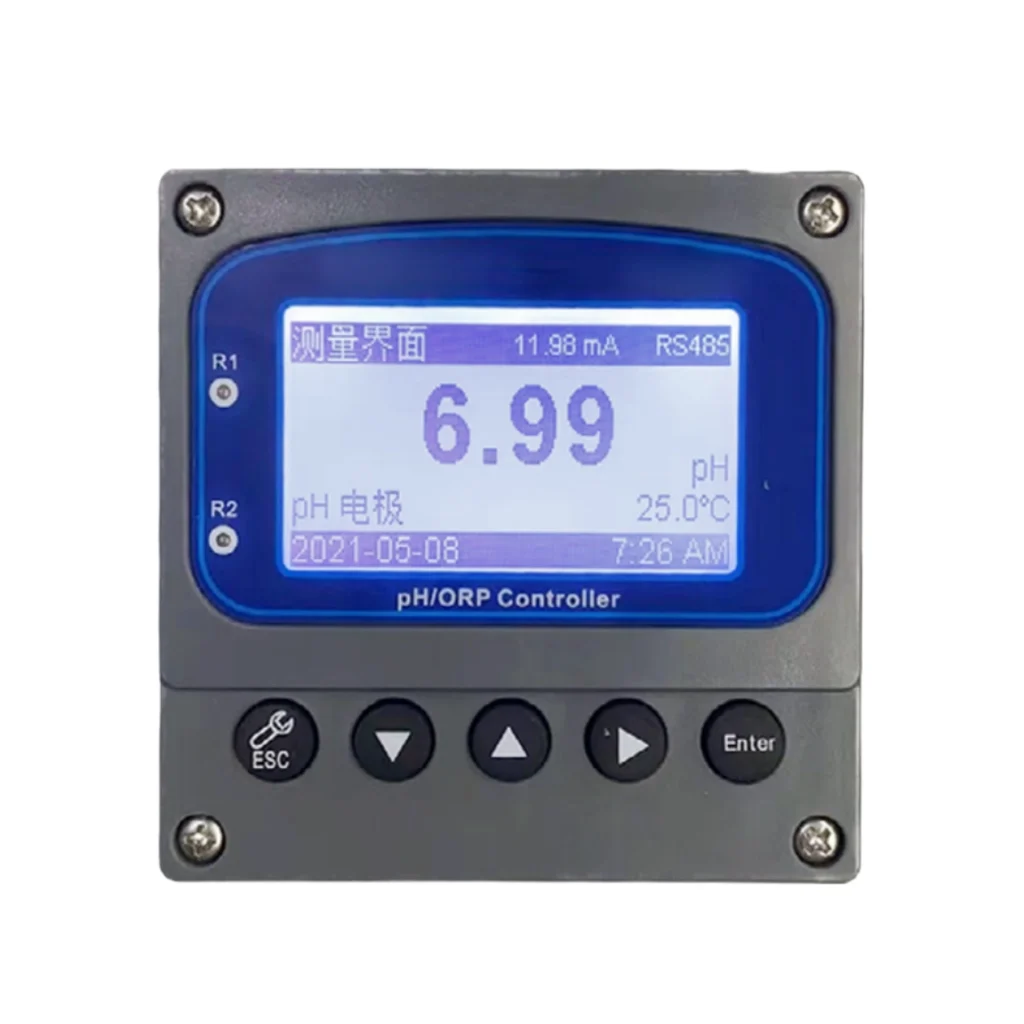
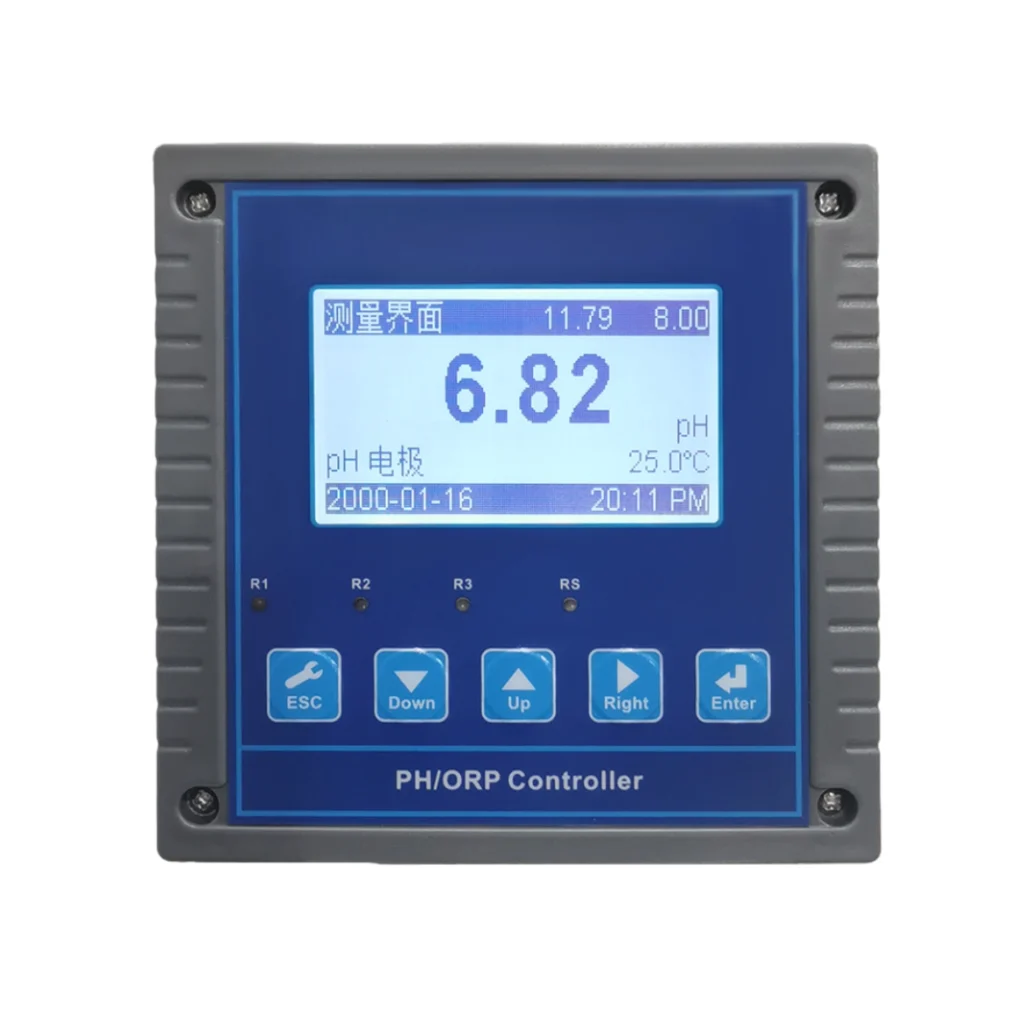
- Note about the digital pH sensor: Using industrial-grade monitors can make measurements much more accurate. Because they don’t have to compare colors one by one, these sensors often give straight readings that are accurate to two decimal places. For those who want to save time, digital monitors are a great choice because they measure themselves once an hour. Smart water monitors can also measure many things about a swimming pool, including temperature, pH, ORP redox (which cleans the water), and TDS.
- Sample advice: Take the sample 45 cm below the water’s surface and away from the return water outflow to make sure it is a good representation of the whole.
How to lower the pH in a pool?
Once you’ve checked that the swimming pool’s pH level is higher than normal, you should do the following right away:
- Pick chemical agents
Muriatic acid is the strongest and cheapest option for reducing pH levels a lot.
Sodium bisulfate (dry acid): comes in granules, is easy to use, and is safer to keep. - Figure out how much you need to take
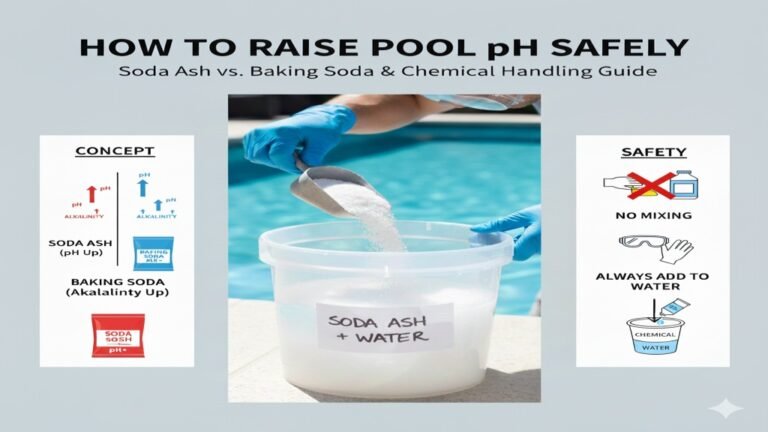
Find out how much medicine you need to take based on how much water is in your pool. To lower the pH of 10,000 gallons (about 38 tons) of water from 8.0 to 7.5, you usually need about 950ml of hydrochloric acid. Always consult the specific dosage chart on your chemical product label, as concentrations may vary. - Placement (according to AAA rules) Always add acid to water. Don’t ever add water to acid.First, mix hydrochloric acid with pool water in a bucket.Slowly pour around the edge of the deep water area while the pump is running.
*Don’t pour directly into the skimmer. - Go through the cycle again and test again.
Before testing again, run the circulation pump for at least four hours. During this time, swimming is not allowed.
Safety Operation Guide
When handling hydrochloric acid or sodium bisulfate (dry acid), please strictly follow the following “professional safety guidelines”:
The operator is fully armed
- Goggles: prevent acid from splashing into the eyes (this is the most dangerous situation)
- Acid resistant gloves: Avoid direct skin contact with high concentration chemicals
- Cover the skin: Wear long sleeved clothing and closed shoes, do not operate with slippers
Operation against the wind
Hydrochloric acid is a highly volatile acid, and inhaling its smoke can burn the respiratory tract. When diluting or releasing outdoors, make sure to stand on the air outlet and let the wind blow from behind to avoid acid mist.
Mixing chemicals is strictly prohibited
Never mix acid directly with chlorine (liquid chlorine or chlorine tablets). The reaction between the two will immediately produce highly toxic chlorine gas, which may be fatal if inhaled in a confined space or at close range.
💡 Safety reminder: If acid accidentally splashes onto the skin or eyes, immediately rinse with plenty of water for at least 15 minutes and seek medical attention promptly. After any chemical adjustment, please be sure to wait for at least one complete cycle (usually 4-6 hours) before allowing personnel to enter the pool.
Summary:How can you safely lower the pH of a pool?
In short, “precise measurement” and “cautious operation” are both important for lowering the pH of a pool.
Maintaining the pH balance of the pool protects swimmers’ skin and pricey pump and valve equipment in addition to keeping the water clear and see-through. When you make changes, keep these three basic, helpful tips in mind:
It’s very important to wear goggles and follow the “Acid in Water” (AAA) method.
Instead of going too far, add two tiny doses to keep the pH stable.
Using sophisticated digital monitoring tools and not using test strips that are hard to see will make you four times more productive.
By following the expert advice in this article, you may simply fix excessive pH, make the pool last longer, and have a stress-free swimming season.

FAQ
Related Products
Core summary: Precise monitoring brings long-term benefits
Mastering how to lower the pH value of a swimming pool not only saves you chlorine costs, but also prevents expensive repairs. Whether you manage a private backyard pool or a commercial water center, data-driven maintenance is the only way to ensure clear water quality.
If you are pursuing higher precision water quality monitoring, please refer to our professional water pH series.
Not sure which chemical scheme is most suitable for your system? Contact us for customized water quality balance recommendations.
Request A Quote
More Resources
-
7 Benefits of Using a Mass Flow Meter in Industrial Processes
By Sino-Inst — A professional supplier of industrial process and analytical instruments, including gas detectors, gas analyzers, dust detectors, mass flow controllers, and…
-
How to Use a Mass Flow Controller for Precision Fluid Control?
In modern industrial manufacturing, laboratory research, and specialized fluid handling, achieving absolute precision is not a luxury; it is a fundamental requirement. Whether…
-
How Does a Gas Mass Flow Controller Work?
In modern industrial processes, precision is not a luxury; it is a fundamental requirement. Whether managing gas distribution in semiconductor manufacturing, controlling bioreactor…
-
The 6 Best Boiler Combustion Analyzer Solutions for Industrial Efficiency
In the highly demanding world of industrial heating, power generation, and commercial HVAC systems, achieving optimal fuel efficiency and maintaining strict emission compliance…
-
Drinking vs. Appliances:Is Distilled Water Better Than Spring Water
When choosing between daily drinking water or equipment water, the debate usually revolves around one issue: is distilled water better than spring water。…
-
The Expert Guide to OSHA Requirements for Confined Space Air Monitoring
Navigating the complex landscape of industrial safety is a critical responsibility for any plant manager, safety officer, or environmental health professional. Among the…