.png)
In the complex and often hazardous world of industrial manufacturing, petrochemical processing, and confined space operations, ensuring the safety of personnel is the absolute highest priority. One of the most frequent questions we receive from safety managers and procurement officers is: Can gas detectors detect multiple gases? As a leading innovator in industrial measurement and safety instrumentation, Sino-Inst has spent years engineering and refining sensor technologies to address this exact operational requirement. The short answer is yes, modern gas detection equipment is highly capable of identifying and measuring various distinct gas concentrations simultaneously. However, understanding the technology, limitations, and specific applications of these devices is critical for maintaining a compliant and safe working environment.
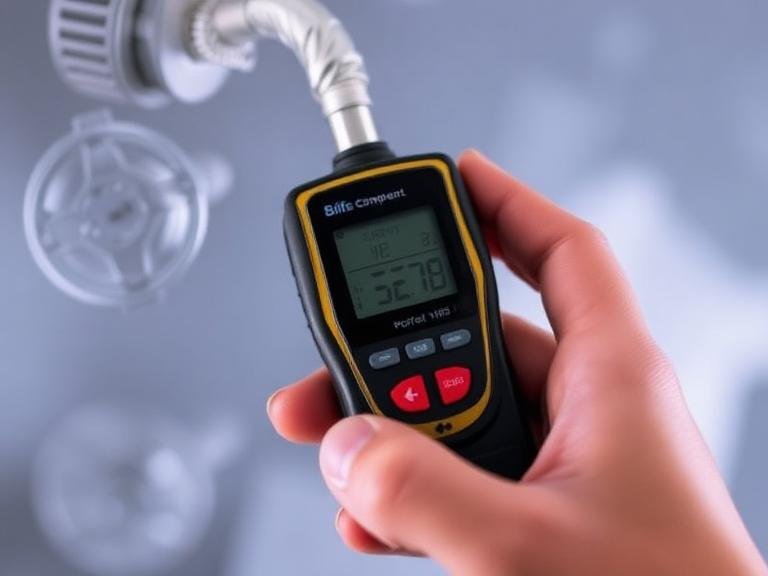
From our experience supplying instrumentation to diverse global industries, relying on a fleet of single-gas monitors is often inefficient, costly, and cumbersome for operators. Advanced multi-gas detectors have revolutionized personal protective equipment by combining electrochemical, infrared, and catalytic bead sensors into a single, compact housing. In this comprehensive guide, we will explore exactly how these devices function, answer the crucial question of Can gas detectors detect multiple gases in varying environments, and introduce our cutting-edge Sino-Inst Portable Multi Gas Detector designed specifically to monitor 2 to 6 gases concurrently.
Table of Contents
- Understanding the Technology: Can gas detectors detect multiple gases?
- How Different Sensors Work Together
- Summary Table: Single vs. Multi-Gas Detectors
- The Sino-Inst Solution: Portable Multi Gas Detector for 2~6 Gases
- Detailed Technical Specifications
- Practical Applications and Expert Recommendations
- Frequently Asked Questions (FAQs)
- References
Understanding the Technology: Can gas detectors detect multiple gases?
When safety professionals ask, Can gas detectors detect multiple gases, they are usually concerned with cross-sensitivity and accuracy. In the past, early iterations of gas detection technology struggled with sensor interference. If a device was looking for carbon monoxide, the presence of hydrogen might trigger a false alarm. Today, the technological landscape is vastly different. High-precision circuitry and advanced algorithmic filtering allow modern detectors to isolate specific gas signatures even in heavily contaminated atmospheres.
So, Can gas detectors detect multiple gases reliably? Yes. By housing several distinct sensor types within one unit, a multi-gas detector allocates a specific channel to a specific hazard. For instance, a standard confined space monitor typically utilizes four channels to detect Oxygen (O2), Carbon Monoxide (CO), Hydrogen Sulfide (H2S), and Lower Explosive Limit (LEL) combustible gases. Because each sensor operates on a different chemical or physical principle, they do not interfere with one another, allowing the microprocessor to display real-time, independent readings for every targeted gas.
How Different Sensors Work Together
To fully answer Can gas detectors detect multiple gases, one must look at the modular nature of the sensors inside the device. Sino-Inst instruments leverage imported high-precision sensors to guarantee accuracy across the board.
- Electrochemical Sensors: Ideal for toxic gases like H2S, CO, and monitoring O2 depletion. They use a chemical reaction to generate a current proportional to the gas concentration. Sensor life is generally greater than 2 to 3 years.
- Catalytic Combustion Sensors: Primarily used for detecting combustible gases (LEL). They measure the heat released when a combustible gas burns on a specialized wire coil. These typically have a 3-year lifespan.
- Infrared (IR) Sensors: Often used for carbon dioxide (CO2) or specific hydrocarbons. IR sensors do not require oxygen to function and cannot be poisoned by silicones, making them incredibly robust with a lifespan of 5 to 10 years.
- Thermal Conductivity Sensors: Used for detecting gases with high thermal conductivity like Helium or Hydrogen. These boast a 5-year operational life.
We recommend selecting a device that allows for a custom configuration of these sensors, ensuring your specific site hazards are covered in a single handheld unit.
Summary Table: Single vs. Multi-Gas Detectors
For quick reference, we have provided a summary table detailing the differences between single-gas and multi-gas configurations, further addressing why buyers ask Can gas detectors detect multiple gases.
| Feature / Characteristic | Single-Gas Detectors | Sino-Inst Multi-Gas Detectors |
|---|---|---|
| Gas Detection Capability | Limited to 1 specific gas | Simultaneously detects 2 to 6 different gases |
| Cost Efficiency | Lower initial cost per unit | Highly cost-effective when monitoring multiple hazards |
| Operational Convenience | Requires carrying multiple devices for complex sites | One compact, anti-slip, waterproof, and dustproof unit |
| Data Analysis | Basic logging | TFT3.5 full-color display with trend analysis charts |
| Ideal Application | Specific, isolated hazards | Confined spaces, complex industrial environments |
The Sino-Inst Solution: Portable Multi Gas Detector for 2~6 Gases

To provide a definitive solution to the industry’s needs, Sino-Inst has developed the Portable Multi Gas Detector for 2 to 6 Gases. When our clients ask Can gas detectors detect multiple gases without sacrificing accuracy, we point them directly to this flagship instrument. This device is engineered to monitor the concentration of toxic, harmful, and flammable gases in the environment or confined spaces and alarm immediately upon detecting hazardous thresholds.
From our experience, data visibility in the field is just as critical as the sensor accuracy. Therefore, our device features a TFT3.5 full-color display with a graphic menu, providing real-time detection trend analysis charts right on the screen. The internal processing utilizes high-precision low-temperature drift amplifiers and stable power supply processing circuits, ensuring that fluctuating environmental temperatures do not skew the readings. Furthermore, the instrument boasts a massive data storage function, capable of storing 200,000 sets of data with an adjustable storage interval time. With its USB interface, high-speed data transmission allows safety officers to easily download and print compliance data via a free host computer communication software or an optional external micro wireless infrared thermal printer.
Safety and durability are paramount. The Sino-Inst detector complies with stringent explosion-proof certifications, achieving an explosion-proof level of ExialCT4 and an explosion-proof mark of Exia II CT6 (intrinsically safe type). The rugged housing is anti-slip, waterproof, and dustproof with an IP66 protection level. It also features automatic self-calibration, zero point calibration, and multi-point calibration functions, heavily reducing the maintenance burden on your safety team.
Detailed Technical Specifications
For engineering and procurement teams, technical parameters are the deciding factor. Below are the rigorous specifications of the Sino-Inst Portable Multi Gas Detector.
| Detection Scope | Toxic, harmful and flammable gases (2 to 6 gases simultaneously) |
|---|---|
| Detection Method | Built-in pump suction, flow rate 500 ml/min |
| Display Mode | 3.5-inch high-definition color screen display, 8-button operation |
| Accuracy & Linearity | Detection accuracy: less than or equal to plus or minus 2% (F.S); Linearity: less than or equal to plus or minus 2%; Repeatability: less than or equal to plus or minus 2% |
| Alarm Modes | Sound and light alarm, vibration alarm, visual alarm, combined alarms, closed alarm |
| Response & Recovery | Response time: T90 less than or equal to 20 seconds; Recovery time: less than or equal to 30 seconds |
| Working Power Supply | DC3.6V (3.6VDC, 5400mA large-capacity rechargeable polymer battery with overcharge, over-discharge, overvoltage, overheating, and short-circuit protection) |
| Sensor Life | Electrochemical: 2-3 years; Oxygen: 2 or 6 years optional; Infrared: 5-10 years; Catalytic combustion: 3 years; Thermal conductivity: 5 years |
| Use Environment | Temperature -40 Celsius to +70 Celsius; relative humidity 0-99%RH (built-in filter for high humidity/dust) |
| Sample Gas Temperature | -40 Celsius to +70 Celsius. Optional high-temperature sampling cooling filter handle or pretreatment system can detect 800 Celsius smoke concentration |
| Environmental Measurements | Temperature: -40 Celsius to +120 Celsius (optional, Accuracy 0.5 Celsius); Humidity: 0-100%RH (optional, Accuracy 3%RH) |
| Data Storage | Standard 100,000 data capacity (larger capacity customizable), support local viewing/export. Storage function closed by default, arbitrary time intervals. |
| Communication Interface | USB (charging and communication), RS232, infrared communication, automatic identification |
| External Dimensions | 225 * 88 * 58mm (L x W x H) |
Practical Applications and Expert Recommendations
Understanding Can gas detectors detect multiple gases is only half the equation; knowing where to deploy them is equally important. We recommend the Sino-Inst multi-gas detector for confined space entry protocols. Confined spaces inherently present multiple atmospheric hazards simultaneously, such as oxygen deficiency combined with the accumulation of hydrogen sulfide or combustible methane. Because our device features built-in temperature and pressure compensation, operators receive accurate readings even as they descend into subterranean vaults where atmospheric pressure shifts.
Furthermore, from our experience in petrochemical turnarounds, the environment often contains high humidity and airborne particulate. The Sino-Inst detector thrives here; its built-in filter can be used in high humidity or high dust environments, ensuring the sensors are protected from physical fouling. If your application involves exhaust stacks or extreme heat, we highly recommend utilizing our optional high-temperature sampling cooling filter handle, which allows the device to safely sample smoke concentrations up to 800 Celsius.
Frequently Asked Questions (FAQs)
References
1. Occupational Safety and Health Administration (OSHA). “Atmospheric Testing in Confined Spaces.” Safety Guidelines, 2025.
2. National Institute for Occupational Safety and Health (NIOSH). “Evaluating Sensor Reliability in Multi-Gas Monitors.”