.png)
Carbon monoxide (CO) is an odorless, colorless, and tasteless gas that poses a severe threat to human life in both residential and industrial environments. As a professional supplier of industrial process and analytical instruments, Sino-Inst fields countless questions from facility managers, safety officers, and homeowners regarding gas detection infrastructure. One of the most persistent questions we encounter across all sectors is: Is a plug-in or battery carbon monoxide detector better? The answer requires a deep understanding of electrochemical sensor technology, power redundancy, placement optimization, and the specific environmental risks of the monitored area.

At Sino-Inst, our expertise spans across sophisticated gas detectors, gas analyzers, dust detectors, mass flow controllers, and dust monitors. We can help you obtain reliable measurement and analysis solutions while saving procurement costs. Because customized products and OEM services are available, we understand the internal mechanics of gas detection better than anyone in the market. We will be your most trusted partner! In this authoritative guide, we will dissect the mechanical differences between power delivery methods, evaluate spatial constraints, and definitively answer whether Is a plug-in or battery carbon monoxide detector better for your specific application.
Table of Contents
- Summary Table: Plug-In vs. Battery Carbon Monoxide Detectors
- Understanding Carbon Monoxide and Sensor Mechanics
- The Case for Plug-In Carbon Monoxide Detectors
- The Case for Battery-Operated Carbon Monoxide Detectors
- Industrial Grade Solutions: Moving Beyond Basic Detectors
- Our Expert Recommendation: Which is Better?
- Frequently Asked Questions
- Industry References
Summary Table: Plug-In vs. Battery Carbon Monoxide Detectors
To provide immediate clarity for procurement officers and safety managers asking Is a plug-in or battery carbon monoxide detector better, we have compiled a summary table detailing the operational parameters of both primary configurations.
| Feature / Capability | Plug-In CO Detectors | Battery-Operated CO Detectors |
|---|---|---|
| Primary Power Source | 120V/240V AC Wall Outlet | AA, 9V, or Sealed 10-Year Lithium Battery |
| Placement Flexibility | Low, restricted entirely by outlet locations | High, can be mounted on any wall or ceiling |
| Power Outage Reliability | Relies on backup battery (requires maintenance) | Unaffected by grid power outages |
| Installation Complexity | None (Plug and play) | Minimal (Requires drilling/mounting hardware) |
| Aesthetic Impact | Often bulky, occupies functional wall outlets | Sleek, unobtrusive when mounted high |
Understanding Carbon Monoxide and Sensor Mechanics
Before determining Is a plug-in or battery carbon monoxide detector better, it is vital to understand how these devices measure gas and how carbon monoxide behaves in an atmospheric environment. A persistent myth in safety circles is that carbon monoxide is heavier than air and sinks to the floor, or conversely, that it is lighter than air and rises directly to the ceiling. From our experience in fluid dynamics and gas monitoring, carbon monoxide has a molar mass of 28.0 g/mol, which is incredibly close to the molar mass of standard air (28.96 g/mol). Therefore, CO diffuses evenly throughout a room.
Because the gas mixes evenly, the placement height of the detector is less critical than ensuring the detector is located near sleeping areas and potential emission sources without being obstructed by furniture or curtains. Both plug-in and battery detectors utilize electrochemical sensors. Inside the Gas Sensor Module, a chemical reaction occurs when CO enters the chamber, generating an electrical current proportional to the gas concentration. The microprocessor reads this current and triggers the alarm if parts-per-million (PPM) thresholds are breached. The core difference lies not in the sensing technology, but in how the microprocessor and alarm are powered.
The Case for Plug-In Carbon Monoxide Detectors
When clients ask us Is a plug-in or battery carbon monoxide detector better, many initially lean toward plug-in models due to the perceived convenience of “set it and forget it” power. Plug-in models draw continuous AC power from a standard wall receptacle. This guarantees that the unit will never fail due to a drained primary battery under normal grid conditions.
From our experience, the greatest advantage of a plug-in unit is its digital display capability. Because AC power is abundant, these units frequently feature brightly backlit LCD screens that display real-time PPM levels, which is highly beneficial for early warning diagnostics. Furthermore, modern plug-in units always include a battery backup—usually a 9V or two AA batteries—to ensure the device continues monitoring during a power grid failure.
However, the limitations are significant. Plug-in units dictate that your safety perimeter is defined by your architectural wiring. If your hallway outlets are positioned behind heavy credenzas, bookcases, or thick curtains, the airflow to the Gas Sensor Module will be severely restricted, rendering the detector dangerously slow to respond. Additionally, homes with toddlers or pets may find low-mounted plug-in detectors vulnerable to tampering or accidental unplugging.
The Case for Battery-Operated Carbon Monoxide Detectors
In the debate over Is a plug-in or battery carbon monoxide detector better, battery-operated units offer one massive, undeniable advantage: absolute placement freedom. Because they are not tethered to an AC outlet, you can mount these detectors at the optimal breathing height (typically 5 feet off the ground) or on the ceiling, completely unobstructed by furniture or daily foot traffic.
We recommend battery-operated units specifically for older infrastructure where wall outlets are scarce, or in areas prone to frequent, extended power outages. While plug-in units have battery backups, those backups are often alkaline batteries that drain quickly when forced to power the unit exclusively. Dedicated battery-operated units are engineered with ultra-low power consumption microprocessors. Today, the industry gold standard is the sealed 10-year lithium battery model. These units provide a decade of uninterrupted protection without the need for late-night battery swaps or annoying low-battery chirps.
Industrial Grade Solutions: Moving Beyond Basic Detectors
While residential users debate Is a plug-in or battery carbon monoxide detector better, the calculus changes entirely in commercial, manufacturing, and heavy industrial settings. Standard retail detectors are vastly insufficient for factories, boiler rooms, and chemical processing plants. Sino-Inst bridges this gap by providing professional-grade instrumentation.
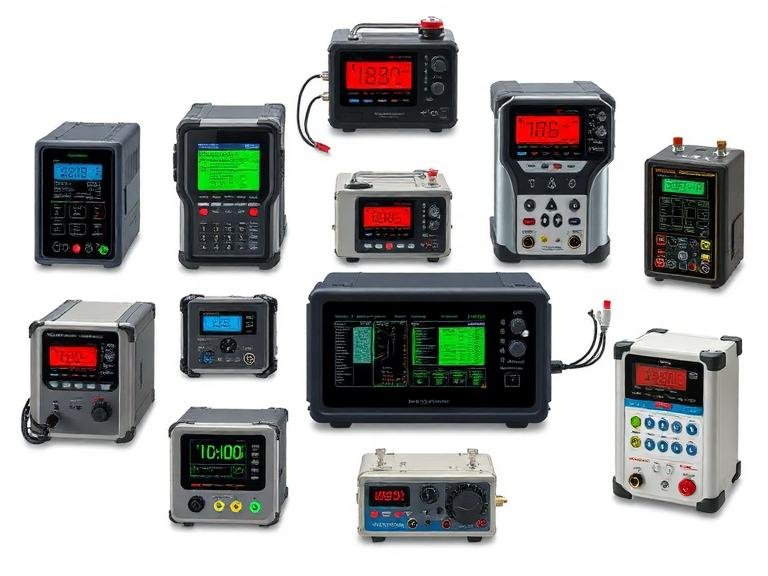
For facility-wide safety, we recommend our Fixed Gas Detectors integrated into a comprehensive Gas Monitoring System. Unlike consumer plug-in units, these fixed systems are hardwired directly into the facility’s electrical mains, featuring advanced relay outputs that can automatically shut down machinery, close valves, or activate heavy-duty ventilation systems the moment dangerous CO levels are detected. These systems often work in tandem with our Dust Monitors and Mass Flow Controllers/Meters to provide a holistic view of environmental air quality and process safety.
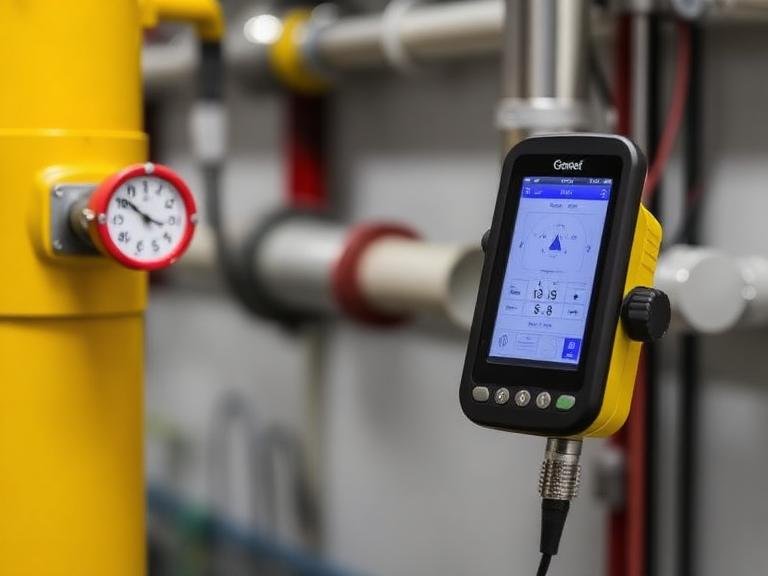
Conversely, for personnel moving through potentially hazardous environments, wall-mounted solutions are inadequate. In these scenarios, we provide highly calibrated Portable Gas Detectors. These ruggedized, battery-powered devices clip directly to a worker’s lapel, measuring the exact breathing zone of the individual in real-time. Whether you are an OEM requiring a precise Gas Sensor Module for your own hardware, or a facility manager outfitting a fleet of workers, Sino-Inst provides reliable measurement and analysis solutions while saving procurement costs.
Our Expert Recommendation: Which is Better?
So, definitively, Is a plug-in or battery carbon monoxide detector better? From our experience, we recommend sealed 10-year battery-operated carbon monoxide detectors as the superior choice for the vast majority of residential and light-commercial applications. The ability to mount the detector exactly where it is needed—away from dead air spaces, unblocked by furniture, and out of reach of children—far outweighs the convenience of plugging a device into a baseboard outlet.
If you absolutely prefer a plug-in model for its backlit digital display, you must ensure that the outlet chosen has clear, unobstructed airflow and that you rigorously maintain the backup batteries. Ultimately, the best detector is the one that is properly installed, regularly tested, and tailored to the specific spatial dynamics of your environment.
Frequently Asked Questions
Regardless of whether you determine Is a plug-in or battery carbon monoxide detector better for your home, the electrochemical Gas Sensor Module inside the device degrades over time. Standard industry protocol dictates that all CO detectors must be completely replaced every 7 to 10 years, depending on the manufacturer’s specific guidelines.
You should never install a carbon monoxide detector directly above or beside fuel-burning appliances (like stoves or furnaces), in highly humid areas (like bathrooms), or near open windows and ceiling fans. These environments can either cause false alarms due to harmless, temporary bursts of gas, or dilute the air, preventing the detector from registering a legitimate threat.
Yes. In industrial settings, accurate measurement is critical. From our experience, we recommend that all Fixed Gas Detectors and Portable Gas Detectors undergo a bump test prior to daily use and a full span calibration every 3 to 6 months to ensure the sensor responds accurately to known gas concentrations.
Carbon monoxide mixes evenly with the air. It does not strictly rise to the ceiling like smoke, nor does it sink heavily to the floor like propane. This equal diffusion is why both low-mounted plug-in units and high-mounted battery units can successfully detect the gas, provided they are in an area with adequate ambient airflow.
Industry References and Standards
- Underwriters Laboratories (UL) Standard 2034: Single and Multiple Station Carbon Monoxide Alarms.
- Occupational Safety and Health Administration (OSHA) Guidelines on Carbon Monoxide Toxicity and Industrial Detection.
- National Fire Protection Association (NFPA) 720: Standard for the Installation of Carbon Monoxide Detection and Warning Equipment.