.png)
Industrial environments pose complex atmospheric risks that cannot be mitigated through visual inspection alone. Toxic gas leaks, oxygen depletion, and combustible gas accumulation present invisible, immediate threats to human life and facility infrastructure. When plant managers and safety officers consult our engineering team, the most critical question they ask is: how do I choose the right multi-gas detector? The answer requires a rigorous evaluation of your specific operational environment, regulatory compliance mandates, and the precise chemical hazards present on your site.
At Sino-Inst, we are a professional supplier of industrial process and analytical instruments, including gas detectors, gas analyzers, dust detectors, mass flow controllers, and dust monitors. We can help you obtain reliable measurement and analysis solutions while saving procurement costs. From our experience, selecting inadequate safety instrumentation leads to false alarms, catastrophic sensor failure, and compromised personnel safety. We recommend approaching gas detection procurement not as a mere compliance exercise, but as an investment in life-saving infrastructure. Customized products and OEM services are available, and we strive to be your most trusted partner in this critical endeavor.
In this comprehensive technical guide, we will break down the essential parameters you must evaluate when you need to choose the right multi-gas detector. We will explore sensor technologies, compare fixed versus portable architectures, and outline the critical data transmission capabilities required for modern industrial safety systems.
Table of Contents
- 1. Summary Table: Core Factors to Choose the Right Multi-Gas Detector
- 2. Conducting a Comprehensive Environmental Hazard Assessment
- 3. Portable vs. Fixed Architecture: Making the Correct Selection
- 4. Deep Dive: Sino-Inst Multi-Gas Detection Solutions
- 5. Understanding Sensor Technology and Customization
- 6. Data Transmission, Alarms, and Environmental Variables
- 7. Procurement Strategy: Partnering with the Right Supplier
- 8. Frequently Asked Questions (FAQs)
- 9. Industry References
1. Summary Table: Core Factors to Choose the Right Multi-Gas Detector
To systematically choose the right multi-gas detector, you must evaluate several structural and functional criteria. The following summary table outlines the primary considerations our engineers use when specifying equipment for industrial clients.
| Evaluation Criteria | Technical Considerations | Impact on Selection |
|---|---|---|
| Target Gas Configuration | Combustible (LEL), Oxygen (O2), Toxic (H2S, CO, VOCs) | Dictates sensor types (Catalytic, PID, Electrochemical, NDIR). Limits configuration to 2-8 gases per unit. |
| Deployment Method | Personal wearable vs. Wall-mounted/Pipeline fixed | Determines whether you choose the right multi-gas detector from a portable or fixed continuous monitoring line. |
| Environmental Conditions | Temperature, Humidity, Particulate matter | Requires instruments with built-in temperature and humidity measurement and compensation. |
| Data and Output Requirements | 4-20mA, RS485, Local Display, Relays | Essential for integrating fixed detectors into DCS/PLC control rooms. |
| Alarm Mechanisms | Audible, Visual (Strobe), Vibration | Critical for ensuring personnel are alerted in high-noise industrial environments. |
2. Conducting a Comprehensive Environmental Hazard Assessment
You cannot effectively choose the right multi-gas detector without first identifying the specific atmospheric threats in your facility. From our experience, many facilities default to a standard 4-gas configuration (Carbon Monoxide, Hydrogen Sulfide, Combustibles/LEL, and Oxygen). While this is adequate for general confined space entry, it falls short in specialized chemical processing, wastewater treatment, or semiconductor manufacturing environments.
We recommend conducting a thorough job hazard analysis. Are there specific volatile organic compounds (VOCs) present? Is there a risk of carbon dioxide displacement causing asphyxiation? By mapping your exact chemical inventory, you can customize your instrument. For example, simultaneous monitoring of methane, hydrogen sulfide, carbon monoxide, oxygen, carbon dioxide, temperature, and humidity requires a specialized, high-capacity instrument rather than an off-the-shelf basic monitor. Customization is the cornerstone of effective industrial safety.
3. Portable vs. Fixed Architecture: Making the Correct Selection
Once the target gases are identified, the next step to choose the right multi-gas detector is determining the deployment architecture. Atmospheric monitoring generally falls into two distinct categories: protecting the individual worker or protecting the facility and surrounding area.
Fixed Continuous Monitoring Systems
Fixed gas detectors are permanently installed near potential leak sources, such as valves, flanges, or storage tanks. They are designed for 24/7 autonomous operation, providing continuous data to a central control system. When you need to protect a specific perimeter or automate ventilation systems upon gas detection, a fixed system is the mandatory choice.
Portable Personal Protection
Portable gas detectors are worn by personnel. They sample the immediate breathing zone of the worker as they move through the facility. If a worker must enter a confined space, a portable detector is required to test the atmosphere prior to entry and continuously monitor it during the work. To fully protect a facility, you often need to choose the right multi-gas detector in both fixed and portable formats.
4. Deep Dive: Sino-Inst Multi-Gas Detection Solutions
At Sino-Inst, we engineer solutions designed to meet the rigorous demands of heavy industry. When our clients ask us how to choose the right multi-gas detector, we present our two flagship series, custom-built for varying deployment strategies.
1000A Multi Gas Detector for 2~8 Gases
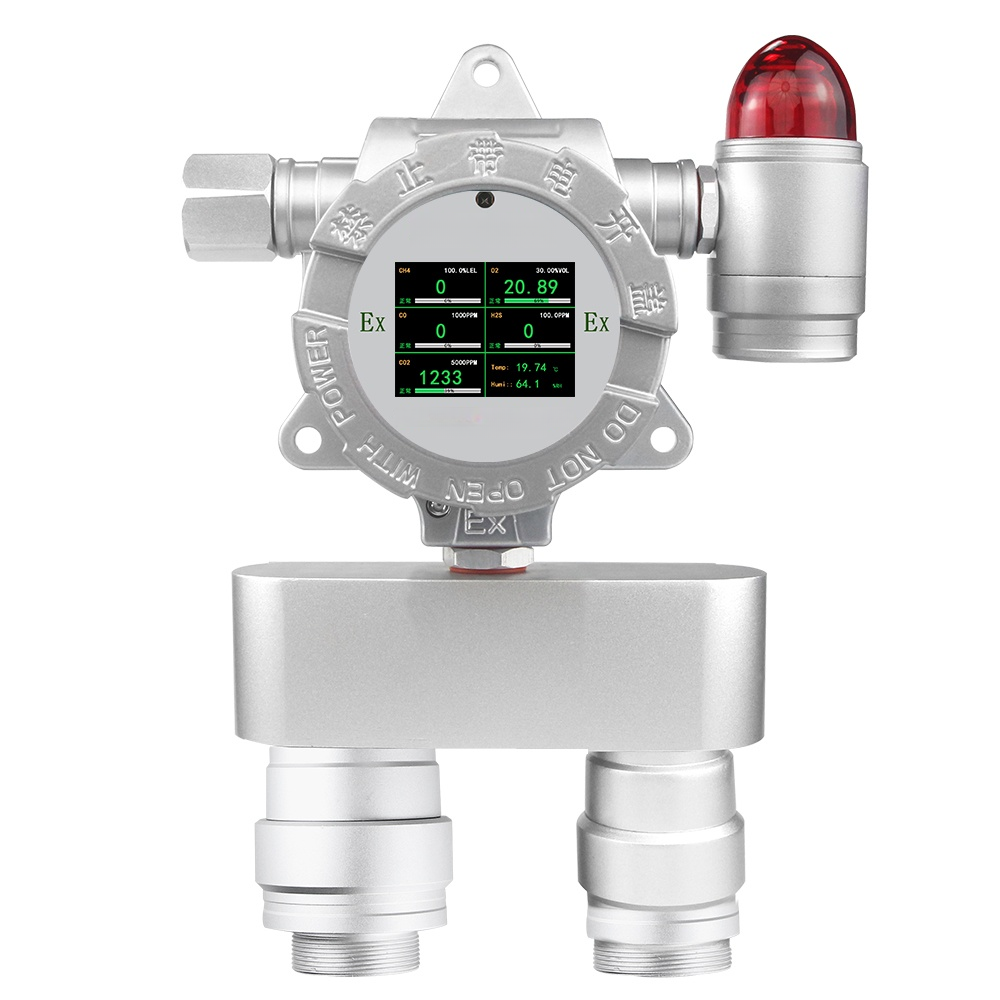
For facility-wide protection, the 1000A series fixed Multi Gas Detector is used for 24-hour continuous online monitoring of 2-8 gas concentrations on site. This unit represents the pinnacle of fixed detection engineering. It integrates seamlessly into existing plant infrastructure via 4-20mA/RS485 data transmission, allowing control room operators to monitor real-time atmospheric health. Furthermore, it includes temperature and humidity measurement, providing crucial environmental context. The instrument features on-site display of concentration and sound and light alarms for exceeding the standard. This ensures safety in various environments, allowing for the simultaneous monitoring of methane, hydrogen sulfide, carbon monoxide, oxygen, carbon dioxide, temperature, and humidity. Of course, the type of gas can be customized to your exact specifications.
900A Portable Multi Gas Detector for 2~6 Gases

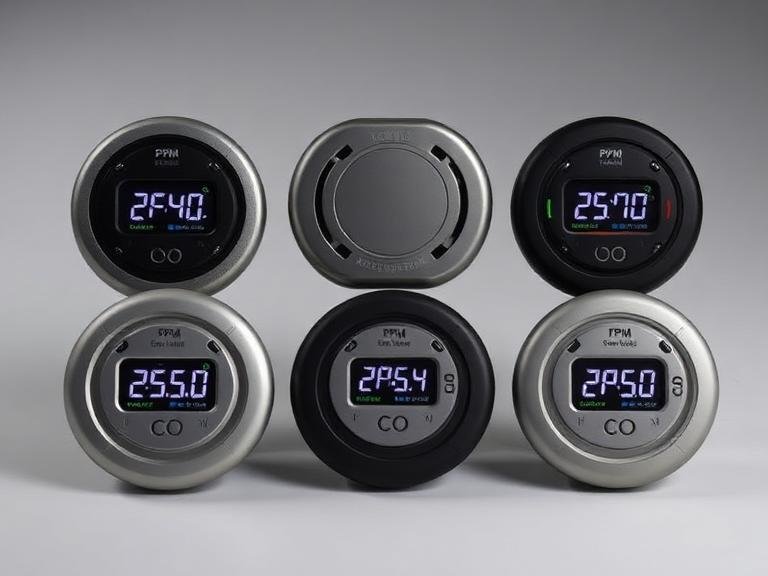
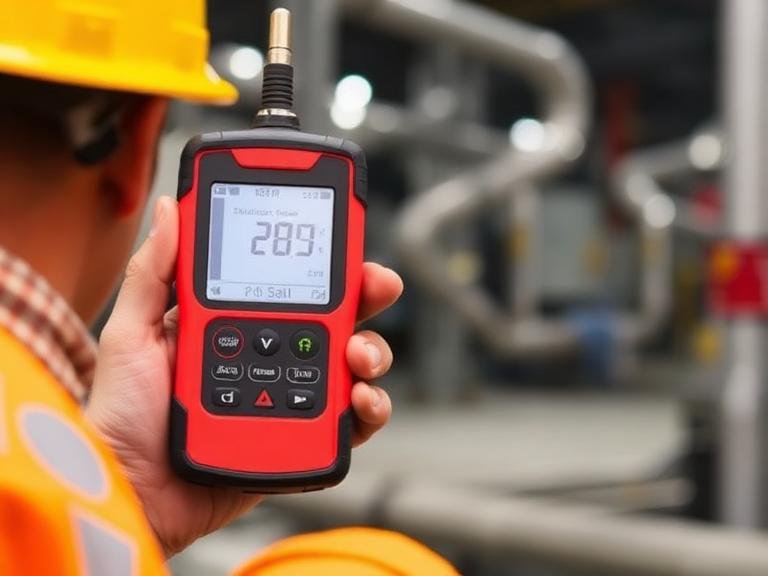
For personal breathing zone protection, the 900A Portable Multi Gas Detector is used for portable and rapid detection of multiple gas concentrations, along with temperature and humidity measurement, and alarms when exceeding the standard. This rugged unit is designed for the modern industrial worker. 2 to 6 gas detectors can be customized within a single compact housing. For example, it can detect concentrations of carbon monoxide, oxygen, hydrogen sulfide, methane (combustible gas), carbon dioxide, or other toxic and hazardous gases. To guarantee worker safety in high-noise environments, it is equipped with highly noticeable audible, visual, and vibration alarms.
5. Understanding Sensor Technology and Customization
To accurately choose the right multi-gas detector, one must look under the hood at the underlying sensor technologies. Different gases require different measurement principles, and pairing the wrong sensor with a target gas leads to sensor poisoning, inaccurate readings, and catastrophic safety failures.
- Electrochemical Sensors: We recommend these for toxic gases like Carbon Monoxide (CO), Hydrogen Sulfide (H2S), and Chlorine (Cl2), as well as Oxygen (O2) monitoring. They offer excellent precision but have a finite lifespan as the internal electrolytes are consumed.
- Catalytic Bead Sensors: These are the industry standard for measuring combustible gases (LEL) such as Methane, Propane, and Hydrogen. They burn a small amount of the gas to measure the concentration. However, they can be poisoned by silicones and require a minimum oxygen level to operate.
- Non-Dispersive Infrared (NDIR) Sensors: When you choose the right multi-gas detector for environments with high carbon dioxide or when monitoring combustible gases in oxygen-depleted confined spaces, NDIR is the superior choice. They use infrared light absorption and cannot be poisoned by standard industrial chemicals.
- Photoionization Detectors (PID): From our experience, if your facility handles solvents, fuels, or complex VOCs, you must select an instrument equipped with a PID sensor to detect these broad-spectrum hazards at parts-per-million (ppm) levels.
6. Data Transmission, Alarms, and Environmental Variables
An often-overlooked factor when safety managers attempt to choose the right multi-gas detector is the impact of ambient environmental variables. Extreme temperature fluctuations and high humidity can cause significant sensor drift, leading to false alarms or, worse, failure to alarm during a true gas event. This is why both our 1000A and 900A series integrate advanced temperature and humidity measurement directly into the diagnostic stream. The microprocessors within these instruments use this data to actively compensate the gas readings, ensuring unparalleled accuracy regardless of weather or process conditions.
Furthermore, data transmission is critical for fixed systems. The ability to transmit data via industry-standard 4-20mA analog signals or RS485 digital protocols ensures that your safety network is robust, redundant, and capable of triggering automated emergency shutdown (ESD) sequences the moment a hazard is detected.
7. Procurement Strategy: Partnering with the Right Supplier
Ultimately, the decision of how to choose the right multi-gas detector should not be made in a vacuum. Working with a dedicated instrumentation manufacturer guarantees that you receive application-specific engineering support rather than a generic, off-the-shelf product. Sino-Inst provides OEM services and customized products tailored to the exact chemical profiles of your facility. We can help you obtain reliable measurement and analysis solutions while saving procurement costs, ensuring that your safety budget is utilized with maximum efficiency. We will be your most trusted partner in building a comprehensive, uncompromising industrial safety architecture.
8. Frequently Asked Questions (FAQs)
How often do I need to calibrate my multi-gas detector?
From our experience, we recommend performing a functional bump test before each day’s use for portable units like the 900A. Full span calibration should be conducted every 30 to 180 days, depending strictly on your facility’s safety regulations, the sensor types utilized, and the severity of the operational environment.
Can I choose the right multi-gas detector to monitor both toxic and combustible gases simultaneously?
Yes. Instruments like the Sino-Inst 1000A and 900A are specifically designed for this purpose. They utilize separate internal sensors (e.g., catalytic bead for combustibles and electrochemical for toxics) within the same housing to provide simultaneous, independent readings for up to 8 different gases.
Why is temperature and humidity measurement included in these gas detectors?
Temperature and humidity directly affect gas density and sensor chemical reactions. By measuring these environmental variables, our instruments perform real-time algorithmic compensation, preventing false alarms and ensuring that the concentration readings remain highly accurate in fluctuating industrial climates.
If I have a confined space, should I choose the right multi-gas detector in a fixed or portable format?
Confined spaces require portable detection. Workers must use a portable detector equipped with a sampling pump to test the atmosphere inside the space before entering. They must then wear a portable unit, such as the 900A Portable Multi Gas Detector, continuously while inside the space to alert them if atmospheric conditions degrade.
9. Industry References
1. Occupational Safety and Health Administration (OSHA). “Atmospheric Testing in Confined Spaces.” Standards – 29 CFR 1910.146.
2. National Institute for Occupational Safety and Health (NIOSH). “Components for the Evaluation of Direct-Reading Monitors for Gases and Vapors.”
3. International Society of Automation (ISA). “Performance Requirements for Toxic Gas Detection Instruments.” ISA-92.00.01-2010.