.png)

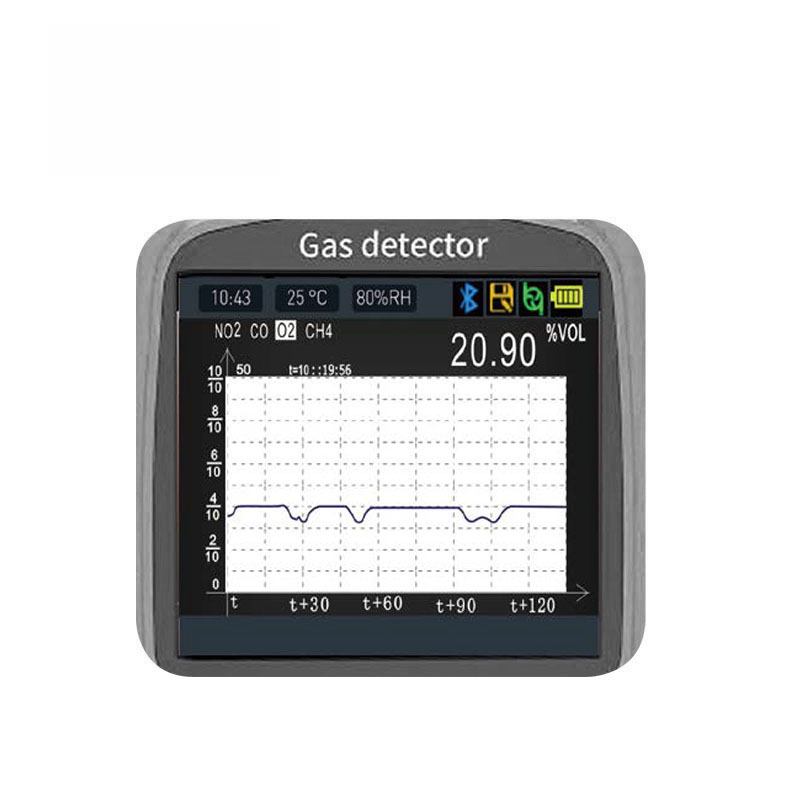
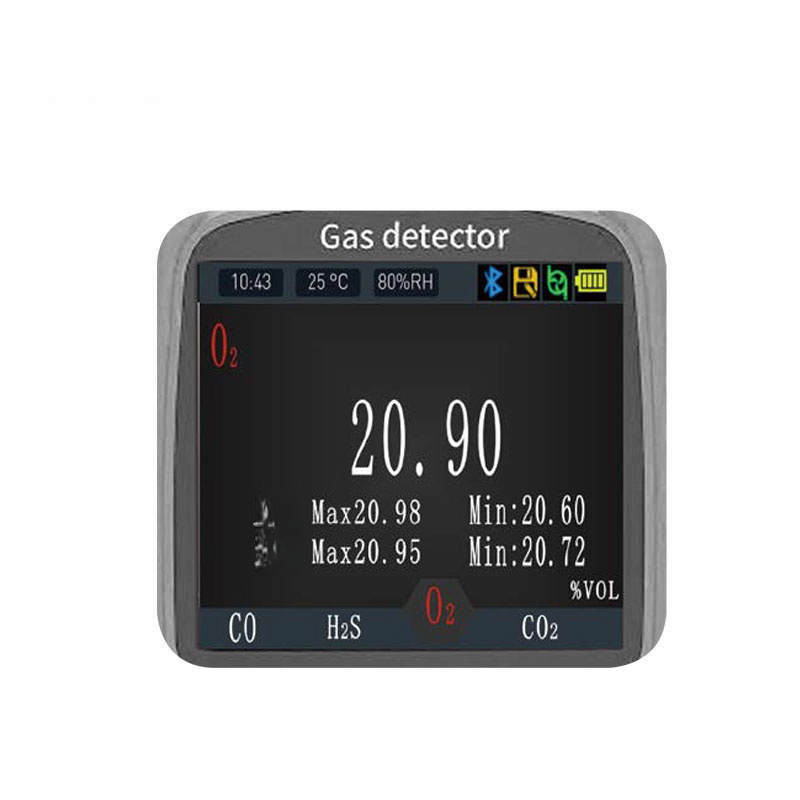
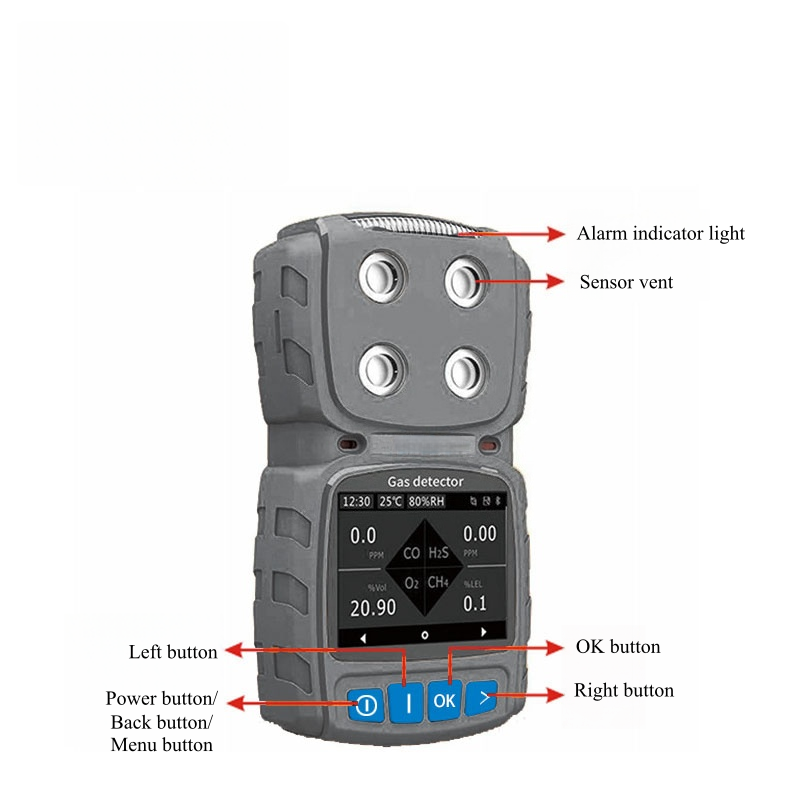
The Portable Voc Gas Detector is a mobile, rapid-detection, multi-functional gas detector and alarm. It can be equipped with temperature and humidity measurement functions. The types of gases it can detect can be configured in multiple ways to meet customer needs.
This portable diffusion-type VOCs gas alarm is suitable for applications requiring rapid detection of VOCs gas concentration, temperature and humidity measurement, and alarming when levels exceed limits. It can detect gas concentrations in pipelines, confined spaces, and atmospheric environments. It can detect gas leaks or high concentrations of a single gas with a background gas of nitrogen or oxygen.
The Portable Voc Gas Detector is widely applicable in industries such as spray painting, leather manufacturing, petrochemical plants, printing, wastewater/garbage treatment plants, gas station leaks, biomass, coal combustion, semiconductor industry, and metallurgical industry.
★★★★★
Features
★ VOCs gas detection; multiple gases can be configured according to customer requirements. Units are freely switchable; selectable units include: PPM, mg/m3, Vol%, LEL%, PPHM, ppb, mg/L.
★ Diffusivity measurement
The gas sensor’s main detection principles include: electrochemical, infrared, catalytic combustion, thermal conductivity, and PID photoionization. Advanced circuit design, mature core algorithm processing, and unique appearance design have resulted in multiple software copyright and design patents.
★ Rich human-machine interface
A 2.31-inch high-definition color screen displays real-time concentration, alarm, time, temperature, humidity, storage, communication, battery level, charging status, concentration unit, gas molecular formula, and gas name; the menu interface uses high-definition simulated graphics to display the function names of each menu item.
★Large-capacity data storage, supporting multiple storage methods
- Standard configuration: 100,000 data storage records; larger capacity available upon customization.
- Supports real-time storage, timed storage, or storage of only alarm concentration data and time.
- Supports local viewing and deletion of data.
- Data can also be uploaded to a computer via USB interface for analysis, storage, and printing using host computer software.
- Optional RS485 communication.
★Three switchable display modes
- Simultaneously displays four gas concentrations, cycles through the concentration of a single channel gas, and displays real-time curves.
- Automatic or manual cycling between channels is switchable.
- Can be configured to display maximum, minimum, and gas names.
- Historical data curves can be viewed.
★Graphical display
Reflects the trend of gas concentration changes over a period of time in curve form.
★Data recovery function
Partial or complete data recovery is available, eliminating concerns about accidental data loss.
★Can be configured to display maximum, minimum, and average values.
★USB charging port with charging protection function; supports USB hot-plugging.
Chargeable via computer or power bank, compatible with mobile phone chargers; Overcharge, over-discharge, overvoltage, short circuit, and overheat protection; 5-level accurate power display; The instrument can operate normally while charging.
★ Employs a 2100mA high-capacity rechargeable polymer battery for extended continuous operation.
★ High-precision temperature and humidity measurement (optional)
Simultaneously compensates for sensor temperature; instrument operating temperature range -40~70 degrees Celsius.
★ Supports real-time or timed detection.
The pump can be turned off when not in use to extend operating time.
★ Multiple alarm modes with multi-directional 3D alarm status indication.
- Includes audible and visual alarms, vibration alarms, and visual alarms.
- Alarm types include: concentration alarm, undervoltage alarm, and fault alarm.
★ Adjustable alarm values and multiple alarm mode settings:
Low alarm, high alarm, range alarm, and weighted average alarm.
★ Misoperation detection function: Automatically identifies and prevents misoperation during concentration calibration, avoiding errors caused by human factors.
★ Automatic zero-point tracking: Unaffected by zero-point drift during long-term use.
★ Multi-level target point calibration: Ensures measurement linearity and accuracy, meeting both national and local metrology bureau standards.
★ Log recording: Records calibration logs, maintenance logs, and troubleshooting strategies. Includes sensor lifespan expiration reminders and next concentration calibration reminders.
★ Meets intrinsically safe circuit design requirements, anti-static, anti-electromagnetic interference, and has passed national standard testing and CMC metrology instrument production license certification.
★ IP65 protection rating: Splash-proof, dustproof, explosion-proof, and shockproof.
Specifications
| Detected gas | VOCs (parameters can be customized, and other gases can also be customized; see the gas table); Optional: Can detect the concentration and temperature/humidity of any 1-4 gases. | |||||||
| range and resolution | VOC: 0-100ppm, 0.01ppm, imported high-precision electrochemical sensor; or VOC: 0-100%LEL, 0.1%LEL, industrial-grade catalytic combustion sensor; or VOC: 0-10ppm, 0.01ppm, imported high-precision PID photoionization sensor; Other ranges, principles, and resolutions can be customized. | |||||||
| Detection Method | Diffusion-type measurement, with optional sampling handle (external handheld sampling pump) | |||||||
| Display Method | 2. 31-inch 320*240 high-definition color screen display, 4-button operation | |||||||
| Detection Accuracy | ≤±3%F.S (Higher accuracy can be customized) | |||||||
| Linearity | ≤±2% | Repeatability | ≤±2% | |||||
| Alarm Method | Audible and visual alarm, vibration alarm, visual alarm, audible and visual alarm + vibration + visual alarm, and alarm off are all available. | |||||||
| Response Time | T90≤30 seconds | Recovery time | ≤30 seconds | |||||
| Operating Power Supply | DC3.7V | |||||||
| Battery Capacity | 3.7VDC, 2100mA high-capacity rechargeable polymer battery with overcharge/over-discharge/overvoltage/overheat/short circuit protection; | |||||||
| Operating Environment | Temperature: -40℃~+70℃; Relative humidity: ≤0-99%RH (built-in filter allows use in high humidity or high dust environments); | |||||||
| Sample Gas Temperature | -40℃~+70℃, with optional high-temperature sampling cooling filter handle, capable of detecting flue gas concentration at 400 degrees or higher; | |||||||
| Temperature Measurement (Optional) | -40℃ to +70℃, accuracy ±0.5℃ | Humidity measurement (optional) | 0~100%RH, accuracy ±3%RH | |||||
| Data Storage | Standard configuration includes 100,000 data entries, supporting local viewing, deletion, and data export; storage interval can be set arbitrarily. | |||||||
| Communication Interface | USB (charging and communication), optional RS485 or RS232 communication interface | |||||||
| Interface Language | The interface can be set to English. | |||||||
| Explosion-proof Type | Intrinsically safe ExiaⅡCT4Ga | Explosion-proof certificate number: CnEx16.3092 | ||||||
| Protection Rating | IP65, dustproof and splashproof. | |||||||
| Dimensions | 130×68×34mm(L×W×H) | weight | 200g | |||||
| Standard Accessories | Instruction manual, certificate of conformity, USB charger (including data cable), back clip | |||||||
| Color packaging box (optional high-grade aluminum alloy instrument case <additional charge>) | ||||||||
| Optional Accessories | Temperature and humidity measurement function, CD (host computer communication software) | |||||||
| Applications | Suitable for spraying, leather, petrochemical plants, printing, sewage/garbage treatment plants, gas station leaks, biomass, coal-fired, semiconductor industry, metallurgical industry, and other places. | |||||||
Commonly detected gases
| Gases Detected | Range (Other ranges available upon request) | Accuracy (Higher accuracy available upon request) | Resolution (Higher resolution available upon request) | Response time |
| Combustible gas (EX) | 0-100%LEL | <±3%(F.S) | 0.1%LEL | ≤10S |
| Combustible gas (EX) | 0-100%Vol | <±3%(F.S) | 0.1%Vol | ≤10S |
| Methane (CH4) | 0-100%LEL | <±3%(F.S) | 0.1%LEL | ≤5S |
| Methane (CH4) | 0-100%Vol | <±3%(F.S) | 0.1%Vol | ≤10S |
| Oxygen (O2) | 0-30%Vol | <±3%(F.S) | 0.01%Vol | ≤15S |
| Oxygen (O2) | 0-100%Vol | <±3%(F.S) | 0.01%Vol | ≤15S |
| Oxygen (O2) | 0-1000ppm | <±3%(F.S) | 1ppm | ≤20S |
| Oxygen (O2) | 0-50000ppm | <±3%(F.S) | 1ppm | ≤20S |
| Carbon monoxide (CO) | 0-500ppm | <±3%(F.S) | 0.1ppm | ≤20S |
| Carbon monoxide (CO) | 0-1000ppm | <±3%(F.S) | 0.1ppm | ≤20S |
| Carbon monoxide (CO) | 0-2000ppm | <±3%(F.S) | 0.1ppm | ≤20S |
| Carbon monoxide (CO) | 0-20000ppm | <±3%(F.S) | 1ppm | ≤20S |
| Carbon monoxide (CO) | 0-100000ppm | <±3%(F.S) | 1ppm | ≤20S |
| Carbon dioxide (CO₂) | 0-2000ppm | <±3%(F.S) | 1ppm | ≤20S |
| Carbon dioxide (CO₂) | 0-5000ppm | <±3%(F.S) | 1ppm | ≤20S |
| Carbon dioxide (CO₂) | 0-10000ppm | <±3%(F.S) | 1ppm | ≤20S |
| Carbon dioxide (CO₂) | 0-50000ppm | <±3%(F.S) | 1ppm | ≤20S |
| Carbon dioxide (CO₂) | 0-20%Vol | <±3%(F.S) | 0.01%Vol | ≤20S |
| Carbon dioxide (CO₂) | 0-50%Vol | <±3%(F.S) | 0.01%Vol | ≤20S |
| Carbon dioxide (CO₂) | 0-100%Vol | <±3%(F.S) | 0.01%Vol | ≤20S |
| Formaldehyde (CH₂O) | 0-10ppm | <±3%(F.S) | 0.001ppm | ≤20S |
| Formaldehyde (CH₂O) | 0-50ppm | <±3%(F.S) | 0.01ppm | ≤20S |
| Formaldehyde (CH₂O) | 0-1000ppm | <±3%(F.S) | 0.1ppm | ≤20S |
| Ozone (O₃) | 0-1ppm | <±3%(F.S) | 0.001ppm | ≤20S |
| Ozone (O₃) | 0-10ppm | <±3%(F.S) | 0.01ppm | ≤20S |
| Ozone (O₃) | 0-50ppm | <±3%(F.S) | 0.01ppm | ≤20S |
| Ozone (O₃) | 0-100ppm | <±3%(F.S) | 0.01ppm | ≤20S |
| Ozone (O₃) | 0-2000ppm | <±3%(F.S) | 0.1ppm | ≤20S |
| Hydrogen sulfide (H₂S) | 0-10ppm | <±3%(F.S) | 0.001ppm | ≤20S |
| Hydrogen sulfide (H₂S) | 0-50ppm | <±3%(F.S) | 0.01ppm | ≤20S |
| Hydrogen sulfide (H₂S) | 0-100ppm | <±3%(F.S) | 0.01ppm | ≤20S |
| Hydrogen sulfide (H₂S) | 0-200ppm | <±3%(F.S) | 0.1ppm | ≤20S |
| Hydrogen sulfide (H₂S) | 0-2000ppm | <±3%(F.S) | 0.1ppm | ≤20S |
| Sulfur dioxide (SO₂) | 0-10ppm | <±3%(F.S) | 0.001ppm | ≤20S |
| Sulfur dioxide (SO₂) | 0-20ppm | <±3%(F.S) | 0.01ppm | ≤20S |
| Sulfur dioxide (SO₂) | 0-100ppm | <±3%(F.S) | 0.01ppm | ≤20S |
| Sulfur dioxide (SO₂) | 0-500ppm | <±3%(F.S) | 0.1ppm | ≤20S |
| Sulfur dioxide (SO₂) | 0-2000ppm | <±3%(F.S) | 0.1ppm | ≤20S |
| Sulfur dioxide (SO₂) | 0-5000ppm | <±3%(F.S) | 0.1ppm | ≤20S |
| Nitrogen monoxide (NO) | 0-20ppm | <±3%(F.S) | 0.01ppm | ≤20S |
| Nitrogen monoxide (NO) | 0-100ppm | <±3%(F.S) | 0.01ppm | ≤20S |
| Nitrogen monoxide (NO) | 0-2000ppm | <±3%(F.S) | 0.1ppm | ≤20S |
| Nitrogen Dioxide (NO₂) | 0-20ppm | <±3%(F.S) | 0.01ppm | ≤20S |
| Nitrogen Dioxide (NO₂) | 0-200ppm | <±3%(F.S) | 0.1ppm | ≤20S |
| Nitrogen Dioxide (NO₂) | 0-1000ppm | <±3%(F.S) | 0.1ppm | ≤20S |
| Nitrogen Dioxide (NO₂) | 0-5000ppm | <±3%(F.S) | 0.1ppm | ≤20S |
| Chlorine Gas (Cl₂) | 0-10ppm | <±3%(F.S) | 0.001ppm | ≤20S |
| Chlorine Gas (Cl₂) | 0-20ppm | <±3%(F.S) | 0.01ppm | ≤20S |
| Chlorine Gas (Cl₂) | 0-200ppm | <±3%(F.S) | 0.1ppm | ≤20S |
| Ammonia Gas (NH₃) | 0-50ppm | <±3%(F.S) | 0.01ppm | ≤20S |
| Ammonia Gas (NH₃) | 0-100ppm | <±3%(F.S) | 0.01ppm | ≤20S |
| Ammonia Gas (NH₃) | 0-1000ppm | <±3%(F.S) | 0.1ppm | ≤20S |
| Ammonia Gas (NH₃) | 0-5000ppm | <±3%(F.S) | 0.1ppm | ≤20S |
| Ammonia (NH₃) | 0-100%LEL | <±3%(F.S) | 0.1%LEL | ≤20S |
| Hydrogen (H₂) | 0-100%LEL | <±3%(F.S) | 0.1%LEL | ≤20S |
| Hydrogen (H₂) | 0-1000ppm | <±3%(F.S) | 0.1ppm | ≤20S |
| Hydrogen (H₂) | 0-20000ppm | <±3%(F.S) | 1ppm | ≤20S |
| Hydrogen (H₂) | 0-40000ppm | <±3%(F.S) | 1ppm | ≤20S |
| Hydrogen (H₂) | 0-100%Vol | <±3%(F.S) | 0.1%Vol | ≤20S |
| Hydrogen Cyanide (HCN) | 0-30ppm | <±3%(F.S) | 0.01ppm | ≤20S |
| Hydrogen Cyanide (HCN) | 0-100ppm | <±3%(F.S) | 0.01ppm | ≤20S |
| Hydrogen Chloride (HCl) | 0-20ppm | <±3%(F.S) | 0.01ppm | ≤20S |
| Hydrogen Chloride (HCl) | 0-200ppm | <±3%(F.S) | 0.1ppm | ≤20S |
| Phosphine (PH₃) | 0-5 ppm | <±3%(F.S) | 0.001ppm | ≤20S |
| Phosphine (PH₃) | 0-20 ppm | <±3%(F.S) | 0.01ppm | ≤20S |
| Phosphine (PH₃) | 0-2000 ppm | <±3%(F.S) | 0.1ppm | ≤20S |
| Chlorine Dioxide (ClO₂) | 0-1ppm | <±3%(F.S) | 0.001ppm | ≤20S |
| Chlorine Dioxide (ClO₂) | 0-10ppm | <±3%(F.S) | 0.01ppm | ≤20S |
| Chlorine Dioxide (ClO₂) | 0-100ppm | <±3%(F.S) | 0.01ppm | ≤20S |
| Ethylene Oxide (ETO) | 0-100ppm | <±3%(F.S) | 0.01ppm | ≤20S |
| Ethylene Oxide (ETO) | 0-1000ppm | <±3%(F.S) | 0.1ppm | ≤20S |
| Ethylene Oxide (ETO) | 0-100%LEL | <±3%(F.S) | 1%LEL | ≤20S |
| Phosgene (COCl₂) | 0-1ppm | <±3%(F.S) | 0.001ppm | ≤20S |
| Silane (SiH4) | 0-1ppm | <±3%(F.S) | 0.001ppm | ≤20S |
| Silane (SiH4) | 0-50ppm | <±3%(F.S) | 0.01ppm | ≤20S |
| Fluorine gas (F2) | 0-1ppm | <±3%(F.S) | 0.001ppm | ≤20S |
| Fluorine gas (F2) | 0-10ppm | <±3%(F.S) | 0.01ppm | ≤20S |
| Fluorine gas (F2) | 0-100ppm | <±3%(F.S) | 0.01ppm | ≤20S |
| Hydrogen fluoride (HF) | 0-10ppm | <±3%(F.S) | 0.01ppm | ≤20S |
| Hydrogen fluoride (HF) | 0-50ppm | <±3%(F.S) | 0.01ppm | ≤20S |
| Hydrogen bromide (HBr) | 0-50ppm | <±3%(F.S) | 0.01ppm | ≤20S |
| Boron hydride (B2H6) | 0-10ppm | <±3%(F.S) | 0.001ppm | ≤20S |
| Arsenic hydride (AsH3) | 0-1ppm | <±3%(F.S) | 0.001ppm | ≤20S |
| Arsenic Hydride (AsH₃) | 0-10ppm | <±3%(F.S) | 0.001ppm | ≤20S |
| Arsenic Hydride (AsH₃) | 0-10ppm | <±3%(F.S) | 0.01ppm | ≤20S |
| Germanium Hydride (GeH₄) | 0-2ppm | <±3%(F.S) | 0.001ppm | ≤20S |
| Germanium Hydride (GeH₄) | 0-20ppm | <±3%(F.S) | 0.01ppm | ≤20S |
| Hydrazine (N₂H₄) | 0-1ppm | <±3%(F.S) | 0.001ppm | ≤20S |
| Hydrazine (N₂H₄) | 0-300ppm | <±3%(F.S) | 0.1ppm | ≤20S |
| Tetrahydrothiophene (THT) | 0-50mg/m3 | <±3%(F.S) | 0.01 mg/m3 | ≤20S |
| Bromine Gas (Br₂) | 0-10ppm | <±3%(F.S) | 0.001ppm | ≤20S |
| Bromine Gas (Br₂) | 0-50ppm | <±3%(F.S) | 0.01ppm | ≤20S |
| Acetylene (C₂H₂) | 0-100%LEL | <±3%(F.S) | 0.1%LEL | ≤20S |
| Acetylene (C₂H₂) | 0-100ppm | <±3%(F.S) | 0.01ppm | ≤20S |
| Acetylene (C₂H₂) | 0-1000ppm | <±3%(F.S) | 0.1ppm | ≤20S |
| Ethylene (C₂H₄) | 0-100%LEL | <±3%(F.S) | 0.1%LEL | ≤20S |
| Ethylene (C₂H₄) | 0-100ppm | <±3%(F.S) | 0.01ppm | ≤20S |
| Ethylene (C₂H₄) | 0-1000ppm | <±3%(F.S) | 0.1ppm | ≤20S |
| Acetaldehyde | 0-10ppm | <±3%(F.S) | 0.01ppm | ≤20S |
| Ethanol (C₂H₆O) | 0-100%LEL | <±3%(F.S) | 0.1%LEL | ≤20S |
| Ethanol (C₂H₆O) | 0-100ppm | <±3%(F.S) | 0.01ppm | ≤60S |
| Ethanol (C₂H₆O) | 0-2000ppm | <±3%(F.S) | 0.1ppm | ≤20S |
| Methanol (CH₄O) | 0-100%LEL | <±3%(F.S) | 0.1%LEL | ≤20S |
| Methanol (CH₄O) | 0-100ppm | <±3%(F.S) | 0.01ppm | ≤20S |
| Methanol (CH₄O) | 0-2000ppm | <±3%(F.S) | 0.1ppm | ≤20S |
| Carbon disulfide (CS₂) | 0-50ppm | <±3%(F.S) | 0.01ppm | ≤20S |
| Acrylonitrile | 0-50ppm | <±3%(F.S) | 0.01ppm | ≤20S |
| Acrylonitrile | 0-100ppm | <±3%(F.S) | 0.01ppm | ≤20S |
| Acrylonitrile | 0-2000ppm | <±3%(F.S) | 0.1ppm | ≤20S |
| Methylamine | 0-50ppm | <±3%(F.S) | 0.01ppm | ≤20S |
| Nitrogen gas (N₂) | 0-100%Vol | <±3%(F.S) | 0.01%Vol | ≤20S |
| Iodine gas (I₂) | 0-50ppm | <±3%(F.S) | 0.01ppm | ≤20S |
| Nitrogen oxides (NO_x) | 0-100ppm | <±3%(F.S) | 0.01ppm | ≤20S |
| Nitrogen oxides (NO_x) | 0-5000ppm | <±3%(F.S) | 0.1ppm | ≤20S |
| Benzene (C6H6) | 0-200ppm | <±3%(F.S) | 0.1ppm | ≤20S |
| Toluene (C7H8) | 0-200ppm | <±3%(F.S) | 0.1ppm | ≤20S |
| Xylene (C8H10) | 0-200ppm | <±3%(F.S) | 0.1ppm | ≤20S |
| Styrene (C8H8) | 0-200ppm | <±3%(F.S) | 0.1ppm | ≤20S |
| Styrene (C8H8) | 0-5000ppm | <±3%(F.S) | 0.1ppm | ≤20S |
| Vinyl Chloride (C2H3Cl) | 0-200ppm | <±3%(F.S) | 0.1ppm | ≤20S |
| Trichloroethylene (C2HCl3) | 0-200ppm | <±3%(F.S) | 0.1ppm | ≤20S |
| Tetrachloroethylene (C2Cl4) | 0-200ppm | <±3%(F.S) | 0.1ppm | ≤20S |
| Methyl Bromide (CH₃Br) | 0-200ppm | <±3%(F.S) | 0.1ppm | ≤20S |
| Sulphuryl Fluoride (SO₂F₂) | 0-200ppm | <±3%(F.S) | 0.1ppm | ≤20S |
| Helium (He) | 0-10%Vol | <±3%(F.S) | 0.01%vol;0.001%vol | ≤20S |
| Helium (He) | 0-50%vol | <±3%(F.S) | 0.01%vol;0.001%vol | ≤20S |
| Helium (He) | 0-100%vol | <±3%(F.S) | 0.01%vol;0.001%vol | ≤20S |
| VOC/ TVOC | 0-10ppm | <±3%(F.S) | 0.01ppm | ≤30S |
| VOC/ TVOC | 0-100ppm | <±3%(F.S) | 0.1ppm | ≤30S |
| VOC/ TVOC | 0-1000ppm | <±3%(F.S) | 1ppm | ≤30S |
| VOC/ TVOC | 0-10000ppm | <±3%(F.S) | 1ppm | ≤30S |
Note: For other gases not listed above, please call for consultation.
Technical Support
CO2 Sensor vs. VOC Sensor: What’s the Difference?

7 Critical Mistakes in Gas Sampling System Design: A Practical Checklist

Buyer’s Guide: 7 Critical Checks for Selecting a Chlorine Gas Detector
Proven Solutions for the 5 Critical Health Dangers of Ammonia Leaks
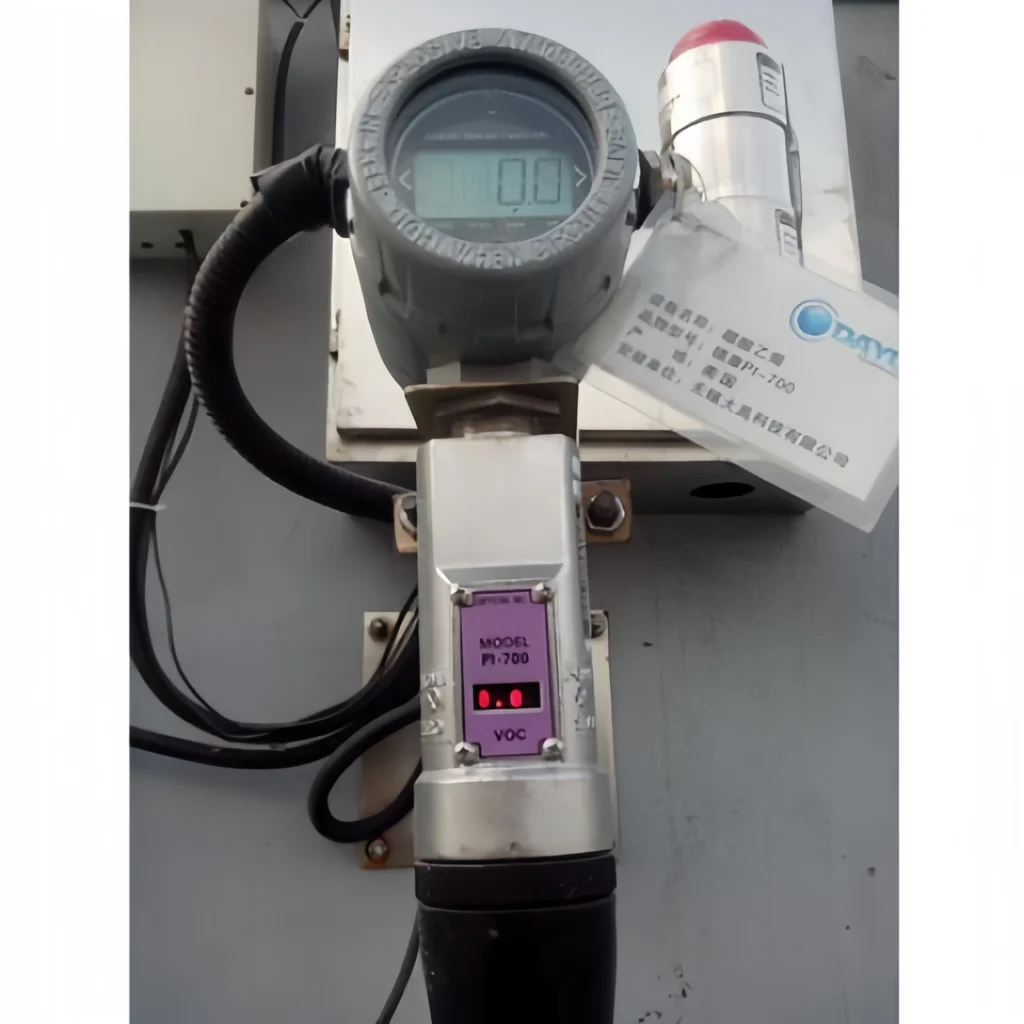
Portable VOC Gas Detectors are primarily used to measure toxic and harmful organic VOC gases in hazardous or industrial environments. They can be used alone or in conjunction with other devices for real-time online monitoring.
In chemical, pharmaceutical, and printing production processes, VOC emissions are a significant environmental issue. By using this instrument, companies can monitor VOC concentrations in real time during production, enabling them to take appropriate measures to reduce emissions and protect the environment. Furthermore, Portable VOC Gas Detectors can also be applied to indoor air quality monitoring, waste gas treatment, and leak detection, providing safety assurance for people’s production and daily lives.
Request a Quote


