.png)
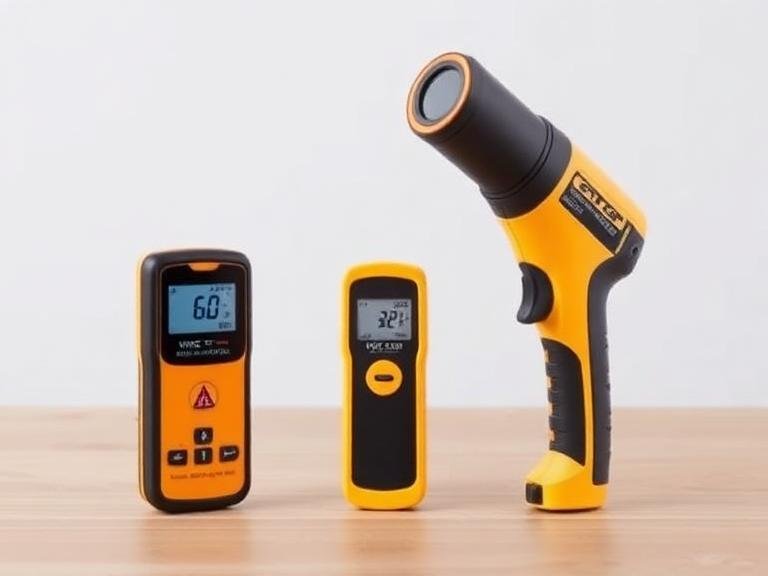
In the industrial world, safety is not a luxury; it is a prerequisite for operation. As we move into 2026, the technology driving the best personal gas monitoring devices has evolved significantly. Modern detectors are no longer just passive alarms; they are connected, intelligent data hubs that protect workers from invisible hazards like carbon monoxide, hydrogen sulfide, and combustible gases.
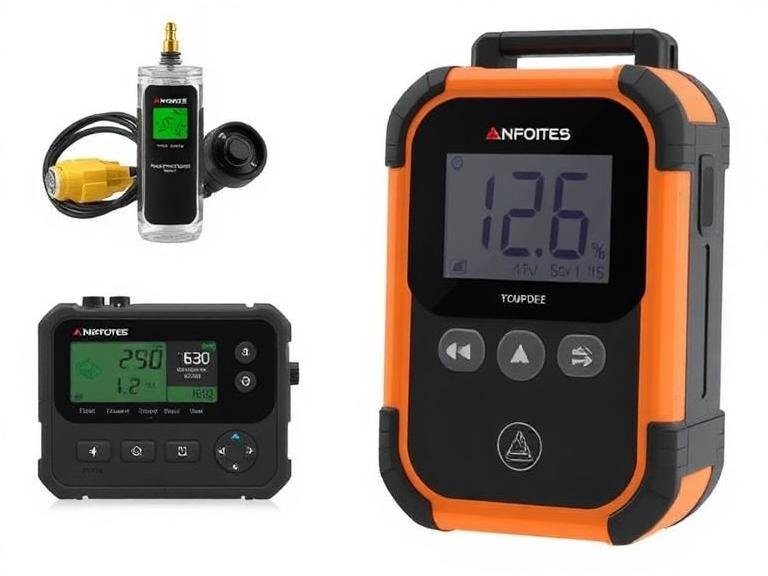
However, a comprehensive safety strategy requires more than just wearable tech. It demands a holistic approach that includes ambient environmental monitoring and fixed detection systems to catch leaks before they reach the worker. This guide reviews the top 9 devices for the upcoming year, bridging the gap between essential fixed infrastructure monitors and the latest portable wearables. Whether you are managing a petrochemical plant, a mining operation, or a confined space entry team, these tools are vital for ensuring everyone goes home safe.
- Buying Guide: Choosing the Right Gas Detection System
- Section 1: Essential Ambient & Fixed Monitoring Solutions
- 1. Wall-mounted Temperature and Humidity Monitor for Ambient
- 2. Fixed Gas Detector with Remote Sensor
- Section 2: Top Personal Portable Gas Monitors
- 3. MSA Altair 5X Multigas Detector
- 4. Honeywell BW Icon+
- 5. Blackline Safety G7c
- 6. Industrial Scientific Ventis Pro5
- 7. Dräger X-am 2500
- 8. RKI GX-3R Pro
- 9. MSA Altair 4XR
- Summary Comparison Table
- Frequently Asked Questions
Buying Guide: Choosing the Right Gas Detection System
Before selecting a specific model, it is crucial to understand the parameters that define the best personal gas monitoring devices in 2026. The market has shifted towards connectivity and durability.
1. Sensor Technology and Response Time
The heart of any detector is the sensor. Modern electrochemical and catalytic bead sensors offer T90 response times of under 15 seconds. Look for devices like the MSA Altair series with XCell sensors, which are renowned for their speed and longevity. For fixed systems, diffusion types are standard, but remote sensor capabilities (like those in the Sino-Inst fixed detector) allow you to monitor hard-to-reach areas while keeping the display at eye level.
2. Connectivity and Data Logging
In 2026, a “lone worker” should never truly be alone. Top-tier devices now feature integrated Bluetooth, Wi-Fi, or even cellular LTE connectivity. This allows safety managers to receive real-time alerts if a worker falls (man-down alarm) or if high gas levels are detected.
3. Environmental Durability (IP Rating)
Industrial environments are harsh. Your device should have an Ingress Protection (IP) rating of at least IP66 or IP68, ensuring it is dust-tight and water-resistant. This applies to both the wearable units and the wall-mounted ambient monitors discussed below.
Section 1: Essential Ambient & Fixed Monitoring Solutions
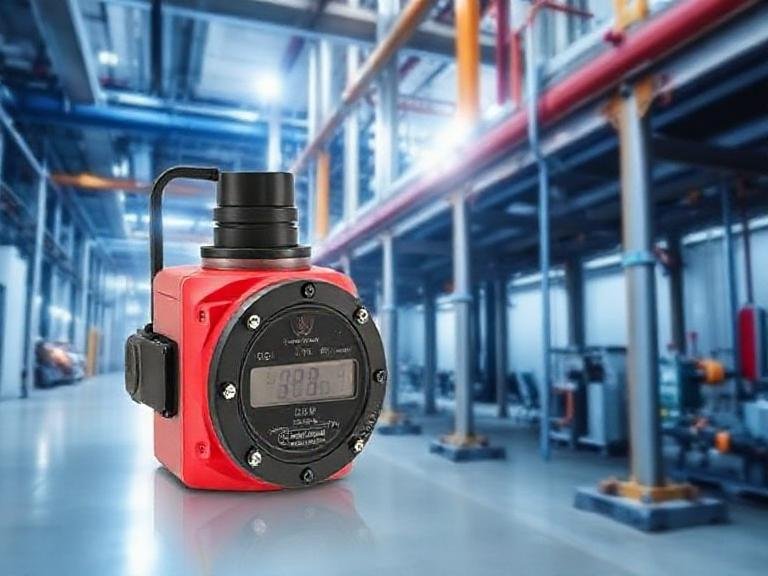
While personal wearables are the last line of defense, the first line of defense is monitoring the environment itself. Temperature fluctuations can affect gas volatility, and fixed detectors provide 24/7 surveillance of high-risk zones.

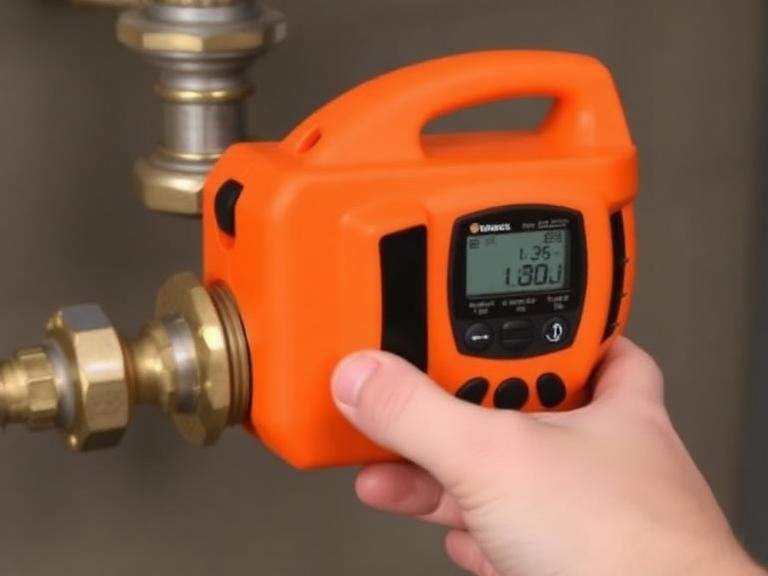
A comprehensive safety program begins with understanding the ambient environment. This wall-mounted monitor is a critical infrastructure component, ensuring that the environmental conditions remain within safe operational limits for both personnel and sensitive gas detection equipment.
Key Features
- Rugged Design: Features a sturdy, flameproof housing suitable for use in a variety of indoor and outdoor environments.
- Clear Display: A large LCD screen intuitively displays various parameters for quick checks.
- Precision Circuitry: Temperature compensation and linearization circuitry ensure accurate measurements and stable operation over long periods.
- Maintenance Friendly: Can be maintained on-site using a remote control without opening the housing, preserving the seal in hazardous areas.
- Fault Detection: Advanced fault detection has been added to the RS485 communication protocol.
- Connectivity: Connects to any monitor providing 12-36 VDC; capable of receiving and processing RS485 bidirectional data communication and analog 4-20 mA signals.
Technical Specifications
| Detection Type | Process Temperature and Humidity HUMI-T/C |
|---|---|
| Detection Range | Temperature: -40~125°C; Humidity 0~100% RH |
| Signal Output | 4-20mA (1km), RS485 (2km), Voltage (0-10V), Switch Signal (Relays) |
| Accuracy | ≤±3% |
| Response/Recovery Time | ≤20 seconds (T90) |
| Dimensions | 183 x 143 x 107 mm (1.5 kg net weight) |

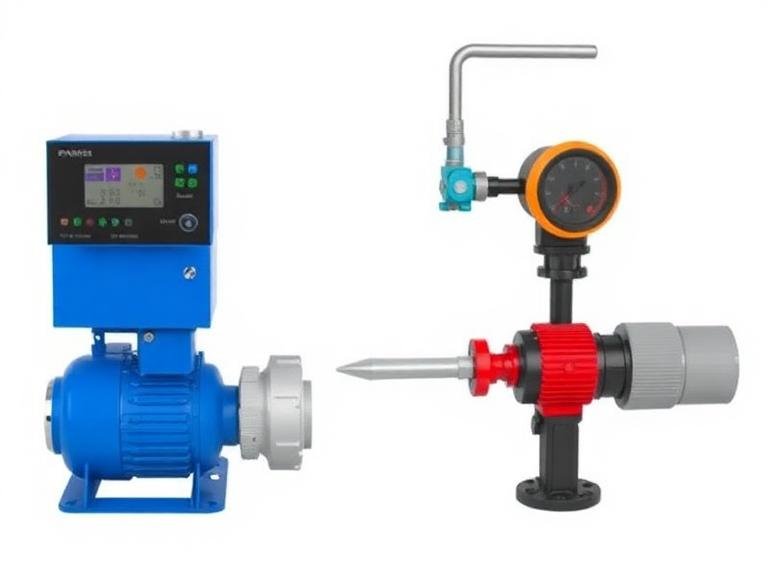
For areas where a leak is likely but access is difficult, a fixed gas detector with a remote sensor is the superior choice. This device separates the sensor from the display unit, allowing the sensor to be placed in high or confined spaces while the readout remains accessible.
Key Features
- Flexible Installation: The sensor part can be extended according to user needs, making it convenient to install in different locations (e.g., near ceilings for lighter-than-air gases).
- High-Temperature Capable: Uses high-temperature resistant cable for the sensor connection, preventing circuit damage in extreme heat environments.
- Versatile Detection: Capable of monitoring toxic and harmful gases with ranges from PPM levels to 100% VOL.
- Self-Diagnosis: Performs self-checks 2 times per second to ensure reliability.
- Robust Output: Supports 4-20mA and RS485 output signals for integration into PLC or DCS systems.
Technical Specifications
| Measuring Range | 0-1000/5000 PPM, 0-100% LEL, 0-100% VOL |
|---|---|
| Detection Principle | Electrochemical, Catalytic Combustion, PID, Infrared, Thermal Conductivity |
| Protection Grade | IP66 / Ex d IIC T6 Gb (Explosion-proof) |
| Working Temp | -40℃ to 70℃ (Standard), up to 420℃ with specialized sensors |
| Response Time | T90 < 30 seconds |
| Output Signal | 4-20mA, RS485 |
Section 2: Top Personal Portable Gas Monitors
For the individual worker entering a confined space or walking a patrol beat, these wearable devices are essential. Here are the top performers for 2026.
The MSA Altair 5X remains a titan in the industry, favored for its ability to monitor up to six gases simultaneously. In 2026, it stands out for its integrated PID (Photoionization Detector) option, allowing it to detect volatile organic compounds (VOCs) alongside standard combustible and toxic gases.
Why It Is a Top Pick
It utilizes MSA’s proprietary XCell sensors, which have a typical life of over four years—double the industry average. The “MotionAlert” feature acts as a man-down alarm, while “InstantAlert” allows the user to manually trigger a distress signal. Its rugged, rubberized housing can withstand a 10-foot drop onto concrete.
Honeywell has revolutionized simplicity with the BW Icon+. Unlike traditional monitors that display confusing numbers, the Icon+ uses simple illuminated symbols (a bell for alarm, a checkmark for safety) to communicate status instantly. It is one of the best personal gas monitoring devices for fleets where ease of training is a priority.
User-Centric Design
This is a serviceable 4-gas detector (O2, LEL, H2S, CO). It features intelligent sensors that predict their own end-of-life, allowing for proactive maintenance. The “Plus” model allows for Bluetooth connectivity to a smartphone app for reporting and configuration.
The Blackline Safety G7c is the world’s first 3G/4G connected gas detector with integrated lone worker monitoring. It does not rely on Wi-Fi or smartphone pairing; it connects directly to cellular networks to stream data to the cloud.
Connectivity Features
If a worker falls, the G7c instantly alerts a live monitoring team. It also features a two-way speakerphone, allowing the monitoring center to speak directly to the injured worker. The modular cartridge system means you can swap from a single-gas to a multi-gas setup in seconds by just changing the cartridge.
The Ventis Pro5 is designed for flexibility. It can detect up to five gases and is compatible with Industrial Scientific’s “LENS Wireless” mesh network. This allows monitors to “talk” to each other; if one worker goes into alarm, peers nearby are notified instantly, even without a central cloud connection.
Versatility
It offers a panic button, man-down alarm, and custom messages (e.g., “EVACUATE”) that can be displayed on the screen. It is also compatible with the iNet Exchange program, which automates maintenance and repairs.
German engineering at its finest, the Dräger X-am 2500 is a workhorse for 1-to-4 gas detection. It is specifically designed for personal protection, with a high resistance to chemical contamination (poisoning) of the catalytic sensor.
Reliability
The X-am 2500 is approved for Ex zone 0, which ensures very high safety for users in areas subject to explosion hazards. Its lightweight design and high-capacity battery (operating more than 12 hours) make it ideal for long shifts in refineries and chemical plants.
Size matters when you are carrying gear all day. The RKI GX-3R Pro claims the title of the world’s smallest 5-gas monitor. It fits comfortably in the palm of your hand but sacrifices no functionality.
Compact Power
Despite its size, it includes Bluetooth communication for iOS and Android. It can monitor standard confined space gases plus a fifth toxic channel (like SO2 or HCN). It is waterproof and dustproof with an IP68 rating, making it one of the toughest compact units available.
A sibling to the 5X, the MSA Altair 4XR is the standard-bearer for 4-gas monitoring (LEL, O2, CO, H2S). It is renowned for its durability and the rapid response of its sensors.
Rugged Standard
Like the 5X, it features XCell sensors and Bluetooth connectivity. It integrates with the MSA ALTAIR Connect app to provide real-time awareness to safety supervisors. It is built to survive a 25-foot drop, making it virtually indestructible in normal working conditions.
Summary Comparison Table
| Device Name | Best For | Gases Monitored | Key Feature |
|---|---|---|---|
| Sino-Inst Wall Monitor | Ambient Temp/Humidity | Temp/Humidity | Flameproof housing, RS485 output |
| Sino-Inst Fixed Detector | Continuous Area Monitoring | Single Gas (Customizable) | Remote sensor capability |
| MSA Altair 5X | Complex Industrial | Up to 6 | Integrated PID, XCell Sensors |
| Honeywell BW Icon+ | Ease of Use | 4 Gas | Icon-based display, Serviceable |
| Blackline Safety G7c | Lone Workers | Modular (1-5) | Direct Cellular/Satellite connection |
| Ventis Pro5 | Team Safety | Up to 5 | LENS Wireless Mesh Network |
| RKI GX-3R Pro | Portability | 5 Gas | World’s smallest 5-gas monitor |
Frequently Asked Questions
Q: What is the difference between diffusion and pump gas monitors?
A: Diffusion monitors rely on natural air currents to bring gas to the sensors and are worn on the chest (breathing zone). Pump monitors actively draw air through a tube, making them essential for pre-entry testing of confined spaces before a worker enters.
Q: How often should I bump test my personal gas monitor?
A: Best practice and OSHA recommendations suggest a “bump test” before each day’s use. This confirms that the sensors respond to gas and the alarms function properly. Calibration is typically done monthly or quarterly.
Q: Can the Wall-mounted Temperature Monitor detect gas?
A: No, the specific model listed (Product 1) detects temperature and humidity. However, it is designed to integrate into a larger safety system (via RS485 or 4-20mA) alongside gas detectors to provide a complete environmental picture.
Q: Why is a “Remote Sensor” important for fixed detectors?
A: Gases have different densities. Methane is lighter than air and collects near the ceiling; Propane is heavier and collects near the floor. A remote sensor allows you to place the detection element exactly where the gas will accumulate, while keeping the display unit at eye level for easy reading.
References
- Occupational Safety and Health Administration (OSHA). (2024). Confined Space Entry Regulations and Gas Detection Standards.
- Sino-Inst. (2025). Product Specifications for Series Temperature and Gas Detectors.
- MSA Safety. (2025). XCell Sensor Technology Whitepaper.