.png)
Testing the best carbon monoxide detector in 2025 is more important than ever as CO dangers continue to rise in residential, commercial, and industrial environments. In this comprehensive guide, we explain how a carbon monoxide detector test works, what tools are most accurate, and compare the 6 best carbon monoxide detector test devices on the market. Whether you are a homeowner, safety inspector, industrial operator, or facility manager, this article helps you choose the best carbon monoxide detector for reliable protection.
Table of Contents
- Why Testing the Best Carbon Monoxide Detector Matters
- How a Carbon Monoxide Detector Test Works
- Top 6 Best Carbon Monoxide Detector Test Devices for 2025
- Product Spotlight: 900A Portable Multi Gas Detector
- Comparison Table
- Frequently Asked Questions
- References
Why Testing the Best Carbon Monoxide Detector Matters
A best carbon monoxide detector is only effective if it is accurate, calibrated, and fast enough to detect rising CO levels before health risks occur. Carbon monoxide is odorless, colorless, and impossible to detect without proper technology. Conducting a regular carbon monoxide detector test ensures:
- Accurate sensor response
- Fast alarm activation
- Reliable real-time measurement
- Compliance with industrial safety standards
- Long-term system durability
Using the best carbon monoxide detector is essential in high-risk environments such as manufacturing, mining, chemical plants, warehouses, underground parking areas, and commercial buildings.
How a Carbon Monoxide Detector Test Works
A standard best carbon monoxide detector test involves checking several critical functions:
1. Sensor Calibration Test
CO detectors must be calibrated to ensure accurate ppm readings. The best carbon monoxide detector includes a self-calibration system or external calibration options.
2. Response Time Verification
A reliable device should detect dangerous CO levels and trigger alarms in less than 20 seconds.
3. Environmental Tolerance Test
Environmental conditions such as humidity, temperature, and dust can affect sensors. The best carbon monoxide detector must remain stable in harsh conditions.
4. Alarm Function Test
A complete carbon monoxide detector test includes audio, visual, and vibration alarms.
6 Best Carbon Monoxide Detector Test Devices in 2025
Below are the top devices for testing and verifying CO presence. These tools are selected for accuracy, safety certification, durability, and suitability for industrial or home applications.
1. 900A Portable Multi Gas Detector (Professional – Multi-Environment)
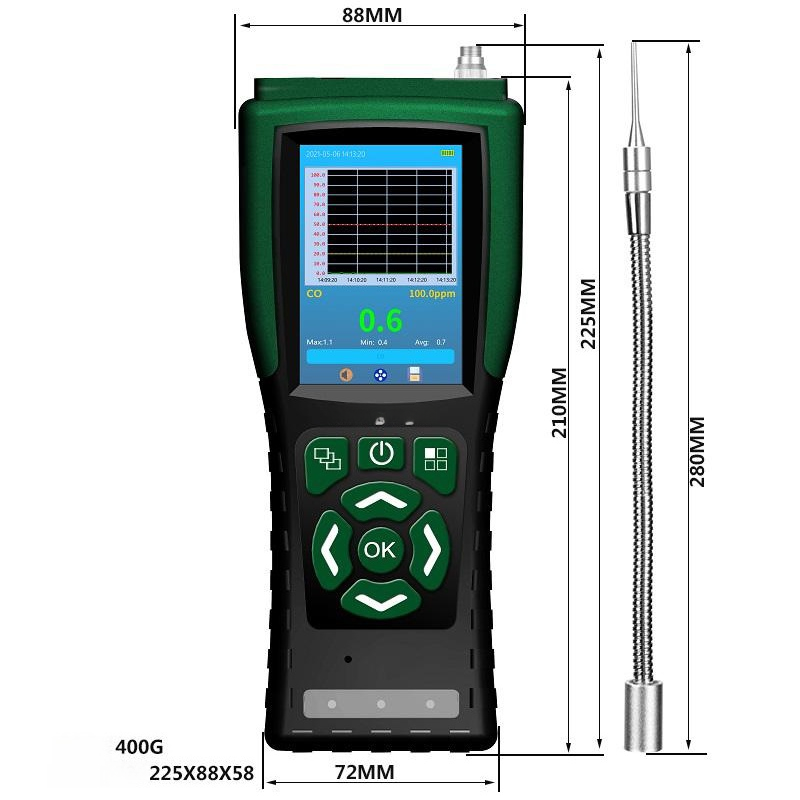
This model is one of the best carbon monoxide detector testing tools, featuring a built-in pump, ultra-fast response time, and the ability to detect 2–6 gases simultaneously including CO, O₂, H₂S, CH₄, and CO₂. Its industrial-grade build and high-resolution screen make it ideal for field inspections and factory environments.
2. Kidde CO400 Basic Carbon Monoxide Detector
A simple, affordable solution designed for household CO monitoring and testing accuracy at consumer level.
3. Honeywell BW Solo Portable CO Detector
A well-known industrial-grade portable unit offering high accuracy and reliable sensor lifespan.
4. Forensics Detectors FD-PRO CO Meter
Known for durability and rapid ppm detection, this model is used by HVAC technicians and safety inspectors.
5. Nest Protect CO + Smoke Alarm (Smart Home)
Combines smoke and CO detection with Wi-Fi monitoring and smartphone alerts, ideal for home and commercial properties.
6. Industrial Scientific Ventis Pro5 Multi Gas Monitor
A rugged, premium multi-gas detector with advanced analytics, data logging, and alarm systems.
Product Spotlight: 900A Portable Multi Gas Detector
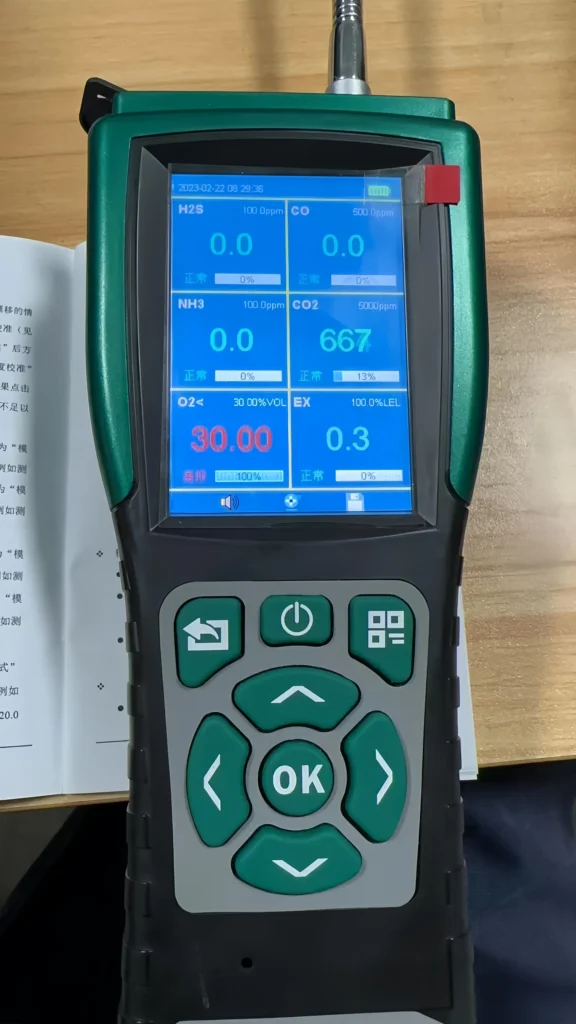
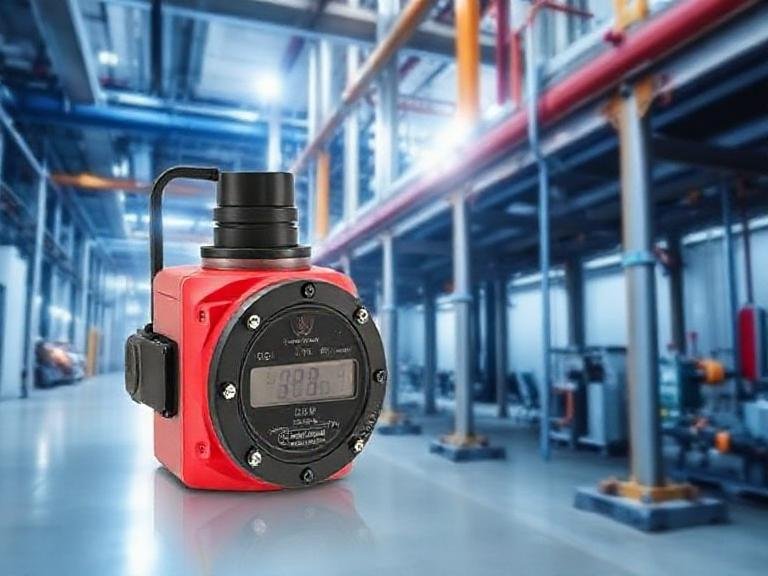
The 900A Portable Multi Gas Detector is the most advanced solution in our selection of the best carbon monoxide detector tools. Designed to detect a wide range of gases with high precision, it is widely used in factories, laboratories, mines, chemical industries, and emergency response teams.
Key Features
- Detects carbon monoxide, oxygen, hydrogen sulfide, methane, CO₂, and more
- Built-in pump with 500 ml/min sampling
- 3.5-inch HD display
- Audible + visual + vibration alarm modes
- Response time T90 ≤ 20 seconds
- Massive data storage (100,000 records)
- Explosion-proof design (Exia II CT6)
- IP66 dust & water protection
Their expertise in industrial equipment reflects the same high-quality engineering found in the 900A detector.
Comparison Table: 6 Best Carbon Monoxide Detector Test Devices
| Model | Detection Type | Sensor Lifespan | Alarm Type | Best Use Case |
|---|---|---|---|---|
| 900A Portable Multi Gas Detector | CO + 2–6 gases | 2–10 years | Audio, visual, vibration | Industrial inspections |
| Kidde CO400 | CO only | 10 years | Audio | Home safety |
| Honeywell BW Solo | Single gas | 5 years | Audio + visual | Industrial |
| Forensics FD-PRO | CO | 3–5 years | Audio + vibration | HVAC & field work |
| Nest Protect | CO + smoke | 10 years | Smart alerts | Homes & offices |
| Ventis Pro5 | Multi-gas | 5–10 years | Advanced multi-alarm | Heavy industrial |
Frequently Asked Questions
1. How often should I test the best carbon monoxide detector?
Monthly testing is recommended for homes, while industrial detectors require weekly or daily tests depending on environment risk level.
2. What ppm level is dangerous?
- 50 ppm — dangerous exposure begins
- 100 ppm — headache and dizziness
- 400 ppm — life-threatening after 3 hours
3. Do multi-gas detectors last longer?
Yes, many multi-gas models such as the 900A include long-life electrochemical or infrared sensors.
4. Can CO detectors work in extreme temperatures?
The best carbon monoxide detector models are designed for temperatures between −40°C and +70°C, depending on the model.