.png)
In both industrial and residential settings, the sudden, piercing sound of a gas detector can be a source of immediate anxiety. When dealing with gas monitoring, specific terminology matters. While many homeowners interchangeably use “CO” (Carbon Monoxide) and “CO2” (Carbon Dioxide), these are distinct gases with different monitoring technologies and risks. If you are searching for the 4 reasons why the CO2 alarm keeps chirping, you are likely facing an intermittent “trouble signal” rather than a full-blown emergency alarm. This chirping is a device’s way of communicating that it needs maintenance, power, or replacement.
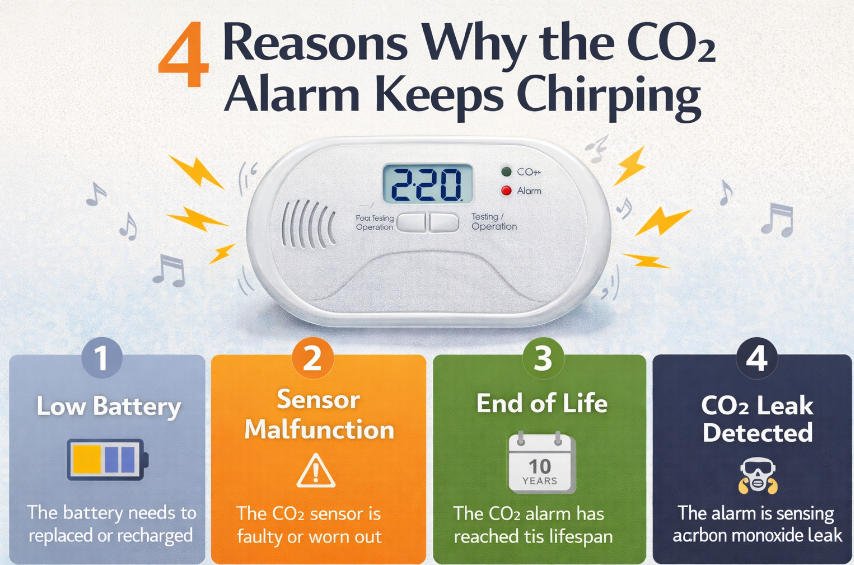
This comprehensive guide will explore the technical reasons behind these nuisance alarms for both CO2 (Carbon Dioxide) monitors—common in breweries, greenhouses, and modern offices—and standard CO (Carbon Monoxide) safety alarms, as the two are frequently confused. We will delve into sensor drift, battery hysteresis, end-of-life protocols, and environmental interference.
Table of Contents
- 1. Introduction: The Difference Between an Alarm and a Chirp
- 2. Reason 1: Low Battery or Power Interruptions
- 3. Reason 2: End-of-Life (EOL) Sensor Failure
- 4. Reason 3: Calibration Drift and Environmental Interference
- 5. Reason 4: Internal Device Malfunction or Error Codes
- 6. Critical Distinction: Carbon Monoxide (CO) vs. Carbon Dioxide (CO2)
- 7. Professional Solutions: Sino-Inst Industrial Detectors
- 8. Summary Troubleshooting Table
- 9. Frequently Asked Questions (FAQs)
- 10. References
1. Introduction: The Difference Between an Alarm and a Chirp
Before ripping the device off the wall, it is vital to distinguish between a “chirp” and an “alarm.” A full alarm event is typically a continuous, loud pattern (often 4 beeps for CO, or a continuous siren for industrial CO2) indicating dangerous gas levels. A “chirp,” on the other hand, is a short, sharp beep that occurs intermittently—usually once every 30 to 60 seconds.
This chirping is a “supervisory signal.” It means the device is still functioning enough to tell you it has a problem, but it may not be able to detect gas reliably until that problem is fixed. Ignoring these chirps compromises safety. Below are the four primary drivers of this behavior.
2. Reason 1: Low Battery or Power Interruptions
The single most common reason for any gas detector to chirp is a voltage drop. This applies to both portable battery-operated units and hardwired units with battery backups.
The Voltage Threshold
Gas sensors, particularly Non-Dispersive Infrared (NDIR) sensors used for CO2 detection, require a stable power supply to operate the infrared light source. If the battery voltage dips below a critical threshold, the device’s internal logic triggers a low-battery chirp.
Temperature-Induced Chirping
A phenomenon known as “nighttime chirping” often occurs because battery chemistry is sensitive to temperature. As temperatures drop at night (often between 2 AM and 4 AM), the chemical reaction inside an alkaline battery slows down, causing a slight voltage drop. This drop might be just enough to trigger the low-battery warning. Once the home warms up in the morning, the voltage recovers, and the chirping stops, leading to confusion.
Solution: Replace the batteries with high-quality alkaline or lithium batteries as recommended by the manufacturer. If the unit is hardwired, check that the backup battery is fresh and seated correctly in the compartment.
3. Reason 2: End-of-Life (EOL) Sensor Failure
All gas sensors have a finite lifespan. Unlike a toaster or a lamp, the sensing element inside a gas detector degrades over time due to chemical reactions or component aging.
Sensor Degradation
- CO Sensors (Electrochemical): These typically last 5 to 7 years (sometimes 10). The electrolyte inside dries up or becomes contaminated.
- CO2 Sensors (NDIR): Industrial NDIR sensors can last 10-15 years, but the light source (lamp) can dim, or the optical path can become obscured.
The “Death Chirp”
Modern detectors have an internal clock or a self-diagnostic loop. When the device reaches its expiration date, it will begin a distinctive chirp pattern (often different from the low battery chirp, such as 3 or 5 rapid chirps every minute). This functionality is a safety feature to ensure you do not rely on a dead sensor.
Solution: Check the “Manufacture Date” or “Replace By” date printed on the back of the alarm. If it is expired, no amount of battery changing will stop the noise. The entire unit must be replaced.
4. Reason 3: Calibration Drift and Environmental Interference
This reason is particularly relevant for industrial CO2 monitors and high-end air quality sensors. Unlike simple residential alarms, these devices measure the exact concentration of gas in Parts Per Million (PPM).
Zero Drift
Over time, the baseline reading of a sensor can shift. This is called “drift.” If a sensor drifts upward, it might think the ambient CO2 level is higher than it actually is, sitting just below the alarm threshold. Minor fluctuations or electronic noise can then push it over the limit momentarily, causing brief chirps or short alarm bursts.
Environmental Cross-Sensitivity
While CO2 NDIR sensors are generally specific, other environmental factors can cause interference:
- Dust and Particulates: In an NDIR sensor, dust can settle on the optical window, scattering the light. The sensor interprets this light loss as high CO2 concentration, triggering alarms or error chirps.
- Humidity: Extreme humidity can cause condensation inside the sensor chamber, refracting the detection beam and causing false readings.
Solution: For industrial CO2 units, perform a fresh air calibration (zeroing) according to the manual. For residential units, use a can of compressed air to gently blow out dust from the sensor vents.
5. Reason 4: Internal Device Malfunction or Error Codes
Sometimes, the chirping indicates a hardware failure that is neither battery nor sensor-related.
Micro-controller Errors
Gas detectors are small computers. Power surges, static electricity, or manufacturing defects can cause the internal processor to glitch. The device usually has a specific chirp code (e.g., erratic beeping) to signal a general “Err” (Error) state.
Loose Wiring
In hardwired systems, a loose wire nut or a poor connection at the harness can cause momentary power loss. The device chirps when it loses power and chirps again when it powers back up, creating a confusing cycle of beeps.
Solution: Perform a “Hard Reset.” Disconnect the unit from AC power and remove the batteries. Hold down the “Test/Silence” button for 15-20 seconds to drain any residual charge from the capacitors. Reinstall the batteries and reconnect power. If the chirping persists, the device is defective.
6. Critical Distinction: Carbon Monoxide (CO) vs. Carbon Dioxide (CO2)
It is crucial to verify which gas your device detects, as “CO2 alarm” is a frequent misnomer for “CO alarm.”
Carbon Monoxide (CO)
The “Silent Killer.” Produced by incomplete combustion (furnaces, cars, stoves). CO alarms are mandatory in most homes. They are safety-critical devices. If this alarm sounds continuously, you must evacuate.
Carbon Dioxide (CO2)
The “Greenhouse Gas.” Produced by human respiration, fermentation, and dry ice. High levels cause drowsiness and poor air quality. CO2 alarms are common in commercial buildings (for ventilation control), breweries, grow rooms, and industrial sites. They are rarely required in typical residential homes unless specifically installed for indoor air quality (IAQ) monitoring.
Note: If you are a homeowner hearing a chirp, it is 99% likely a Carbon Monoxide (CO) or Smoke detector, not CO2.
7. Professional Solutions: Sino-Inst Industrial Detectors
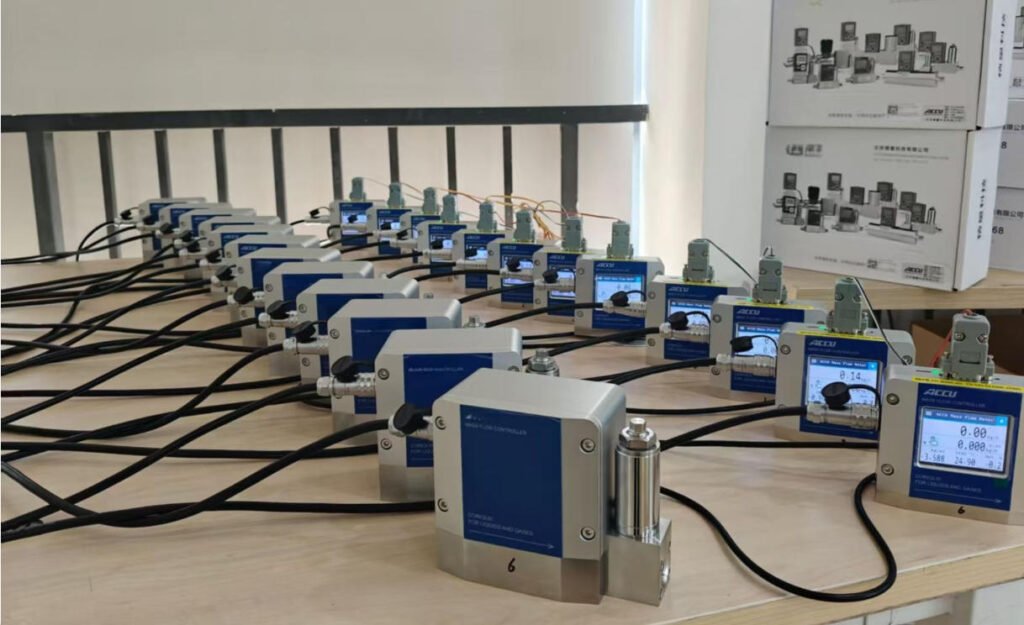
In industrial environments where precise measurement of gases like CO2 is critical for safety and process control, reliability is non-negotiable. Sino-Inst is a professional supplier of industrial process and analytical instruments, including gas detectors, gas analyzers, dust detectors, mass flow controllers, and dust monitors.
We can help you obtain reliable measurement and analysis solutions while saving procurement costs. Unlike residential detectors which only offer a binary “alarm/no alarm” status, Sino-Inst provides high-precision instruments that offer real-time data analysis, integrating seamlessly with PLC and SCADA systems. Customized products and OEM services are available. We will be your most trusted partner!
Our Featured Products:
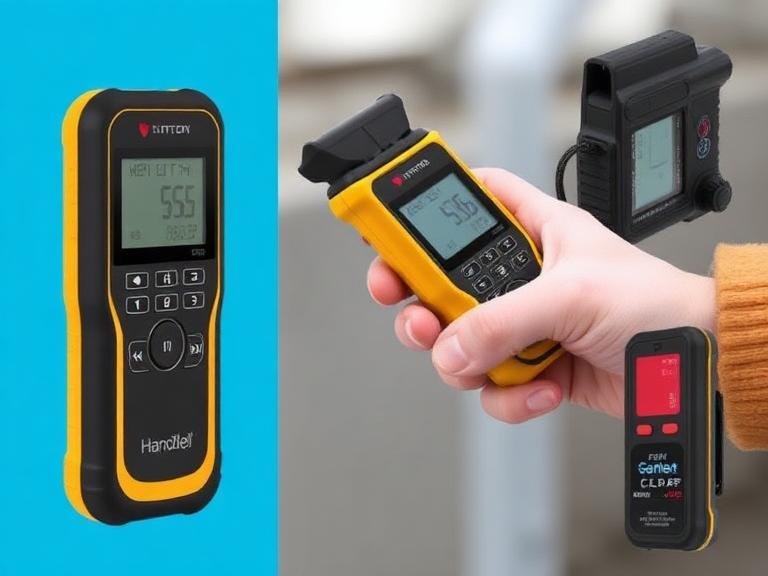
- Fixed Gas Detectors: Permanent installations for continuous monitoring of hazardous gases in factories and plants.
- Portable Gas Detectors: Personal safety devices for technicians working in confined spaces.
- 800 Series Gas Sensor Module: High-sensitivity modules for OEM integration.
- Gas Monitoring System: Complete turn-key solutions for facility-wide safety.
- Dust Monitors: Particulate matter detection for air quality compliance.
- Mass Flow Controllers/Meters: Precise control for gas mixing and delivery.
- pH/ORP Controller & Sensors: Comprehensive liquid analysis tools including Glass and Plastic-Shell Electrodes.
- Dissolved Oxygen (DO) & Conductivity Sensors: Essential for water quality management.
Whether you need to monitor CO2 levels in a brewery or hazardous gases in a refinery, Sino-Inst provides the industrial-grade durability required to prevent false alarms and nuisance chirping.
8. Summary Troubleshooting Table
| Chirp Pattern | Likely Cause | Recommended Action |
|---|---|---|
| 1 Chirp every 30-60 secs | Low Battery | Replace battery immediately. Check battery drawer is fully closed. |
| 3-5 Rapid Chirps every minute | End of Life (EOL) | Check “Replace By” date. Replace the entire unit. |
| Erratic / Random Chirps | Dirt / Interference | Vacuum sensor openings. Move away from open windows/fans. |
| Continuous Alarm (4 Beeps) | DANGER: Gas Detected | Evacuate immediately. Call emergency services. |
| Continuous Alarm (Industrial) | High PPM Threshold | Ventilate area. Check process equipment for leaks. |
9. Frequently Asked Questions (FAQs)
How do I reset my CO2 alarm to stop the chirping?
Most alarms have a “Test/Silence” button. Pressing this may silence the chirp for up to 24 hours (for low battery) or a few minutes (for false alarms). However, if the underlying issue (like a dead battery or expired sensor) isn’t fixed, the chirping will return. For a full reset, remove power and batteries, hold the test button for 15 seconds, and restart.
Why does my alarm only chirp at night?
This is due to the “thermal drop.” Batteries produce electricity through a chemical reaction that is less efficient in colder temperatures. As your home cools down at night, a borderline battery may dip below the low-voltage threshold, triggering the chirp. It stops when the house warms up in the morning.
Can humidity set off a CO2 alarm?
Yes. High humidity (steam from a shower or boiling water) can be misinterpreted by some sensors as gas, or it can cause condensation on the circuit board, leading to a temporary malfunction or fault chirp.
Is there a difference between a CO detector and a Smoke detector chirp?
They are similar, but the patterns often differ slightly. Smoke detectors usually chirp once per minute for low battery. CO detectors may have specific patterns for “End of Life” vs “Low Battery.” Always consult the user manual for your specific model.
Resource: How To Fix A Carbon Monoxide Detector That Is Beeping Even After A New Battery