.png)
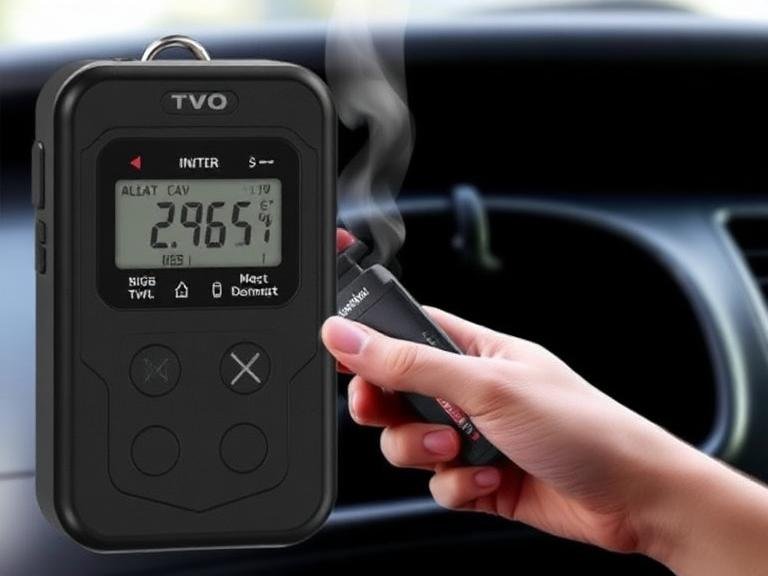
As we navigate through 2026, the technology behind gas safety has evolved significantly. Whether you are a homeowner concerned about a potential natural gas leak in your kitchen or an industrial site manager responsible for multi-gas monitoring, finding the best gas line leak detectors is a critical safety priority. Modern devices now offer unprecedented accuracy, wireless connectivity, and multi-gas sensing capabilities. This comprehensive guide reviews the top 10 solutions available this year, focusing on sensitivity, reliability, and ease of use.
Table of Contents
- Gas Detection Technology Trends in 2026
- 1. Sino-Inst Handheld Multi Gas Detector-Wireless
- 2. Sino-Inst Online Gas Detector for Single Gas
- 3. Kidde Nighthawk KN-COEG-3
- 4. Klein Tools ET120 Combustible Gas Leak Detector
- 5. TopTes PT199 Compact Gas Sniffer
- 6. Forensics Detectors FD-Professional
- 7. DeNova Detect Natural Gas Alarm (Battery Powered)
- 8. Amprobe GSD600 Gas Leak Detector
- 9. Aicevoos Digital Handheld Gas Detector
- 10. Honeywell BW Solo Single Gas Detector
- Buyers Guide: How to Choose the Best Gas Line Leak Detectors
- Summary Comparison Table
- Frequently Asked Questions
- References and Industry Standards
Gas Detection Technology Trends in 2026
In 2026, the landscape of gas monitoring is defined by the integration of the Internet of Things (IoT) and smart sensor technologies. The best gas line leak detectors are no longer isolated “sniffers” that just beep. Instead, they are nodes in a larger safety network. We are seeing a massive shift toward LORA and 4G wireless transmission, allowing remote sites to transmit data to a central cloud without the need for complex wiring. This is particularly vital in industrial sectors where offshore platforms or vast pipeline networks require constant surveillance.
Sensor longevity has also improved. While older catalytic bead sensors might drift or fail within a year, modern electrochemical and semiconductor nanotechnology sensors, like those found in the Sino-Inst lineup, now boast a service life of 3 to 5 years. Calibration has become more intuitive, with many devices featuring automatic tracking and compensation for temperature fluctuations, which historically caused false alarms. Furthermore, the push for green energy has increased the need for specialized detectors capable of sensing hydrogen and other alternative fuels alongside traditional methane and propane.
1. Sino-Inst Handheld Multi Gas Detector-Wireless

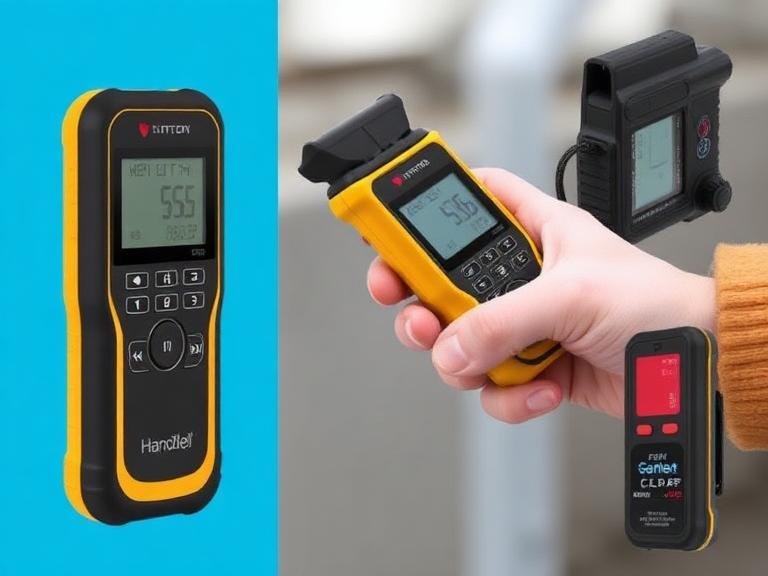
Leading our list for industrial and professional use in 2026 is the Sino-Inst Handheld Multi Gas Detector-Wireless. This device represents the peak of portable monitoring, offering a robust solution for those who need to detect multiple gases simultaneously while staying connected to a central monitoring system. It is specifically designed for mobile workers in hazardous environments like refineries, chemical plants, and underground tunnels.
Specifications and Performance
| Feature | Detail |
|---|---|
| Measuring Gas | Combustible gas, oxygen, carbon monoxide, hydrogen sulfide, etc. |
| Range (Combustible) | 0-100% LEL (Lower Explosive Limit) |
| Sampling Accuracy | Plus or Minus 2% F.S. |
| Protection Level | IP66 waterproof splash and short-term rain |
| Output Signals | GPRS, 4G, WIFI, LORA, ZigBee |
| Battery | 2800mAh Rechargeable Lithium (Up to 16 hours runtime) |
| Explosion-proof Level | ExdIICT6 |
The versatility of this unit makes it one of the best gas line leak detectors for professionals. The inclusion of GPRS and LORA options ensures that even if a worker is 5 kilometers away in a town or up to 20 kilometers in a suburb, the alarm data can be transmitted to a central control station or a mobile phone via SMS notifications. The casing is constructed from die-cast aluminum with a Teflon paint finish, ensuring it survives the toughest physical conditions. Its response time of less than 10 seconds (T90) is industry-leading for 2026.
2. Sino-Inst Online Gas Detector for Single Gas

For facilities that require permanent, 24/7 monitoring, the Sino-Inst Online Gas Detector for Single Gas is a top-tier choice. This fixed-point detector is engineered for high-precision measurement in dangerous on-site operations. It provides a constant safety net, ensuring that any buildup of gas is identified long before it reaches explosive levels.
Key Features
- The sensor has good anti-interference performance and a service life of up to 3-5 years.
- It adopts advanced microprocessor technology, with fast response speed, high measurement accuracy, and excellent stability.
- On-site sound and light alarm function activates instantly when gas concentration exceeds the set standard.
- On-site large-screen LCD display with backlight provides intuitive display of gas type, unit, and working status.
- Independent gas chamber allows for easy replacement of sensors without requiring on-site calibration.
- Full range temperature digital automatic tracking compensation ensures measurement accuracy regardless of weather.
- Full software automatic calibration with up to 6 target point calibration functions for linear accuracy.
- Automatic protection function against high concentration gas shock prevents damage to the sensitive instrument.
This model is highly favored in 2026 due to its reliability against external interference. It includes overvoltage, lightning, and short circuit protection, making it ideal for outdoor installations. The fact that no on-site calibration is required when swapping sensors is a major benefit for maintenance teams, significantly reducing downtime and operational costs.
3. Kidde Nighthawk KN-COEG-3
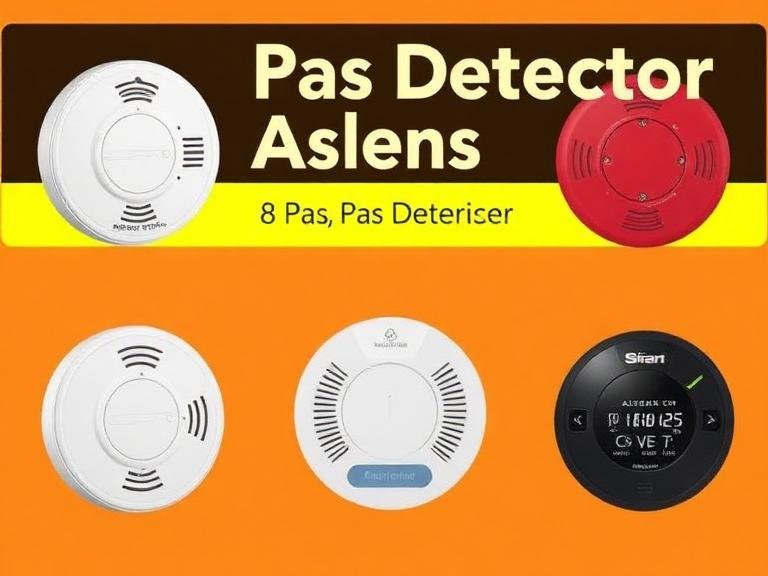
The Kidde Nighthawk remains a household staple among the best gas line leak detectors. While the Sino-Inst models dominate the industrial sector, the Nighthawk is perfected for residential use. It is a plug-in detector with a battery backup that monitors both carbon monoxide and explosive gases (propane and natural gas).
In 2026, the Nighthawk has been updated with a louder 85-decibel alarm and a more responsive electrochemical sensor for CO. Its primary advantage is the extension cord, which allows the unit to be mounted at eye level or near the floor while the plug occupies a wall outlet. This flexibility is essential because natural gas is lighter than air and rises, while propane is heavier and sinks. Having a device that can be positioned strategically is a life-saving feature.
4. Klein Tools ET120 Combustible Gas Leak Detector
For plumbers and HVAC technicians, the Klein Tools ET120 is the workhorse of the industry. It features an 18-inch flexible gooseneck that allows the user to “snake” the sensor into tight corners, behind furnaces, and along complex gas pipe joints. This physical reach is what makes it one of the best gas line leak detectors for troubleshooting specific leaks.
The ET120 identifies a wide range of gases, including methane, propane, and butane, with a sensitivity range of 50 to 10,000 parts per million (ppm). The 2026 version includes an improved visual bar graph on the LCD and a “tick” rate that increases in frequency as you get closer to the leak source, much like a Geiger counter. It is rugged enough to survive a 2-meter drop, reflecting the build quality professionals expect from Klein.
5. TopTes PT199 Compact Gas Sniffer
Not every situation requires a thousand-dollar industrial rig. The TopTes PT199 is the best entry-level choice for DIY enthusiasts and homeowners who want a quick way to check their gas stove or grill connections. It is roughly the size of a large marker, making it highly portable.
Despite its small size, the PT199 doesn’t skimp on essential features. It offers high and low sensitivity modes and a 3-color backlit display. When a leak is detected, the screen turns red, and the alarm sounds. It is powered by standard AAA batteries and features an auto-power-off function to preserve life. While it lacks the wireless data transmission of the Sino-Inst handheld, its simplicity and price point earn it a solid spot in the top 10 for 2026.
6. Forensics Detectors FD-Professional
The Forensics Detectors FD-Professional is designed for home inspectors and environmental consultants who need documented accuracy. This model is often calibrated to NIST standards, providing a level of trust that “budget” sniffers cannot match. In 2026, it remains a favorite for its high-contrast color screen and rechargeable lithium battery.
This detector is particularly sensitive to very small leaks that might be missed by less sophisticated sensors. It excels at detecting methane and LPG with a resolution of 1 ppm. The housing is ergonomic and features a high-density rubber grip, ensuring it stays in the hand even in sweaty or oily environments. For those who need a paper trail or certified proof of a leak, this is among the best gas line leak detectors for providing reliable data.
7. DeNova Detect Natural Gas Alarm (Battery Powered)
DeNova Detect has made waves in 2026 by offering the only fully battery-powered residential natural gas alarm that lasts for years. Traditionally, natural gas detectors had to be plugged into a wall because the sensors required too much power. DeNova changed this with their ultra-low-power MEMS sensor technology.
This device is one of the best gas line leak detectors for installations where no electrical outlet is available near the ceiling. Since natural gas rises, a ceiling-mounted unit is much faster at detecting a leak than a floor-level plug-in model. The DeNova Detect alerts users at 10 percent of the Lower Explosive Limit (LEL), which is well before the gas becomes dangerous, providing ample time for evacuation.
8. Amprobe GSD600 Gas Leak Detector
The Amprobe GSD600 is a dedicated tool for identifying gas leaks in piping systems. It is renowned for its rapid warm-up time—often ready in under 10 seconds—and its “mute” function, which allows technicians to work in quiet environments using only the visual LED indicators. The 2026 model has been upgraded with a more durable sensor tip and better humidity resistance.
Amprobe’s focus is on pinpointing the leak. The GSD600 uses a sensitive semiconductor sensor that is specifically tuned for combustible gases. Its probe is stiff but bendable, allowing it to stay in the shape you put it in, which is helpful when checking the backside of a pipe manifold. It is a no-frills, high-performance tool that consistently ranks as one of the best gas line leak detectors for plumbing contractors.
9. Aicevoos Digital Handheld Gas Detector
The Aicevoos detector bridges the gap between the budget TopTes and the professional Klein. It features a larger digital display that shows the exact concentration of gas in either %LEL or PPM. This data-heavy approach is appreciated by users who want to know the severity of the leak, not just its existence.
In 2026, the Aicevoos has integrated a temperature and humidity sensor into the display, providing environmental context that can affect gas dispersion. It also includes a flexible probe and a high-accuracy sensor that is less prone to false positives from household chemicals like hairspray or cleaning agents. Its USB-C charging capability makes it modern and convenient for frequent use.
10. Honeywell BW Solo Single Gas Detector
Rounding out our list is the Honeywell BW Solo. While it is often used for toxic gases, its combustible gas version is highly respected for its “serviceability.” Honeywell designed this unit so that every part—from the sensor to the battery to the display—can be replaced by the user. This sustainability factor is a major trend in 2026.
The BW Solo is a wearable device, making it one of the best gas line leak detectors for personal protection. It clips onto a collar or pocket and provides a “breathing zone” monitor. It is Bluetooth-enabled, allowing users to sync the device with their smartphone to log exposure data and verify calibration status remotely. It is incredibly lightweight and has a one-button operation, making it foolproof in high-stress emergency situations.
Buyers Guide: How to Choose the Best Gas Line Leak Detectors
Selecting the right gas detector depends entirely on your specific environment and the level of risk involved. In 2026, we categorize these devices into three main buckets: Residential, Professional/HVAC, and Industrial. To find the best gas line leak detectors for your needs, consider the following technical factors.
1. Sensitivity and Range
For home use, you want a detector that triggers at about 10% LEL. For professional leak hunting, you need a device that measures in PPM (Parts Per Million), as this allows you to find very small leaks before they even reach the LEL threshold. The best gas line leak detectors for professionals usually have a range from 50 ppm up to 10,000 ppm.
2. Gas Specificity
Are you detecting natural gas (methane), propane (LPG), or carbon monoxide? Many household units are “combustible” detectors, meaning they detect anything that burns. While useful, this can lead to false alarms from alcohol or aerosol sprays. Industrial units like the Sino-Inst Handheld Multi Gas Detector-Wireless allow you to monitor specific toxic gases like Hydrogen Sulfide (H2S) alongside combustibles, which is essential for oil and gas workers.
3. Connectivity and Alarms
In a large facility, an alarm that only makes noise on-site might not be enough. The best gas line leak detectors in 2026 feature wireless transmission (4G, WIFI, or LORA). This ensures that if a leak is detected in a remote storage building, the security team is notified immediately via a computer or mobile phone. For personal use, a loud audible alarm (85 dB+) and a vibrating alert are standard requirements.
4. Battery Life and Durability
Fixed online detectors should have a battery backup to cover power outages. Portable units should offer at least 12-16 hours of continuous use. Durability is measured by the IP (Ingress Protection) rating. For outdoor or industrial use, look for IP66 or higher, which guarantees protection against dust and water jets.
Summary Comparison Table
| Model | Type | Best For | Connectivity |
|---|---|---|---|
| Sino-Inst Handheld | Portable Multi-Gas | Industrial/Remote Sites | 4G, LORA, WIFI |
| Sino-Inst Online | Fixed Single-Gas | 24/7 Facility Safety | 4-20mA, RS485 |
| Kidde Nighthawk | Plug-in Hybrid | Homes/Kitchens | None |
| Klein Tools ET120 | Gooseneck Sniffer | HVAC/Plumbing | None |
| TopTes PT199 | Compact Sniffer | DIY/Budget Home | None |
| Forensics FD-Pro | Precision Sniffer | Inspectors/Audits | None |
| DeNova Detect | Battery Fixed | Ceiling Installation | None |
| Amprobe GSD600 | Professional Tool | Pipeline Maintenance | None |
| Aicevoos Digital | LCD Handheld | Advanced DIY | None |
| Honeywell BW Solo | Wearable | Personal Safety | Bluetooth |
Frequently Asked Questions
Where should I place a natural gas detector?
Since natural gas (methane) is lighter than air, it rises. You should place the detector about 12 inches from the ceiling and within 10 feet of gas appliances like your stove or water heater. This placement is key to finding the best gas line leak detectors’ optimal performance.
Can a gas detector find carbon monoxide?
Not all of them. Some are designed only for explosive gases, while others are “combination” units. To find the best gas line leak detectors that also handle CO, look for “Multi-Gas” or “Combination” on the label. Carbon monoxide is slightly lighter than air but generally mixes well with it, so eye-level placement is usually recommended for CO-only units.
What is the difference between %LEL and PPM?
PPM (Parts Per Million) is a measure of concentration used for finding tiny leaks. %LEL (Lower Explosive Limit) measures how close the gas is to becoming explosive. 100% LEL means the gas is at its minimum concentration to ignite. Most safety alarms trigger at 10% LEL to give you a massive safety buffer.
How often should I calibrate my gas detector?
For industrial devices like the Sino-Inst models, calibration is typically recommended every 6 to 12 months. However, the Sino-Inst Online Gas Detector has an automatic recovery function and smart sensors that can extend the service life to 3-5 years with minimal intervention. Always “bump test” your portable detector before entering a confined space.
Why did my gas detector alarm when I used hairspray?
Many gas detectors use semiconductor sensors that are sensitive to a variety of volatile organic compounds (VOCs). Hairspray, cleaning chemicals, and even some perfumes can cause a “cross-sensitivity” alarm. The best gas line leak detectors are designed to filter these out, but it is always best to keep detectors away from areas where chemicals are frequently sprayed.
References and Industry Standards
1. OSHA Standard 1910.146 – Permit-Required Confined Spaces for Gas Monitoring.
The safety of your home or workplace depends on the reliability of your sensing equipment. By investing in the best gas line leak detectors for 2026, you are not just buying a tool; you are buying peace of mind. Whether it is the wireless convenience of the Sino-Inst Handheld or the simple reliability of the Kidde Nighthawk, these devices are the front line against invisible dangers.